
Don’t Count Time — Make Time Count For You as a Writer
How to be rich with time — value, organize, and spend
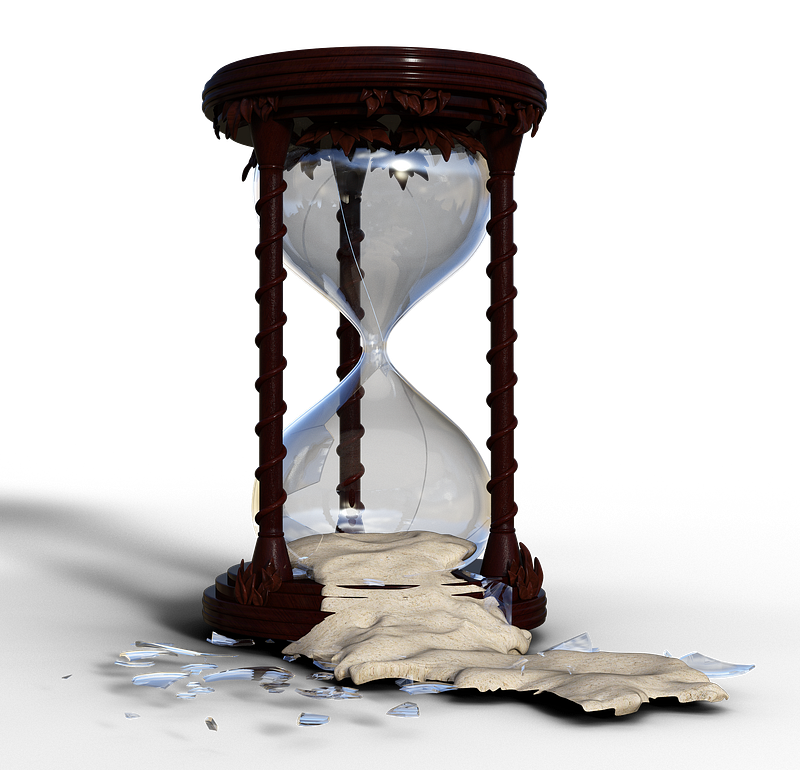
“Time is free, but it’s priceless. You can’t own it, but you can use it. You can’t keep it, but you can spend it. Once you’ve lost it you can never get it back.” ~Harvey Mackay
We all have it. In fact, you’re using it right now. We can’t hold it, stop it, or start it. It moves in one direction. And it may be the most elusive and precious thing you possess — TIME.
Time is what we want most, but what we use worst. ~William Penn
Imagine waking up every morning and knowing that overnight your bank account replenished itself automatically, giving you more than enough funds to accomplish the important things in life. Wouldn’t you give more than the ordinary attention to how you used those funds? After all, you don’t know where the money comes from or when it will run out…
Time is very much like that bank account. Each day is replenished with 24 hours, enough to accomplish the important things that day. But sad to say, most of us are guilty of devaluing that time by repeatedly squandering it. Sometimes we even blame time, or the lack of it, for our problems, heaping more stress on our heads.
So the question is, how can we adjust our view of time and then manage it in a way that truly benefits us as writers? Let me offer some thoughts and suggestions.
The value of time
If you remember only one point from this article, please make it this. The value of time is directly related to the purpose for which we use it. Time spent in a productive, healthful, and morally pursuant endeavor will accomplish valuable results.
Wasted time creates a negative balance in which we’ve lost something that can never be retrieved. What is that? The time we let slip through our fingers along with the possibilities and opportunities it held.
The value of time is directly related to the purpose for which we use it.
There’s a reason why most successful people agree that time is their most valuable asset: Once it’s gone, it’s gone forever. Unlike money, you can’t earn more time. ~4 Ways to Value Yourself by Valuing Your Time
Organize Your Time
Keep it real
Nobody has time for everything! Prioritize your activities by necessity and time-sensitive criteria. Does it have to be done now or can it wait for later? First-things-first. Think about the actual benefits of each task — the fewer benefits, the less priority. As writers, time can often be a scared commodity. The only way to squeeze more time for our writing from our daily activities is to better manage what time we have.
Make a plan
Put it in writing. List it. Schedule it. Whatever is most effective in your case, use that method to stay on track. Build in a flexibility factor — allow for adjustments.
Apply Pareto’s principle
But how can the 80/20 rule be applied to your use of time? Analyze your plan. How many items on your priority list must be accomplished to produce 80% of the results you desire? Think about doing those first.
Don’t let your mood dictate your use of time.
Tips on spending your time
- Do specific tasks at the most efficient time — Examples: 1) Arrange your travel time to and from work so as not to waste time in commuter traffic. 2) Need groceries? Shop early or late when the store is not congested to spend less time in crowded aisles and checkout lines.
- Do jobs that need your complete focus when you are most alert to avoid mental or physical lag.
- Do not fall into a rut of procrastination — Tasks that are delayed may become more time laborious if done later.
I have never heard anyone procrastinate their way to success before and I doubt it’s going to change in the near future. ~How to Stop Procrastinating
- When appropriate start and end your scheduled activities on time.
- Always have the right tools for the job — The right tools for each task is a time saver in itself.
- Self-care is time well spent — Taking care of yourself by getting enough sleep and maintaining a healthy diet and exercise routine will save you downtime due to illness.
- Keep the right mental attitude — Treat time like a time-professional. Don’t let your mood dictate your use of time.
- Reward yourself for following these guidelines with a guilt-free span of personal time to be spent in whatever manner you wish. — Viewing time as a gift is another way to keep its value high.
Concluding principle
“Self-discipline. Before you can master time you must first master yourself. And the rewards make it eminently worthwhile.” ~R. Alec Mackenzie, a leading management consultant
The reward of good time management is the extra minutes or hours we accrue to do the thing we love — writing.


