
Don’t Build a Startup, Build a Movement
How to move the masses by going beyond selling just software

As a startup marketer, spending my lunch break arguing with developers is not my favorite part of the job.
“That’s bullshit,” our CTO replies. “MailChimp’s product isn’t any better than the rest; it’s just another tool to send your newsletters. Why spend $200/month when their competitors offer the same thing for a few bucks?”
I want to convince him that MailChimp ensures our email campaigns hit customers’ inboxes, not their spam folders.
But he keeps beating me back with technical explanations I don’t fully get.
“Look, we can even build our own email bot that does the exact same thing,” he adds. “You’re just sold on their brand.”
Well, he’s partly right.
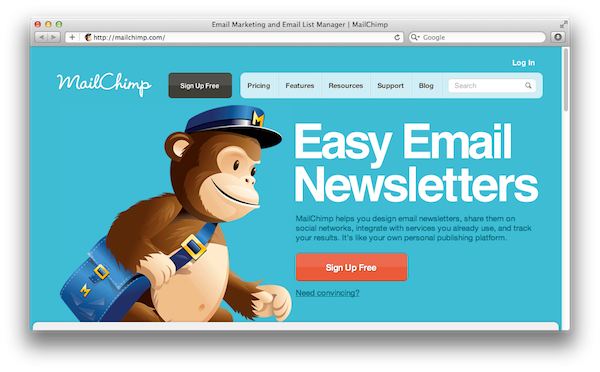
Over the last years, MailChimp has built an iconic brand with its design-centric approach and unconventional marketing campaigns.
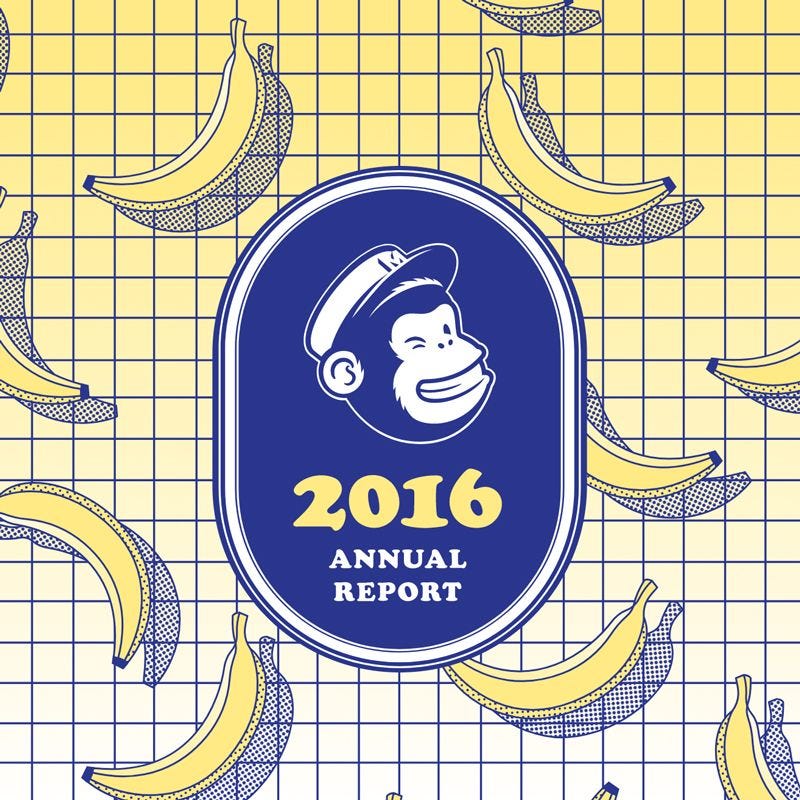
Monkey mascot billboards with no mention of their name … “MailKimp” and other name-teasing campaigns that reached 334 million people … design-centric annual reports that came with style …
MailChimp’s giveaways were unconventional, too. Free monkey hats for cats were delighting their superfans like me who were ready to pay more.


In a world where anyone can copy your product overnight, instead of knitting monkey hats for cats, MailChimp could very well have chosen to get into an arms race on building more features.
After all, the company was even receiving open letters and warnings from some big customers threatening to shift to the competition if they didn’t build more advanced features.
MailChimp’s answer?
Focus on building a brand customers love.
As we near the end of 2017, the email startup that never took a single dime in outside funding is preparing to close the year with a mind-blowing 15 million customers.
But enough with the monkey business.
Let’s look at the big picture to understand what this means for startups trying to succeed in today’s cluttered world:
- You don’t have to disrupt an entire industry: While many entrepreneurs are busy trying to build the next Uber or Facebook, this is a myth we need to dispel. MailChimp didn’t disrupt any industry, yet it managed to build its monkey empire in a market that was becoming increasingly crowded.
- If you aren’t disrupting or creating an entirely new market, you can still build an empire in a highly competitive space: And it involves growing superfans who religiously follow your movement and spread the word about you even if you charge premium prices or refuse to get into an arms race on building more features.
What is the secret, though?
How do you reach the masses and grow your fan club that enables you to play the game by your own rules, without worrying about the competition?
The options vary, but some of the world’s most successful startups use two powerful strategies:
First is obviously the “MailChimp way”, i.e., marketing your product like a high-quality brand. As their founder Ben Chestnut explains:
“We make apps for business customers, using low-priced parts, then we market the apps like a high-quality, design-centric, lovable B2C brand.”
But a growing breed of thriving startups uses an alternative strategy — one that doesn’t necessarily require a design-centric approach.
It requires influencing people’s thinking instead:
Don’t disrupt an industry, disrupt the thinking
As Mark Bonchek highlights in his widely popular Harvard essay:
“Companies that successfully market and sell innovation are able to shift how people think not only about their product, but about themselves, the market, and the world.
Don’t sell a product, sell a whole new way of thinking.”
Take Drift, one of the rising stars in the tech scene today.
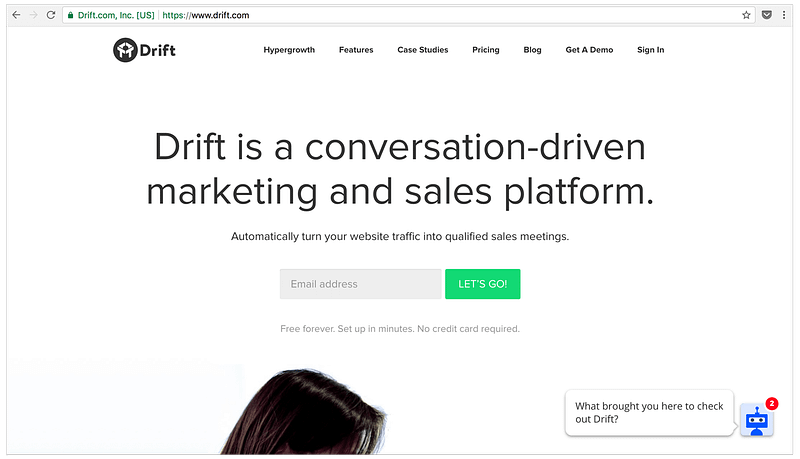
Instead of forcing their product down people’s throats, the “movers” like Drift sell the underlying shift in thinking, the original insight that led to their innovation.
In Drift’s case, the original insight that led to their product was the old, broken way of marketing and sales that still relied on website forms and annoying sales follow-ups.
Thats why, instead of hard selling or flooding their blog with product info, they talk about how today’s marketing and sales techniques are so yesterday, or why marketing automation and email marketing are broken.
“This is different than your value proposition. It’s an assumption (usually unconscious) about how the world works,” adds Bonchek.
The logic is easy to apply to any startup when you think of it as a template:
We champion [insert], and shift the way people think about [insert] to [insert].
For instance, Drift champions the new way of marketing and sales, and shifts the way people think about marketing and sales to be more conversation-driven, personalized, and human.
Two other iconic companies — Basecamp and Salesforce — are also leading the way in rethinking existing mental models.
- Basecamp’s founders grow their superfans by championing the “Un-Silicon Valley way” and shifting how people think about management, productivity, time, growth, or the way startups work.
- Salesforce champions the “no software” mantra and shifts the thinking from packaged, installed software to cloud computing and software-as-a-service.
Building an engine that shifts how people think
Changing people’s current mental model doesn’t happen overnight.
Rather, you will need a sustainable engine that shows people the new mental model in different contexts and situations, over and over again.
For example, even though Drift’s blog already reaches over +100K people per month, they unlock new channels that reach the audiences they wouldn’t reach otherwise via:
- Their annual “Hypergrowth” conference, dedicated entirely to discussing the future of marketing and sales;
- Their “Seeking Wisdom” podcast, where they spread their message through audio conversations.
Like Drift, Basecamp’s founders build a multi-channel engine that helps them reach new pockets of people through their best-selling books like ‘Rework’, their popular blog, and podcasts.
Building an engine to educate people on the new way of thinking isn’t reserved for startups, though.
Giant corporations like GE have already recognized the importance of what they call “mindshare before market share.”
GE’s CMO Beth Comstock explains why they heavily invest in their content engine:
“The really good innovations need to be explained before they’re accepted… It has meant becoming a content factory — telling stories across media and methods from data to videos to social media.”
The MailChimp way, the Drift way, or your way
From bloggers to startup founders, today’s makers share a growing concern:
“So much noise, so much competition.”
Spaces like SaaS are becoming increasingly competitive, where companies feel they are almost selling a commodity or that their product could be copied overnight.
That’s why, in today’s most cluttered marketplace in history, building a movement is more important than ever.
Build it the MailChimp way, the Drift way, or your way. No matter what route you take, there is one element that is consistent across businesses that distinguish themselves: being true to yourself.
As Basecamp’s founders note, pouring yourself into your product is a powerful way to stand out from the crowd:
“If you’re successful, people will try to copy what you do. But there’s a great way to protect yourself from copycats:
Make you part of your product or service. Inject what’s unique about the way you think into what you sell.
Pour yourself into your product and everything around your product too: how you sell it, how you support it, how you explain it, and how you deliver it.
Competitors can never copy the you in your product.”
For MailChimp, it means launching unconventional marketing campaigns that intentionally mispronounce their name:
“We believe the best way to build relationships with customers is to be yourself.
For us, that means having some fun with our name.”
For Drift, it means hosting an honest chat between their CMO and CEO. While the world is full of podcasts that pretend to look professional, Drift’s informal podcast style is one of the reasons that “Seeking Wisdom” has legions of loyal fans.
Being true to yourself is good for business.
Don’t build a startup, build a movement — right from day one.
And if you do it right, super fans like me might voluntarily spend their lunch breaks arguing on behalf of your awesome solution.
This post is part of a series of stories that explore the fundamentals of escaping competition and building a business on your own terms in the most cluttered marketplace in history.1. To build a business empire, own an opinion (not a marketing budget)
The goal is not to sell to everybody who needs what you have.2. How we got 11.3 million pageviews without the growth hacking bullsh*t
Growth begins with words.3. Don't build a startup, build a movement
How to move the masses by going beyond selling just software4. How to escape competition (and build a business on your own terms)
A practical framework to build your unique selling proposition5. Growing startups when the product sucks
Don’t hurt your company by focusing on growth too much, too soon.6. How to build a startup empire without selling your freedom
Small is the new big.7. Sell something bigger than your otherwise boring business
Don’t sell boats. Sell time on the water.8. Long-term thinking is most powerful when everything is falling apart
Lessons from founders who built their empires over the last decade9. I can’t tell you why our business is growing
Kill your conversion funnel.10. The consumer isn’t a moron
On having an obsession for growth before retention.11. The future of growing startups
Growth doesn’t happen overnight.