
Don’t Be Afraid To Say “No”
Is it fear of aggression or fear of hurting his feelings?

I think it’s time to write about learning to say “no.” I watched the Vice Presidential debate this week, a little shocked that Kamala Harris — and Joe Biden — had allowed the debate to proceed, given how likely it was that Pence had been exposed to COVID-19.
I couldn’t help but compare the debate set-up to what I’d seen in documentaries and new stories from Emergency Rooms and COVID-19 units, with doctors and nurses outfitted head to toe in hazmat suits (full PPE — Personal Protective Equipment), so contagious is the airborne virus. I started thinking about the complex psychology involved in the stupid decisions people seem to be making.
I’ll never forget the first time a client told me she agreed to have sex with her new boyfriend without protection. It was in the 1990s, there still wasn’t a widely known way to control HIV infection. Furthermore, we were just learning how widespread Hepatitis C was in the community. The guy wasn’t someone I’d consider risk-free, but he convinced her.
“I’ve been tested,” he told her, “I”m clean.”
Trying to convince me, she continued: “He was really sincere, I know him, he wouldn’t lie to me, I believe him.”
The guy was a 35-year-old man with a sketchy history, including an arrest for voyeurism. Therapists are supposed to appear somewhat neutral, but my hair stood on end and I didn’t hide it. If someone seems unable to be self-protective, that’s an issue. It’s important. As a therapist, I give advice, when someone has demonstrated a lack of self-protection. And if possible, I provide a personal illustration. I refuse to take actions that might be slippery.
I asked my client to explain it to me — why on earth did she think it was safe to have unprotected sex with anyone she’d only known briefly, no matter how instant the attraction had been. She hedged around, she squirmed. Finally, looking obviously uneasy, she said “Well I prefer it that way; it feels better.”
I knew she was lying. Whether or not a man is using a condom doesn't change anything for a woman.
So why was she unable to say “no.” Since my client was a fairly ethical person, I knew she didn’t like lying, it created an uneasy cognitive dissonance. So I concluded she’d convinced herself that she suffered — personally — if a man used a condom.
Understanding what happened to my ordinarily highly intelligent and ethical client might help me understand what’s happening in Washinton. Why? That’s the question. Knowing how dangerous COVID can be, why have these debates actually happened, why has the President been allowed to carry on, exposing probably 1000s of people, with the blessings of his physician and complete paralysis in everyone else around him.
For one thing, (an aside) — his so-called physician isn’t a medical doctor, he’s an osteopath and they have far scantier training than an MD who has been through the arduous program at a medical school. Some may have less training than I do, as a PhD in clinical psychology. Although someone’s training excuses nothing; education or lack of it fails to explain the promotion of misinformation.
Most American’s know how contagious COVID-19 is, especially when in the company of a “super-spreader.” Though being fed faulty information may be a source of someone’s failing to say “No” in most cases, more complex psychological reasons are well- worth reviewing.
Failure to say “No:” Fear of aggression/fear of hurting someone’s feelings
There are several other reasons a woman may find herself frozen and unable to say “no” to someone, and I’m going to assume the same psychological factors play a role in men as well as women.
People who fear a violent reaction from the person they want to say “no” to may remain silent. So threats of a tantrum may act as an inhibitor and we’ve all read and heard enough about the rages of our President to assume his Osteopathic doctor and those around him may have been silenced by fear of an aggressive outburst.
More subtle and less well-understood — and often unrecognized — is the fear of hurting someone’s feelings. This was the reason my client risked her health and safety. She was afraid to hurt her boyfriend’s feelings. Not because she feared an angry reaction — no.
She feared the moment she said “no” he’d look sad, dejected, pathetic. She was avoiding her own painfully guilty reaction. We endure the most outrageous insults and demands from people, for fear of the guilt we’d feel if we risked hurting their feelings.
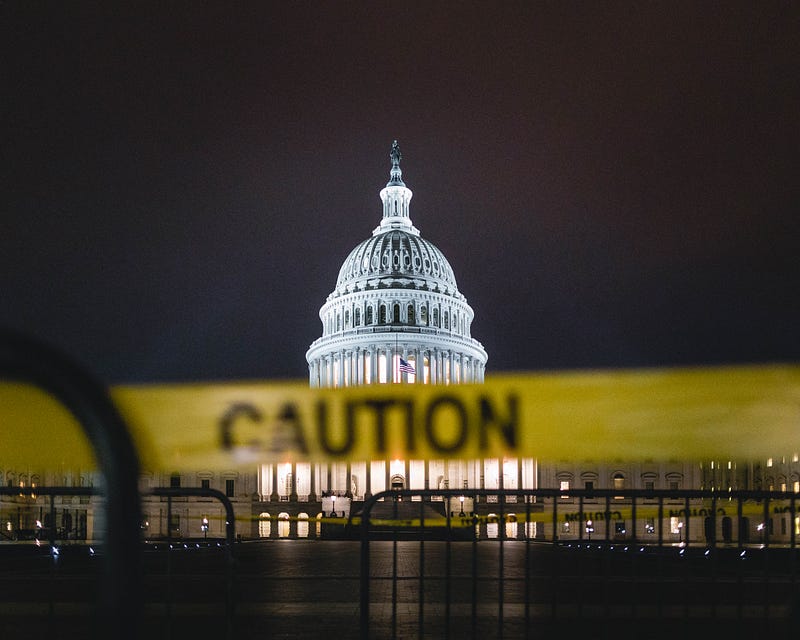
This is the likely dynamic behind Washington being afraid to say “NO” to an out-of-control President running around with COVID-19 infecting who knows how many people, jacked up on a powerful steroid. In fact, I’d go so far as to say in the middle of a psychotic episode as a side-effect to the steroid. Sure, the people around the White House fear an angry quasi violent outburst. But for many, it’s an inability to tolerate guilt that has them endorsing high-risk behavior from “the leader.”
I’ve been reading Michael Cohen’s book “Disloyal.” I’m learning a lot more about Donald Trump’s character. There is something deeply pathetic about his constant bragging and hyperbolic language. There is something pitiful about his need for constant attention, it illustrates an unusual weakness. When Trump gets personally seductive — and I don’t mean sexually seductive — most seem to be unable to resist him. The combination of male power — no matter how toxic — with profound weakness, seems irresistible.
Fear of saying “no” may lead to a particularly painful outcome — serious, potentially fatal illness is not an infrequent outcome. Learning to tolerate guilt without taking action to reduce it would make the need to say “no” a whole lot easier. May this be a lesson for all of us.
When you’re afraid to say no remember to ask yourself: “Am I afraid of this person’s aggression?” “Am I afraid to hurt this person’s feelings?” “Am I doing something stupid, or foolish, or even life-threatening, in order to avoid the anxiety I might have to endure when I feel guilty?” You can do it, don’t be afraid to say “no.”
Your life may depend upon it.


