
Don’t Be Afraid of Therapy
In response to Dancing Elephants prompt Relationship Column
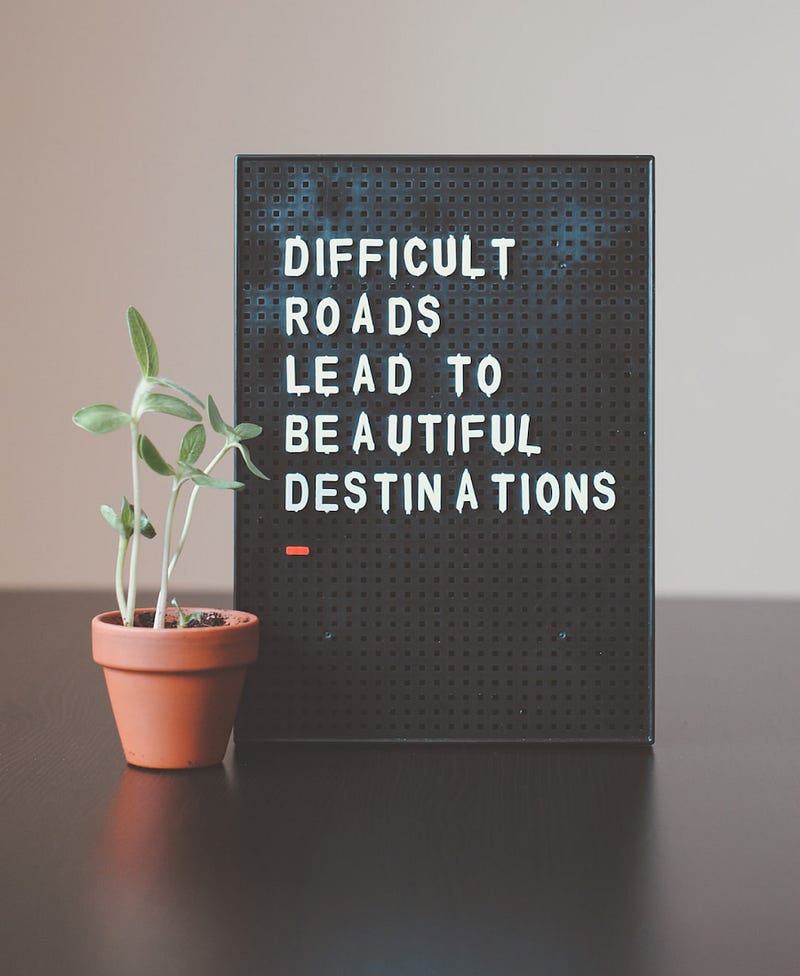
Before my wife and I married in 2017, we endured some very challenging periods, like all relationships.
We both brought different sets of baggage to the relationship from our childhood.
I grew up in a family where my mom weaponized my dad’s insecurities against him. She also never shied away from using her words to manipulate him to get her way or put him down. Her actions were this simple — if she were feeling hurt, she would make you feel hurt.
It was difficult for me not to model her pattern of behavior that I had witnessed my whole life and, subsequently, use the same tactics in my adulthood. The problem was, at that time, I wasn’t aware that I was doing it, one failed relationship after another.
My wife also dealt with difficult circumstances during her adolescence. Threats of her father’s eventual departure and reunification with his previous family were common, if not daily, threats from her mother were my wife’s childhood.
This, unfortunately, forever robbed her of any security with any romantic partner, so she was left with no choice other than to dance on eggshells in every relationship and constantly struggle with her abandonment issues.
So, you can imagine what happened when our two unique backgrounds collided.
By the time 2014 had rolled around, we had been a couple for six years and were living together in a home purchased in 2011. The home was in my name only since she had bad credit.
Since I grew up with parents who mishandled money (and trust me, I heard the fights daily), it made me anxious that she wasn’t on the mortgage because she could have technically left at any moment, and I would have been stuck with a house payment I couldn’t afford. I didn’t realize it at the time, but I was carrying a ton of resentment from it.
This was not the only crack forming in our relationship. By this point, we had become contemptuous roommates leaning more on codependency than authentic love.
I am not proud of this, but one of my go-to's in arguments was to tell her to leave and move out. It was a cowardly way to express the fact that I knew that the relationship was over since I had yet to learn how to approach such painful topics without blame or deflection respectfully.
One day, on our way to the store, we got into yet another argument, and I reverted back to the only way I knew how to fight and dropped an atomic bomb.
“That’s it. You need to pack up your stuff and get out,” I hollered from the driver’s seat.
This time, the atomic bomb telling her to “get out” detonated even harder than I had anticipated. Let’s face it: my mom taught me how to fight dirty. When someone makes you feel bad, you go for the jugular, and I did.
A full-blown argument erupted, with us yelling back and forth, which was normal for us; it was the only way we knew how to communicate. After all, it’s how our parents spoke to each other. When I say spoke, I mean yell because our parents yelled at each other more than they actually talked.
When the dust settled, she came to me later with tears pouring down her face and said, “You have to promise me you’ll never tell me to get out again.”
It was the first time I realized the impact of my words on her.
After the nasty fight, I knew something needed to change if we were going to make it as a couple. We loved each other; we just had no clue how to communicate effectively.
I was already seeing a therapist for my anxiety issues, so I asked my therapist if we could do a few couples counseling sessions, and she agreed, but she warned me that the sessions might actually show both of us how toxic we may be for each other.
As therapy went on, a lot of ugly things came out — honest, candid realizations and admissions. Slowly, vulnerability replaced the façade we both were throwing up as protection. We learned to replace excuses with accountability.
The counseling sessions were hard at first, but over time, we started to see tangible improvement in our relationship in several areas.
The beauty of therapy is to have someone who is an arbitrary third party with no emotional connection to the situation be able to sit back and objectively access the relationship while providing useful feedback. Our therapist served as a referee, so we were able to speak openly and honestly while she guided the conversation and managed the tension in the room.
She brought to light the negative patterns we were both modeling from our parents, and she used our destructive words and transformed our dialogue into constructive communication, with a focus on “I feel that…” and not the accusing tone of “You did…” This allowed us to stop bracing ourselves, preparing for another blow from each other’s words, and instead allow us to open ourselves to each other and trust that when we talked, we were doing so in order to help each other, not tear each other down.
At the time, I had no idea that my use of atomic bombs was because I was modeling that destructive, learned behavior from my mom. It wasn’t until the therapist brought it into my consciousness that I was able to fix it, and I’m proud to say that I’ve never said “get out” once to my wife since 2014, and I never will.
That phrase is not welcome in our relationship.
Our therapist taught me that it’s never productive to intentionally use language to hurt your partner just because you are feeling hurt. It’s even less productive to weaponize your partner’s insecurities against them, which I was clearly doing with her fear of abandonment.
My wife learned that due to my upbringing, money was a difficult subject for me, and she would have to communicate more about our finances. Being more transparent and open about spending would only ease my anxieties over money and bring more peace to our relationship.
The people that we were each becoming bore no resemblance to those abused, dejected people who started in therapy. We were more assured, more in love, and more patient with each other. We knew where we came from and never wanted to be those people again.
Don’t be afraid of therapy. I’m speaking to everyone, especially all of the macho men out there who view therapy as something only wimps go through.
Therapy is not a sign of weakness; it’s a sign of strength and takes work.
Sometimes, it is the catalyst we need to be able to take our destructive, hurtful patterns and transform them into meaningful, loving relationships.
The only way to improve is to be vulnerable and honest with yourself. Every human has unique challenges, and I’m proof that therapy can be life-changing if you’re willing to put in the work.
Sometimes you have to do what you don’t like to get where you want to be — Tori Amos
My wife and I have been together now for fifteen years and have been married for six of them. Without our counseling sessions, there was a zero percent chance our relationship would have lasted.
If you think you need help, don’t hesitate to try talking to someone. It could change your life like it did for me.
It is also important to know that therapy does not always lead to a path where you stay together, and that’s okay. What you will do is separate, knowing you tried everything you could, and in the process, emerge a stronger and more complete person, which is what personal growth is all about.
Please check out this inspirational piece by Yana Bostongirl about how she decided to use a toxic past relationship as fuel to transform her life into the one she’s always wanted:
Thank you, Libby Shively McAvoy, for allowing me to share my story and creating this Relationship prompt!


