avatar𝐂𝐡𝐫𝐢𝐬𝐭𝐨𝐩𝐡𝐞𝐫 𝐀𝐤𝐢𝐧𝐥𝐚𝐝𝐞

Free AI web copilot to create summaries, insights and extended knowledge, download it at here

3527

Abstract

ce we can make.”</p><p id="46b5" type="7">The true measure of a man is how he treats someone who can do him absolutely no good. ~ Samuel Johnson</p><figure id="b4b6"><img src="https://cdn-images-1.readmedium.com/v2/resize:fit:800/1*d4Lb3gGKYNA6CddTn2lmMg.jpeg"><figcaption>Screen shot of Bob Marley’s picture by <a href="https://www.instagram.com/p/Bw39NdYAJjp/?utm_source=ig_web_copy_link">Author</a></figcaption></figure><p id="7582">Dr Fritz Breithaupt author of <b><i>The Dark Side of Empathy</i></b> explained <a href="https://www.npr.org/sections/health-shots/2019/04/12/712682406/does-empathy-have-a-dark-side">how we can learn to use empathy in a somewhat controlled way</a>. We can learn when to block it, when to not allow our empathy be manipulated and when we are to fully turn it on.</p><p id="7c00">While pondering over this impasse I picked up Professor Adam Grant’s book, <b><i>Give and Take</i></b>. Fortuitously, <b><i>Give and Take</i> </b>was next on my reading list then. From him, I learned many lessons on how we can save ourselves from being burnt up or undone by our empathetic spirit.</p><h2 id="ab55">1. Couple your concern for others with a healthy dose of concern for self.</h2><p id="8c35">Instead of being selfless, be <i>otherish</i>. Being <i>otherish</i> in your empathy and giving enables you to think in more complex ways and identify win-win solutions that benefit you and those you empathize with. Being overly selfless in your empathy will make you miss such opportunities.</p><h2 id="9154">2. Trust but verify.</h2><p id="e1a8">Trust is one reason givers are so susceptible to the doormat effect. Because they are trustworthy, they see the best in everyone, so they operate on the mistaken assumption — everyone is trustworthy. Once empathizers see the value of “sincerity screening” and spot agreeable <i>takers</i> as potential fakers, they protect themselves by adjusting their behavior accordingly. Using these filters help you identify those who are only out to prey on your magnanimity. You can then apply caution without losing your humaneness.</p><h2 id="bc7c">3. Avoid the Empathy Trap</h2><p id="26b8">To avoid getting scammed or exploited, it’s critical to distinguish the genuine <b>givers</b> from the <b>takers</b> and <b>fakers</b>. If you are to be successful as a caring helper, you need to know who’s likely to manipulate you so you can protect yourself.</p><h2 id="15c9">4. Focus on what others are thinking.</h2><p id="246c">Don’t just focus on others’ feelings and emotions, zero in on what they are thinking. Doing otherwise expose you to the risk of giving away too much. By focussing on their thoughts and interests, you are more likely to satisfy them without forfeiting your own interests.</p><h2 id="057c">5. Avoid the doormat effect by being more assertive.</h2><p id="d24b">Some people fall into an unhealthy need for other people’s approval at all times. Such people, unconditionally say “Yes” even when “No” should have been the response that best protect their own interests while they carry others along. <b><i>In Assertiveness for Earth’s Angels</i></b>, author Doreen Virtue gave groundbreaking insights on how you can maintain inner peace and your caring nature without letting others use you as their doormat.</p><p id="036c" type="7">Every man must decide whether he will walk in the light of creative altruism or in the darkness of destructive selfishness. — Martin Luther King Jr.,</p><h2 id="374c">Takeaways</h2><p id="4024">Do not fall prey to t

Options

hose who are hunting for kind people to take advantage of. You avoid this pitfall by following these tips;</p><ul><li>Couple your concern for others with a healthy dose of concern for self.</li><li>Unconditionally trusting other people is risky. If your natural inclination is to trust other people, remember to always verify if others are worthy of your trust in them.</li><li>If you are not to be burnt out by your empathy, learn to identify those who are only out to take advantage of you and screen them out of your cycle of empathy.</li><li>Focus on what others are thinking and their interests instead of allowing their emotions and feelings to determine your own actions. This way, you can satisfy your concern for others, but not at the cost of your own interests.</li><li>Don’t be an unconditional, “yes person”. Avoid the doormat effect by learning to be more assertive in wholesome ways.</li></ul><h2 id="6e84">SOURCE</h2><ul><li><a href="https://youtu.be/Adgb_TK2WPo">Man Claims He’s A Child To Enter UK Borders</a></li><li>Copyright by ©<b>Adam Grant</b>, <i>Give and Take — A Revolutionary Approach to Success,</i> Viking Adult, 2013</li><li>Copyright by ©<b>Paul Bloom</b>, <i>Against Empathy: The Case for Rational Compassion,<b> </b></i>HarperCollins, 2017</li></ul><p id="5a14">I do not have any affiliate relationship with any of the authors or publishers mentioned in this review. <a href="https://is.gd/QK6hFw"><b>Connect with me here and share your insights</b></a>.</p><p id="1b2a">Thank you for reading. Check out my other stories below.</p><div id="9490" class="link-block"> <a href="https://baos.pub/to-trust-or-not-to-trust-68bfa8032f04"> <div> <div> <h2>To Trust or Not To Trust</h2> <div><h3>Protect yourself from the pernicious, the slippery and the untrustworthy. 6 rules for screening out the bad guys.</h3></div> <div><p>baos.pub</p></div> </div> <div> <div style="background-image: url(https://miro.readmedium.com/v2/resize:fit:320/1*5IJWinO7p_m8yFa--yVnsA.png)"></div> </div> </div> </a> </div><div id="39cf" class="link-block"> <a href="https://readmedium.com/heres-how-the-virtuous-can-win-against-the-vile-3ce7c6fc8521"> <div> <div> <h2>Here’s How the Virtuous Can Win Against the Vile</h2> <div><h3>Pavan Chaudary’s wisdom for winning and thriving in life’s battles</h3></div> <div><p>medium.com</p></div> </div> <div> <div style="background-image: url(https://miro.readmedium.com/v2/resize:fit:320/1*S17AlcJWdMHHKye8NmHoxw.jpeg)"></div> </div> </div> </a> </div><div id="2d5a" class="link-block"> <a href="https://readmedium.com/the-power-of-no-and-knowing-when-to-use-it-4d995e5682c4"> <div> <div> <h2>The Power of “No” and Knowing When to Use It</h2> <div><h3>These 5 lessons from Jana Kemp will help you know when to give in and when to hold your ground.</h3></div> <div><p>medium.com</p></div> </div> <div> <div style="background-image: url(https://miro.readmedium.com/v2/resize:fit:320/1*5FuSoZB8z-fAYdSMATCg3A.jpeg)"></div> </div> </div> </a> </div></article></body>

Don’t Be a Victim of Your Empathy

Escape the evil agendas of some of those you empathize with.

Photo by PNW Production from Pexels

Last year, the social media ran the infamous daring of a young man who played a fast move on a border police officer. He was attempting to enter the United Kingdom illegally by claiming to be an underage man seeking for asylum from a repressive government back in his home country.

Back at home, it was glaring to his watching fellow Nigerians that this young man was preying on the empathy of the UK Immigrations police officer. (This is not an incident I am not proud of as there is no justification whatever for telling lies to those who are trying to help you.) Towards the end of the video clip, while the officer went seek for clarifications or report to her superior officers, the illegal alien made his escape into the thick labyrinth of an undocumented mass of illegals in the UK. Often attributed to Aesop, in the fable of the Scorpion and the Frog, a scorpion wants to cross a river but cannot swim, so it asks a frog to carry it across. The frog hesitates, afraid that the scorpion might sting it, but the scorpion argues that if it did that, they would both drown. The frog considers this argument sensible and agrees to transport the scorpion. The frog lets the scorpion climb on its back and began to swim. Midway across the river, the scorpion stung the frog anyway, dooming them both. The dying frog asks the scorpion why it stung despite knowing the consequence, to which the scorpion replies: “I couldn’t help it. It’s in my nature.” What is the moral of this story? Some people cannot resist hurting you even while you are trying to help them. Hardly has the plague of COVID-19 subsided when its more deadly Delta mutation got unleashed. In the essay, The Surprising Downsides of Empathy, the BBC carried a story on how the Covid-19 pandemic has tested our ability to empathise with strangers. How then do you avoid the perils of mean-spirited people who have no scruples hurting you even while you are trying to help them? While laying no claims to being a guiding angel, this has become a personal conundrum. All the more so as people everywhere suspect do-gooders whether self-acclaimed or otherwise. It was then I realized that being good to others and the society often puts empathizers in undeserved harm’s way. Thinking about this almost move me to despair.

But, you are who you are, and you are unlikely to change overmuch — especially on the short term. Is there then no place for aspiring Good Samaritans anymore? The need for cautious empathy is so much necessary these days that author Paul Bloom posits that, for “both policy decisions and the choices we make in our everyday lives, limiting our impulse toward empathy is often the most compassionate choice we can make.”

The true measure of a man is how he treats someone who can do him absolutely no good. ~ Samuel Johnson
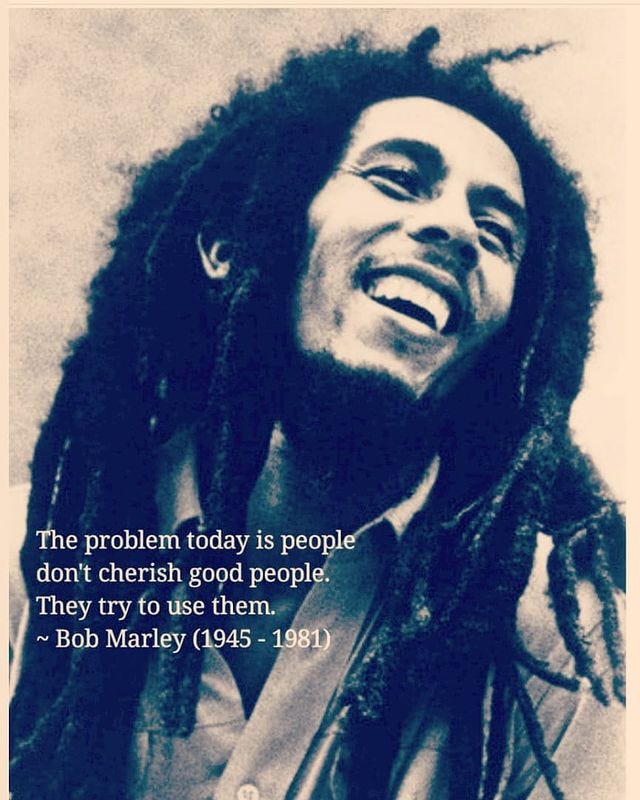
Screen shot of Bob Marley’s picture by Author

Dr Fritz Breithaupt author of The Dark Side of Empathy explained how we can learn to use empathy in a somewhat controlled way. We can learn when to block it, when to not allow our empathy be manipulated and when we are to fully turn it on.

While pondering over this impasse I picked up Professor Adam Grant’s book, Give and Take. Fortuitously, Give and Take was next on my reading list then. From him, I learned many lessons on how we can save ourselves from being burnt up or undone by our empathetic spirit.

1. Couple your concern for others with a healthy dose of concern for self.

Instead of being selfless, be otherish. Being otherish in your empathy and giving enables you to think in more complex ways and identify win-win solutions that benefit you and those you empathize with. Being overly selfless in your empathy will make you miss such opportunities.

2. Trust but verify.

Trust is one reason givers are so susceptible to the doormat effect. Because they are trustworthy, they see the best in everyone, so they operate on the mistaken assumption — everyone is trustworthy. Once empathizers see the value of “sincerity screening” and spot agreeable takers as potential fakers, they protect themselves by adjusting their behavior accordingly. Using these filters help you identify those who are only out to prey on your magnanimity. You can then apply caution without losing your humaneness.

3. Avoid the Empathy Trap

To avoid getting scammed or exploited, it’s critical to distinguish the genuine givers from the takers and fakers. If you are to be successful as a caring helper, you need to know who’s likely to manipulate you so you can protect yourself.

4. Focus on what others are thinking.

Don’t just focus on others’ feelings and emotions, zero in on what they are thinking. Doing otherwise expose you to the risk of giving away too much. By focussing on their thoughts and interests, you are more likely to satisfy them without forfeiting your own interests.

5. Avoid the doormat effect by being more assertive.

Some people fall into an unhealthy need for other people’s approval at all times. Such people, unconditionally say “Yes” even when “No” should have been the response that best protect their own interests while they carry others along. In Assertiveness for Earth’s Angels, author Doreen Virtue gave groundbreaking insights on how you can maintain inner peace and your caring nature without letting others use you as their doormat.

Every man must decide whether he will walk in the light of creative altruism or in the darkness of destructive selfishness. — Martin Luther King Jr.,

Takeaways

Do not fall prey to those who are hunting for kind people to take advantage of. You avoid this pitfall by following these tips;

  • Couple your concern for others with a healthy dose of concern for self.
  • Unconditionally trusting other people is risky. If your natural inclination is to trust other people, remember to always verify if others are worthy of your trust in them.
  • If you are not to be burnt out by your empathy, learn to identify those who are only out to take advantage of you and screen them out of your cycle of empathy.
  • Focus on what others are thinking and their interests instead of allowing their emotions and feelings to determine your own actions. This way, you can satisfy your concern for others, but not at the cost of your own interests.
  • Don’t be an unconditional, “yes person”. Avoid the doormat effect by learning to be more assertive in wholesome ways.

SOURCE

  • Man Claims He’s A Child To Enter UK Borders
  • Copyright by ©Adam Grant, Give and Take — A Revolutionary Approach to Success, Viking Adult, 2013
  • Copyright by ©Paul Bloom, Against Empathy: The Case for Rational Compassion, HarperCollins, 2017

I do not have any affiliate relationship with any of the authors or publishers mentioned in this review. Connect with me here and share your insights.

Thank you for reading. Check out my other stories below.

Relationships
Humanity First
Book Review
Growth Mindset
People
Recommended from ReadMedium