
Don’t Assume One’s Ability
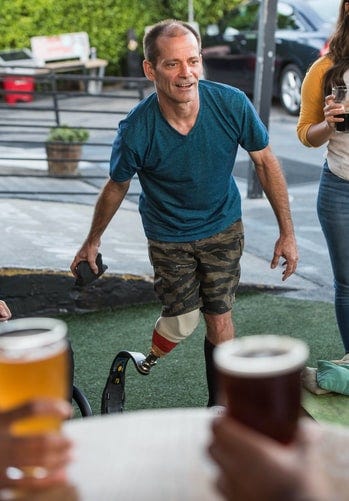
So I was scrolling my Facebook and came across a story about a woman in Australia who decided to confront a man about his ability. According to the man, she came up to him before he exited his car and asked if his disability card belonged to him. He later confronted her and told her he has one leg, and a prosthetic leg, something that clearly would not have been noticed because he was in his car when she decided to question him.
When he decides to confront her and tell her he has one leg, she explains that she desperately needs a disability card and that “ there have been times when….” and then he cuts her off. I imagine she was going to say there have been times where she needed a disability parking spot but wasn’t able to use one because someone, perhaps one who wasn’t disabled was using what she needed.
He asks her why she felt the need to question him. She responds by saying she had a right to question his ability or lack thereof.
What this woman displayed was ableism.
Ableism is the discrimination of and social prejudice against people with disabilities based on the belief that typical abilities are superior. At its heart, ableism is rooted in the assumption that disabled people require ‘fixing’ and defines people by their disability. Like racism and sexism, ableism classifies entire groups of people as ‘less than,’ and includes harmful stereotypes, misconceptions, and generalizations of people with disabilities.
She displayed ableism by prejudging his ability or lack thereof. She displayed her entitlement, bias, and misconception of what a person with a disability does or doesn’t look like and decided to question him.
“Categorization is a universal function of the brain that allows us to organize and manage the overload of stimuli that constantly bombard us. It’s a system that brings coherence to a chaotic world; it helps our brains make judgments more quickly and efficiently by instinctively relying on patterns that seem predictable”. ~Eberhardt, Jennifer L.. Biased (p. 24)
Jennifer also says “once we’ve decided on the category, our perceptual reality adjusts to suit the label we’ve settled on.”. People and society categorize people with disabilities and adjust their perceptions of those people to suit their label of such people. Unfortunately, people often have prejudice and assume that disabilities are visible. This is not true, because there are many disabilities that aren’t as visually obvious such as someone who is visually or audibly impaired, autistic, or has a prosthetic leg, such as the man I’m discussing. Furthermore, it’s also prejudicial to assume what one can or can’t do due to their abilities or disabilities. Disabilities aren’t experienced the same with each person, what one can do with a specific disability doesn’t mean another person with the same disability can do the same. Lastly, one’s disability can also fluctuate, what one person can do today, they might not be able to do it the next.
Her assumption of his abilities is harmful to him, and it is harmful to other people with disabilities. It’s demeaning and embarrassing to question one’s ability. Also our dangerous prejudgments of what a visually disabled person looks like can lead to systemic and social discrimination as well. It can lead to people being denied accomodating services in the medical and or educational system, and in the workplace. This woman verbally addressed him, but this could have been a situation in which she could have physically attacked him because of her own biased assumption that he was not disabled, something that would not be out of the ordinary, as a visually impaired man was physically attacked for asking a person to vacate a seat on the bus so he can sit.
We need to not question what’s wrong with people with disabilities, as many do, but rather what’s wrong with society, and why haven’t we learned to make our world more accessible to them.
What can we do to recognize and avert ableism?
Here is a list mentioned in access living
- Believe people when they disclose a disability
- Similarly, don’t accuse people of ‘faking’ their disability
- Listen to people when they request an accommodation
- Don’t assume you know what someone needs
- Never touch a person with a disability or their mobility equipment without consent
- Keep invasive questions to yourself
- Don’t speak on behalf of someone with a disability unless they explicitly ask you to
- Talk about disability with children and young people
- Incorporate accessibility into your event planning
- Learn more about being a good disability ally
I think educating ourselves and children is one of the most important ways to recognize and rid of ableism. When we know better we do better. Many forms of isms happen because of ignorance. We must become less ignorant about ableism and people with disabilities.
It’s also essential for us to demand that more accurate representation of people with disabilities is shown in media. Because media influences our perceptions of those who are different from us, especially if we don’t have a lot of exposure to them in our daily lives.
I want to end with the emphasis on Intent over Impact. Her intentions to question him might not have been of ill intent, but her impact was harmful, so we must acknowledge and value our impacts more than our intent.


