
Don’t Ask Me To Work For Your Company Without Telling Me How Much I’m Being Paid
The sunk cost fallacy is dying.

LinkedIn recruiters are at it again.
I got a message the other day asking me to come and check out this vacancy for a particular company. She sold it to me well in the message, so I clicked on the link to read the JDPS for the job.
To my horror, I couldn’t see the salary on the job advertisement or in the JDPS.
I know it’s typical of companies to do this, so I asked the recruiter for the salary and she sent me the following message:
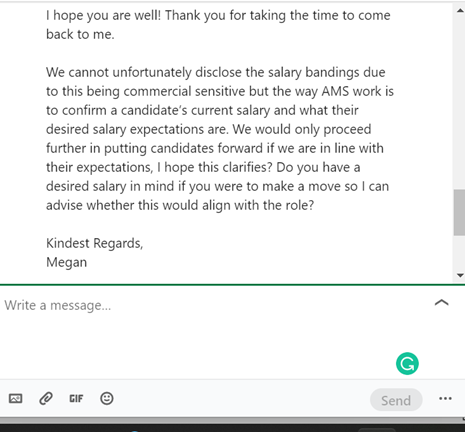
Well Megan, guess who’s no longer interested? Why are you willing to listen to my desired salary, but you can’t just tell me the starting salary? Seems to me as though this would be an organisation where everyone is paid differently due to experience (and gender).
When it comes to looking for a new job, people are messing around anymore. Do you want to go through two or three interview rounds, maybe even an assessment, to find out the salary at the end is the same or even lower than what you’re getting paid now?
Didn’t think so.
Do you want to get your hopes up and believe there’s a positive career change on the horizon that you can put all your experience and your skills towards, for them to exploit you even after all you’ve demonstrated to them so far?
Didn’t think so.
What is also annoying, is looking at job adverts that don’t advertise the salary or just label the salary as ‘competitive’. Who am I competing against? Myself? In which case, surely I’ll be being paid more?
What is the big deal behind hiding the salary? You’ll have less people wasting your time when they apply because they would be wanting to do the role and be accepting of the salary.
“In traditional corporate environments, the salary is often hidden because it’s a game of cat and mouse trying to figure out what salary the candidate is currently on, what they’re expecting, and what the company is willing to pay.” — BBC
We’re being exploited by the second. I’m not surprised at all. After The Great Resignation and other corporate shenanigans, you would think companies would be a bit more courteous now.
“Employers who refuse to be more transparent about pay seem confident that they can rope in potential employees based not on the merits of the job, but based on employees feeling that it’s a sunk cost — they’ve already dedicated so much time and energy into interviewing for this job, and looking for another job will just mean repeating the cycle again, so they might as well accept whatever they can get.” — Refinery29
Let me tell you now, times have changed and the sunk cost fallacy is dying. People don’t care how much effort they’ve invested anymore, if you’re not paying us the right amount or they’re not getting the right outcome, they will be searching elsewhere until it’s right. Folks are recognising their worth more and more as time goes on.
With this new self-love and self-recognition combined with the rise of bills and life in general, you better be honest about how much your employees are about to be paid.
Any company that isn’t transparent about the pay, I won’t be applying. You won’t be wasting my time today!
Your membership fee directly supports Shamar M and other writers you read. You’ll also get full access to all stories and all features on Medium alongside being eligible for the paid Partner Programe.


