
Donald J. Trump: |“Political Theatre Unveiled: The Intricacies of Allegations Against Donald J. Trump”
Abstract
In the midst of heightened political polarization, the allegations against former President Donald J. Trump have ignited a fervent debate, unveiling a complex interplay between partisan politics and legal proceedings. This exploration delves into the multifaceted dynamics surrounding the allegations, highlighting the paradoxical nature of the Republican Party’s responses and the broader implications for the American political landscape.
Amidst allegations where the majority of witnesses and cooperation individuals hail from the Republican camp, a key question arises: Can a bipartisan legal process be upheld amid intense political fervor? Despite this, the GOP frequently pivots to casting blame on the Democratic Party, raising concerns about the integrity of the justice system and sowing seeds of doubt in the minds of citizens.
The interjection of partisan finger-pointing serves to exacerbate divisions, casting doubt on the separation between legal proceedings and political motivations. By examining the intricate implications of these accusations, this analysis underscores the necessity of holding public officials accountable across party lines, while also raising questions about the erosion of equal justice under the law.
As media narratives perpetuate sensationalism and spotlight political drama, the intricate legal details often fade into the background. This abstract considers the potential consequences of media’s role in shaping public perceptions and its impact on the broader discourse surrounding the allegations.
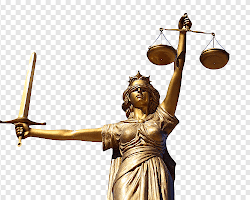
The image of a courtroom with a judge holding a balance scale, weighed down on one side by Republican elephants and on the other by Democratic donkeys, epitomizes the struggle between political interests and the pursuit of justice in the context of allegations against Donald J. Trump.
In a socio-political landscape fraught with division, the allegations against Trump emerge as a compelling case study. This analysis aims to unravel the complexities of these allegations, illuminating the intricate threads that weave together political theater and the pursuit of truth within the American democratic framework.

Content
In recent times, allegations against former President Donald J. Trump have ignited a fierce debate, highlighting the complex interplay between partisan politics and legal proceedings. The perceived contradictions and finger-pointing tactics that have emerged raise important questions about the role of the GOP, the Democratic Party, and the broader implications for the American political landscape.
1. Witness Dynamics
Allegation: The majority of witnesses and cooperation individuals involved in the indictments against Trump are Republicans.
Consequence: This raises questions about the bipartisan nature of the investigation and underscores the non-partisan nature of the legal system.
Contradiction: Despite this fact, the GOP frequently attempts to shift the focus onto the Democrats, suggesting a political bias in the accusations.
2. Partisan Finger-Pointing
Allegation: The Republican Party claims that Democrats are orchestrating a witch hunt against Trump.
Consequence: This narrative fuels polarization and distrust in the legal process, potentially weakening public confidence in the justice system.
Contradiction: The accusations are being pursued by legal professionals within the judiciary, many of whom have affiliations with the Republican Party, suggesting a separation between the legal and political realms.
3. Implications for Democracy
Allegation: Trump’s alleged crimes have sparked a broader debate about accountability and the limits of executive power.
Consequence: The allegations underscore the importance of holding public officials accountable regardless of party affiliation, which is essential for a healthy democracy.
Contradiction: Accusations of political bias undermine the concept of equal justice under the law, threatening the foundational principles of the United States.
4. Media Influence
Allegation: Media coverage often highlights the political drama and sensational aspects of the allegations.
Consequence: This can overshadow the legal intricacies and nuances, potentially leading to misinformed public opinions.
Contradiction: Media narratives can amplify partisan divisions and sensationalize the allegations, obscuring the legal aspects of the case.
In a climate of intense political polarization, the allegations against Donald J. Trump serve as a striking reminder of the challenges that arise when partisan interests intersect with legal processes. Navigating this intricate web of consequences and contradictions is essential for a society that seeks to uphold the rule of law while respecting the principles of democracy.
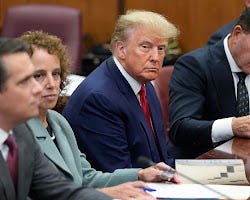
Summary of the Indictments Against Donald J. Trump
In the annals of American political history, few figures have elicited as polarized a response as former President Donald J. Trump. From his controversial policies to his unorthodox communication style, his tenure in the White House was marked by both fervent support and vehement opposition. However, it is the post-presidential era that has thrust him into a different kind of spotlight — one characterized by allegations of wrongdoing and legal battles that seem to blur the line between partisan politics and the pursuit of justice. The saga that unfolds in the wake of his presidency reveals a complex web of consequences and contradictions, as the GOP points fingers at the Democrats for what can only be described as a political theatre of unprecedented proportions.
At the heart of this theatre lies the intricate nature of the allegations themselves. It is striking to note that the majority of witnesses and cooperation individuals implicated in the indictments against Trump belong to the Republican camp. This raises fundamental questions about the notion of bipartisan cooperation within the realm of the legal process. Can a system that is deeply entrenched in political divisions truly transcend those lines when it comes to seeking truth and accountability? The implications are profound, suggesting either an earnest commitment to justice across party lines or a mere façade of bipartisanship.
However, the paradox emerges when one considers the response of the Republican Party itself. In a seemingly contradictory twist, the GOP often chooses to shift the blame onto the Democratic Party, characterizing the allegations as nothing short of a politically motivated witch hunt. This narrative, though not without precedent in the realm of American politics, carries significant consequences. By casting doubt on the integrity of the investigation, it fosters an atmosphere of skepticism among the public, leading to a decreased trust in the institutions responsible for upholding justice. The very party that provides the majority of witnesses now stands as both defender and accuser in a complex game of political chess.
The apparent conflict between these two facets — the Republican witnesses and the GOP’s finger-pointing at Democrats — captures the essence of a political theatre that unfolds in plain view. The juxtaposition between the legal process and partisan agendas becomes an emblematic representation of the challenges faced by a democracy striving to maintain a delicate equilibrium between political discourse and the pursuit of accountability.
The consequences of this political theatre extend beyond mere theatrics, bleeding into the very heart of democratic governance. The allegations against Trump transcend individual culpability to underscore the fundamental principle that no one, regardless of party affiliation, is above the law. The very essence of a democracy rests on the belief that accountability is universal, and the rule of law is applied impartially. The paradox of the situation lies in the contradiction between this foundational principle and the political motivations that seek to undermine it. The allegations against a former president highlight the need to decouple political expediency from legal proceedings, lest the integrity of the judicial system be compromised.
A further layer to this intricate tapestry is the media’s role in shaping public perception. Media narratives, often driven by sensationalism and drama, have the power to mold the collective understanding of the allegations. However, the nuances and intricacies of the legal details risk being overshadowed by the allure of political intrigue. Consequently, the public discourse becomes laden with soundbites, oversimplifications, and polarizing rhetoric. The media’s role in this theatre of allegations cannot be understated, as it contributes to both the exacerbation of divisions and the distortion of reality, potentially hindering a balanced and informed understanding of the situation.
The metaphor of a courtroom, with a judge holding a balance scale laden on one side by Republican elephants and on the other by Democratic donkeys, serves as a poignant visual representation of the struggle between political interests and the pursuit of justice. The scales of justice are meant to be balanced, free from external influences, and reflective of the truth. However, when the weight of partisan agendas and the theatrics of political warfare come into play, the equilibrium becomes tenuous, threatening the very foundation upon which a just society is built.
In conclusion, the allegations against Donald J. Trump reveal a complex and multifaceted situation that transcends the realm of partisan politics. The involvement of Republican witnesses raises questions about the nature of bipartisan cooperation within the legal process, while the GOP’s finger-pointing at Democrats highlights the intricacies of political theatre in a democracy. The consequences of these allegations extend beyond the individual, underscoring the essential principle of accountability for all, regardless of party affiliation. The media’s role adds another layer of complexity, as sensational narratives can cloud the nuanced legal details. As the drama unfolds, the metaphorical courtroom scale oscillates, reminding us of the delicate balance between political theater and the pursuit of truth and justice. The nation watches, torn between the spectacle and the underlying principles that define its democratic fabric.