“Dolemite is My Name”: Our Culture’s Obsession with Celebrities
DISCLAIMER: This article contains spoilers to the film.
“Dolemite is my name, and fucking up motherfuckers is my game.”
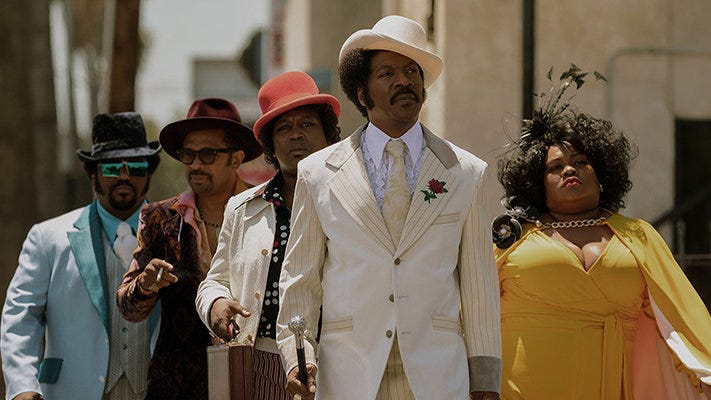
Eddie Murphy in the Craig Brewer-directed “Dolemite is My Name” slays as the scintillating, storytelling, and goofy stand-up comedian Rudy Ray Moore. I mean it; he slays with spice, sugar and honey all wrapped up in between.
Born in Arkansas to a poor sharecropping family, and raised by a neglectful father, Moore heads out west, trying to live his dreams and make something of himself.
The film tracks his rise to fandom and popularity, the good as the bad as he starts out working behind the cash register of a record store. The opening scene shows Moore trying to convince Snoop Dogg’s character (Roj) to play his music over the radio, failing to do so.
What eventually does work is cultivating an alter ego called “Dolemite” off the back of jokes he heard from a homeless junkie.
After settling for junkyard shift after junkyard shift at the local nightclub he works at, one night, he performs for the first time as “Dolemite”, as achieves the big break he is looking for.
Things that take off for him, and his eclectic crew (Craig Robinson, Mike Epps, Keegan Michael-Key, Titus Burgess, Wesley Snipes).
Dolemite’s clout skyrockets through the roof. He records a live comedy album titled “Eat Out More Often” (with a boundary-pushing cover) and he gets gigs all throughout cities in the country. In Mississippi, he meets Lady Reed (Da’Vine Joy Randolph), who catches her husband with his young “side piece.” They talk, and he convinces to join him on his tour and becomes his right-hand lady.
From there on out, Dolemite does more stand-up before embarking on the biggest risk he’s ever taken on his life: producing a feature film, based on his own life.
His label doesn’t fully believe himself. In America in the 70s, mainstream audiences still only could tolerate art that contains black people/minorities in certain contexts. Plus “Dolemite” nor his crew know anything about making movies.
Nonetheless, his label begrudgingly loans him all the money he needs, and the film is made in a renovated building, near the record store that was home to all the local junkies and homeless in the area.
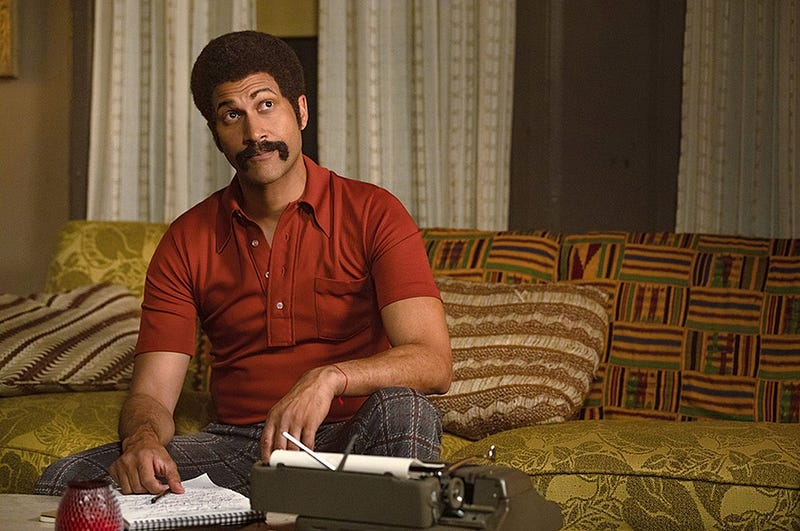
Some film students from UCLA are hired. Key’s Jerry Jones writes the script, and Wesley Snipes directs with detached passion.
It takes a boat-load of effort and luck to move heaven and mountains for Rudy’s movie to finally get seen and noticed.
Even with negative reviews, Rudy makes it to the big leagues in the end. He proved that he was meant to be more than what his father could ever imagine.
Cult of Celebrity
This film, available on Netflix, got me thinking about the “cult of celebrity” and how the average person gets memorized by the glamor such a decadent life unfolds.
We all need role models and mentors, especially if we want to attain success in one line of work or another, but the need for such is easily taken far over the cliff.
We all need a Ubermenschen to aspire towards. That’s why organized religion has had endless appeal throughout millennia, even when God doesn’t give clear answers. It gives the masses an “opiate” to derive hope from, and to seek out enlightenment and fulfillment.
Every culture has to produce myths, folklore and legends that capture the spirit of it’s traditions, norms and morals. The Mongols under the leadership of the notorious Genghis Khan had Father Sky and Mother Earth.
Every people have to weave a tapestry that gives their culture body and character.
To light a fire in the hearts of its youth, captivating them in amazement, giving them a reference point to work off of to build a brighter tomorrow.
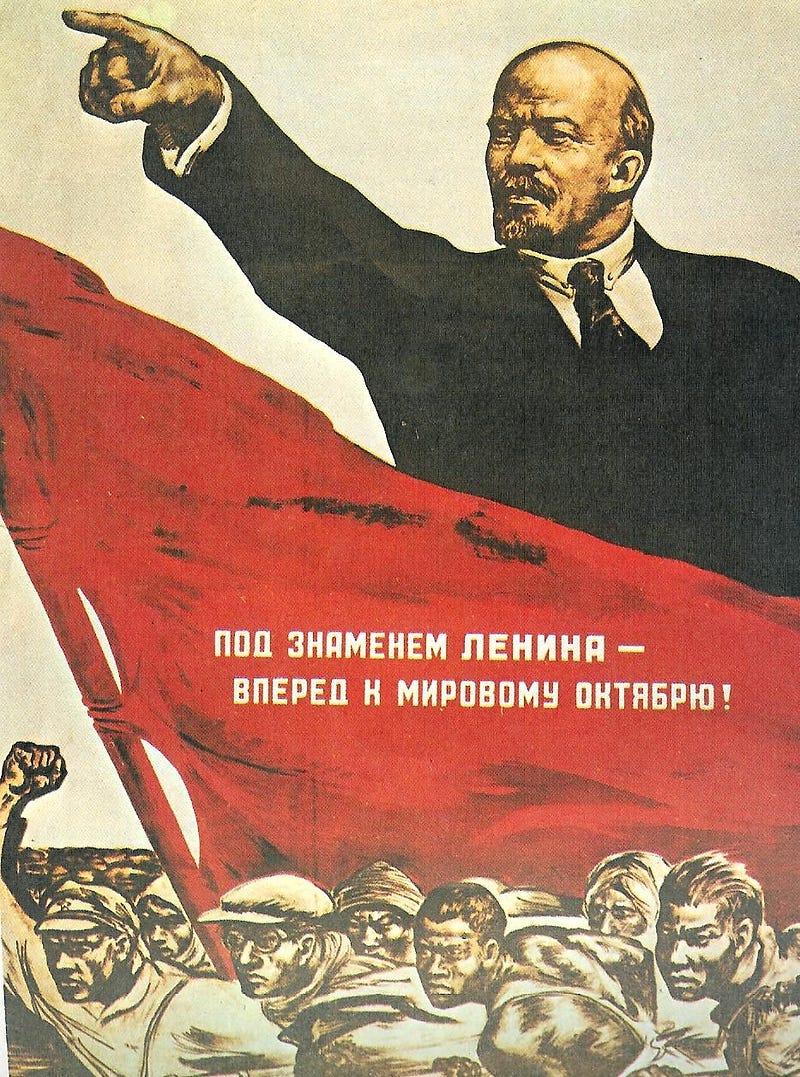
The globalization of pop culture has revealed more than anything how people will pour hours of attention, spend their money and devote their resources and love to people who’ve gotten to a specific level of status.
It doesn’t matter if said figure, whether a politician, athlete or artist is actually putting on an act, and is not the esteemed, “legitimate” and accomplished individual the media portrays them out to be. Look at the headlines written in magazines like Rolling Stone when people were exposed to the insanity of Charles Mansion.
In modern times, social media has given the bottom 70% on the social hierarchy (to some extent, the term “middle class” can be used) free, unlimited access to interact with individuals that lived more successful lives than they do.
In the scene where Rudy first meets Lady Reed, he persuades her to hit the stage again, and sing by revealing his cards. Rudy admits that Dolemite is just an act; he doesn’t have a whole rotation of subservient, attractive beauties at his disposal. He ain’t a pimp, and was never meant to be:
“It’s all pretend. It’s magic! You put on a cape and turn into a fuckin’ superhero! You go on the stage and leave your old self behind”
Social media has planted that malnourished hope into the hearts of many. The hearts of those whose attention is scattershot, and robbed by these same platforms.
The executives at Twitter, Facebook, Snapchat, Instagram, etc have a impeccable grasp on the ins and outs of psychology like any marketing professional does. They know the lure of their apps are built upon tapping into and feeding people’s insecurities and desires; transmuting the former into the latter.
When any user goes onto a livestream of their favorite influencer, they automatically feel like they’re making progress with themselves, and goals they’ve set for their lives. The influencer can announce they’re giving away money, or spout some washed-up, recycled inspirational bullshit, and all his followers watching him or her will get the illusionary impression that they won the lottery, ten times over.
It’s the equivalent of reading ten books, and applying none of the knowledge contained in any of them in any meaningful way. To borrow a phrase I saw on Twitter from an influencer ironically himself, all that amounts to “active inaction.” It doesn’t even equate to “two steps forward, one step back.”
It’s the age-old story repeating itself that everyone wants fame and success and acclaim; most people also have no problem taking shortcuts to get there.
Everyone wants their 15 minutes of fame, like the famous artist Andy Warhol predicted.
If that doesn’t work, then living through your idol will count as self-best. Like a parent forcing their kid to be in the occupation they’re in or to continue the family trade, someone losing their sense of individuality unfortunately always serves someone else’s benefit.
As GaryVee points out, every moment that you use to focus and harp about what someone else has, that’s a moment gone that you could’ve taken advantage of to make moves and improve your current situation.
That’s a moment gone that could’ve gotten you one step closer to living life on your own terms, living limitless.
It’s not that people don’t know what to do. That excuse isn’t plausible in the age of being able to educate one’s self on any topic through books at the library, YouTube videos, online courses, seminars, etc.
They are searching and hunting down, on the inside and outside, the motivation and willpower to do so. Motivation and willpower are wrapped in a bundle with discipline, that of which many have never mastered, or haven’t been taught how to master.
This is why books like 12 Rules for Life, Think and Grow Rich and The Subtle Art of Not Giving A F*ck will never run out of copies to sell. The self-help industry is an industry that thrives off of people’s ineptitude to lead themselves, think for themselves and welcome struggle. It’s all need to be synthesized, catalyzed, and boiled down into some pill-shaped solution.

What will it take for social media users to look behind the veneer of the Photoshopped pictures that they like without any urgent second thought, and realize that many of the musicians and filmmakers and athletes they admire and are fiercely devoted to can be, and often are bereft of moral courage and moral sanctity. They are deplorable, lazy, conniving, cynical, nihilistic. They bounce around between the whole rainbow circle of emotions.
Look at Kurt Cobain. Look at River Phoenix. Michael Jackson. Prince. Amy Winehouse. Mac Miller. Phillip Seymour-Hoffman. Even the guys from Glee.
Being someone that everyone looks up puts you in the position of Atlas, humbled to one knee, struggling to balance the weight of the world and making it seem like running on ice.
It's not a burden everyone is capable of handling. But fame is a commodity, the price for which has a high bounty on its head.
At the end of Dolemite is My Name, at a screening of his “autobiographical” film that’s finally showing in, instead of going in and seeing himself on the big screen, Rudy decides to stay outside with the large crowd of folks that came out to see the film and support him. He chose to do his job, and be an entertainer (and in a typical scene for a Hollywood film, he hands over his tasteful custom walking stick to a young black boy, aspiring to be badass like him.)
He chose to give the people what they want. What do they want? A show. Magic. A spectacle. To believe that life is larger in scale, as large as the Milky Way Galaxy. To be entertained, swept on their feet and patted on the back.
Celebrities are often perceived as immortal; their work, their art, the words they prophetically utter. The legacy they leave has an clobbering impact that feels like it could last the span of eternity.
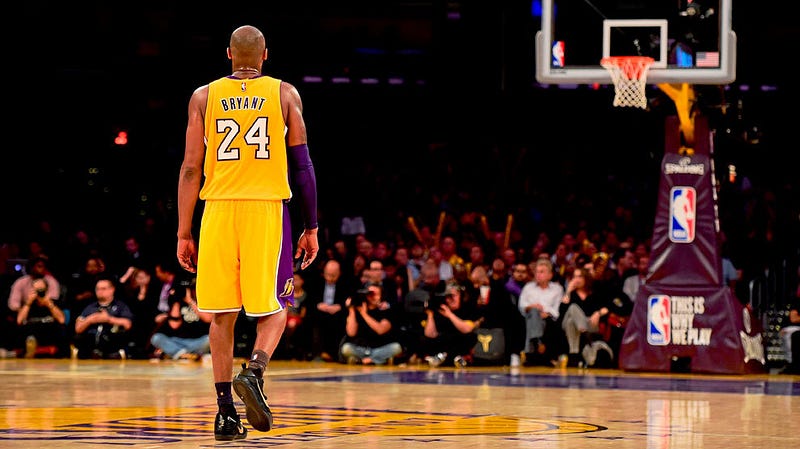
Case in point, the abrupt and tragic death of Kobe Bryant, one of the greatest basketball players of all time falls into that category squeaky clean. Even with sexual assault allegations tainting his legacy at one point, Mr. Bryant inspired a generation of people to say his name whenever they shoot rolled-up paper into a trash bin.
Kobe Bryant’s exit off this Earth to a degree is different from most other celebrity deaths in the last couple of years. It wasn’t the end of an era, but a void still opened up. The fact that one of his daughters had to suffer the same fate only blackens it.
So yes, Kobe didn’t created “high art” or pushed culture forward in a traditional sense, but if we limit our expectations of greatness based upon whether or not it fits within tradition, culture won’t progress forward at all.
He earned the admiration of his peers, young and old. His relationship with the “King”, Lebron James is an example of the master-student dynamic producing such an earnest sense of fraternity that everyone should try to replicate. He is respected by many ordinary folks inside and outside of the NBA.
On the death of his day, moments of silence and special tributes were held during all games. There is video footage of many greats, like Doc Rivers, Kareem Abdul-Jabbar and Stephen A. Smith remembering the Black Mamba and saying a heartfelt goodbye.
During the Raptors-Spurs game, both teams intentionally let the shot clock run down to zero during their respective possessions to pay their respects.
Everyone I saw on social media being positive did the same. They took their personal biases and feelings out of the equation, and gave Kobe a send-off that won’t be forgotten.
The world lost a legend. Heroes die, but legends live forever.
I’m not going to say that this is a wake-up call for the younger generations to “step up.” This is a wake-up call to become introduced to much more profound lessons.
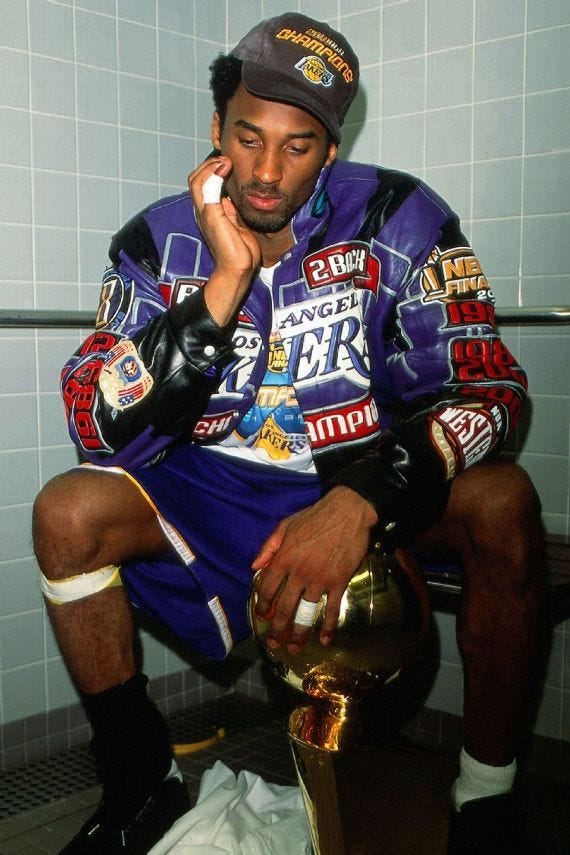
Death is the greatest equalizer, helicopter crash or not. It’s indifferent ofcourse. It doesn’t matter (or care) if you were having self-esteem issues, and was chasing for approval in a ghost town of followers, whether they liked your photo or not didn’t matter. You may have touched a million hearts and impacted their worldview or not, you may have millions of fans in the crowd and fans elsewhere singing your praises. The grave, much like the colloquial “wall” is undefeated.
For the Instagram influencer, the applause isn’t eternal, nor real. It will never be good enough. For a legend like Kobe Bryant, he will get remembered in the Hall of Fame, and the Hall of Life.
Our culture needs normal heroes in proportional ratio to super ones. Marvel characters are competent, but we need to feel and believe that excellence can’t be tampered. We need to see that hard work leads to favorable results.
We desire to rip the shawl off the nihilistic Bogeyman in the closet, and conquer our fears. He ain’t no Genghis Khan, conquering a whole continent, but Kobe Bryant imprinted his image onto the minds of millions. That’s not brain-washing; that’s power to the good, to the extraordinary.
The manner in which we give their performance value and praise must be strictly measured. They make us or break us, because we cannot escape the ideals and value culture puts in front of us, unless we live in a hut.
Everyone has a master, religious or not. Everyone engages in idolatry. Kobe Bryant is a pitch-perfect example of why stricter vetting is an absolute must for culture to move forward in a healthy manner.
People will worship and throw favor at figures less honorable than him. What’s considered noble and honorable is subjective, but what’s seen by the naked eye cannot always be trusted.
Many people’s favorite music artists have no wealth beyond the sportscars and shiny jewelry they flex with in music videos. It’s all magic and dress-up. Their publicists and PR managers thoroughly earn their paychecks.
Although there’s no indisputable, empirical evidence for the claim, there has to be a sliver of dis-associative identity disorder comes about being in the limelight front and center. One’s ego becomes naturally inflated because having an super-abundance in everything makes one lose a sense of place.
Actors, sports players, Kanye and celebrities like the Kardashian family are the closest representation of anything that’s God-like. But past the surface, they lack the moral framework more often than not to be worthy of their disciples. What they benefit from is having access to the levers of the media.
Fame is fleeting, because it’s an over-inflation of the value and service distinguished people provide. Men like Jocko Willink, accomplished as he is, acts truly humbled when given acclaim for what he does. He knows.
He’s a hero to some of the people who look up to him, but to all, he is an personification of the ideals they want to believe exist at large within the world.
Same can be said about Kobe. Fame is fleeting; Honor and moral, spiritual and intellectual congruency is eternal.
We are as weak or strong as our masters and heroes that will be recollected in tales by historians far from now.
Either we baptize them in water, hold their feet to the fire or find middleground. But heroes have to be distinguished from villains. Good from evil, yin from yang.
They have to.