
“How the Mighty” Chapter 15 — Roland
Dogface Walking
Roland takes the lead
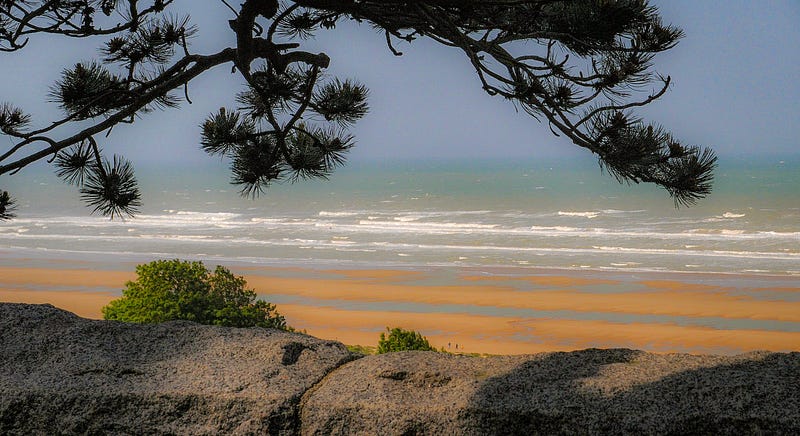
Together the two soldiers tumbled down the hill. Another grenade followed them down, and Roland thought that was the end as he watched it bounce and spin through the air over them.
It kept on going when they stopped, and the explosion, when it finally came, did nothing but echo down the years whenever Roland recalled that moment.
“Get off me, you idiot,” Osmond gasped, and Roland complied, amazed that he still could. He hurt all over, and his uniform was drenched in blood, but nothing seemed to be damaged. Another bunch of bruises to add to the collection.
His hands shook a little as he removed his belt and bent to wrap it around the sergeant’s thigh. Twice around, pull it tight, force the clasp closed. The bleeding stopped.
“Shit, Rollie, that hurts. How does it look?”
“You’ll survive, Matt. Your pants won’t make it. I’ll have to duck back and get your spares, find a couple of medics. You’ll be on the hospital ship for lunch.”
“I should have listened to you, grabbed the guys from the company. But I couldn’t run ’em through a fucken minefield. They’d never talk to me again.”
The sergeant smiled at his joke. His face was white, and his words were whispers.
“You’ll get that Kraut bastard for me, Rollie?”
“Yes, Mattie. Just rest for me now. It will be okay.”
And then he was gone, taking his place at the family table with those who had gone before. They would be so proud of their boy.
“I’ll get that bastard for you.”
There was a bright focus to his eyes as he descended the bluff. He stepped in the same footprints on the path, carefully lifted his feet over the tripwire, and avoided the flags marking the mines and their nasty surprises.
Everything was clear in his mind, and the day seemed to slow as his thoughts raced. It was almost as if he could see the bullets in the air, throwing himself down in the sand as they clapped overhead, and timing his run across the gap in the minefield one step ahead of the rattle from a distant bunker.
Roland leapt over the shingle bank and thumped down into the water on the far side. Yes, there were the two packs, bookending the corpse they had used as cover. But what had happened to the men from the company?
All he could see were strangers, men from other units, the other division, even. America’s finest, crouching in the surging water, demoralised, just waiting for someone to tell them what to do.
With a cold clarity, he peeled off his bloody jacket, dumped it into the water, and watched as it was sucked away with a retreating wave. He opened Sergeant Osmond’s pack and removed the spare jacket, buttoning it over his woolen shirt.
He slung his pack onto his back, picked up his rifle, and started gathering troops.
“We’re moving out, soldier,” he barked to the first, standing over a huddled corporal, heedless of the bullets. There were fewer of them whipping through the air, anyway. Either the naval guns had knocked out more bunkers, or other groups had found ways up the bluff and begun rolling up Hitler’s defences. “There’s a path through the mines. Come with me.”
And they did. He sent them off individually through the blown gap in the wire with instructions to shelter in the hollows on the far side.
It was ridiculously easy. A loud confident voice, a clear path forward, and they got out of the salt water and squelched across the sand for him. He set the last one — another sergeant — to gather more, and made the dash himself.
“Listen up!” he shouted to his dozen men. “I know the way. Single file, each man stepping in the footprints of the man ahead. The mines are marked, but there may be others we didn’t find. There’s a path a bit farther on, and we’ll follow that up.”
Roland led them out, pointing out each mine to the man behind, and halting at the tripwire to make sure his men crossed it safely. They gingerly stepped over it, each one, and passed on the information to the man following.
Good. He might even pull this off.
He paused his group at the crest. Getting them flat on their stomachs, he told them to await his signal. Picking out a man with a Browning Automatic Rifle — a BAR — he wriggled forward until they could both see the bunker. It was silent for the moment, the machine-gun pointing up into the sky.
“There’s a German in there. If he pops up, hose him down, will you? And for chrissakes don’t hit me.”
Roland began lizard-crawling across the open ground toward the bunker, rifle in one hand, grenade in the other, expecting every moment to hear some other hidden German open up on him as he inched closer.
When he was close enough that he was sure that he couldn’t miss, he pulled the pin from his grenade and lobbed it into the open mouth of the concrete bunker.
It went off, his ears rang with the noise, but there were no shots in return. No screams or yells, either.
The lessons in England — hundreds of men crammed into a hall, while an intelligence officer pointed to charts — might not have stuck with the average soldier, but Roland remembered the details of the Tobruk, which was a common structure with the Germans. There should be a rear entrance with some cover and concealment.
And there was when he crawled closer. Along with a trench. Jackpot!
He threw himself in and beckoned his motley squad over. They seemed to cheer up with the protection of earth and sandbags and there were a few whoops. This was soldiering!
Roland posted his BAR man at a bend in the trench and motioned to two others to mount guard with their rifles in the other direction. Any Germans coming would get a warm welcome.
He pointed to two soldiers. “Check out the bunker. And be careful!”
One stuck his rifle into the entrance, followed it with his nose, and disappeared into the interior. The other followed.
Right. Now what?
Every man in the division had been issued with French phrasebooks, and the importance of contacting and working with the French resistance fighters had been stressed. They had armed men, they knew the countryside, they could be a huge help.
And not far away, across open fields and hedgerows, a church tower stood, marking a village. A village that was well within the division’s first day objectives. It sat on the coastal road, and that road and the nearby crossroads were crucial to success. Deny the Germans the roads, secure them for American traffic, the beachhead could be secured and expanded. If they could get this part of the screwed up plan right, there was hope yet.
“Nobody inside, Sarge. Nobody alive, that is. One dead Kraut, and he’s blown to bits.”
“Good. Any weapons, equipment?”
“A busted rifle, the machine-gun, a heap of ammo, some grenades…”
“Documents, Maps?”
The soldier looked blank.
“Corporal!”
“Yes, Sergeant?”
Roland looked at him. He really should just hand over command to the corporal, and take a back seat. But that would just confuse everyone, and they needed to be a team for now.
“Pick two guys. One is going to learn how to use that German MG in a hurry, the other will carry as much ammo as possible, and you’ll be in charge of the gun team. I saw one man without a rifle, he’ll do.”
He looked around. “You there, soldier. What happened to your weapon?”
“Fell into the water when we got off the boat, Sarge. I figured it was me or it, and I picked me.”
“Good choice. Oh, and Corp, check out the body for documents. Maps, notebook, ID, anything. The intel guys want that stuff. Go.”
Roland paused for a moment. Something was picking at his mind. What would Sergeant Osmond do?
Right.
He stuck his head in the bunker. “Corporal, we’re moving out in five minutes. I want to get to the village and block the road, and that MG will help us do it. I’m just going down the hill a little bit. For chrissake don’t shoot me when I come back.”
Sergeant Osmond’s body lay where it had tumbled. Roland stuck his rifle into the soft earth, hung the sergeant’s helmet on top, and untangled the submachine gun he’d been carrying. Inside the dead man’s jacket was a map. Marked up with objectives, radio frequencies, codes, and other notes on the reverse. He wouldn’t be needing that where he had gone, but Roland could use it.
Now, all he had to do was be a sergeant for an hour.
He climbed back up to the bunker. “You,” he pointed at a skinny kid, “Take point. We’re going to take the trench till we get to that hedge line, then follow it into the village. If we see any Krauts, we’ll hand them a bunch of bullets. Move out!”
My plot boxes are getting ticked pretty quickly now. I’ve still got to fit in the tender love scene I planned this thing around, and I hadn’t intended to fight a battle to get there.
But that’s Omaha Beach for you. It was all battle, all day. Once the soldiers moved off the beach, they had an easy run of it for a little while and then the German counterattacks came in. By the end of the day they held the beach and maybe a kilometre inland, way short of what had been planned, but enough that troops and vehicles could land safely and set off on the long trek to Berlin, which they reached ten months later.
With any luck, I’ll wrap this thing up by the Fourth of July, wave a weary flag, and find something else to write about. Maybe some science fiction where I can just make stuff up as I go along.
Britni
The story so far:


