
Dofollow and Follow Links
What’s the Difference?
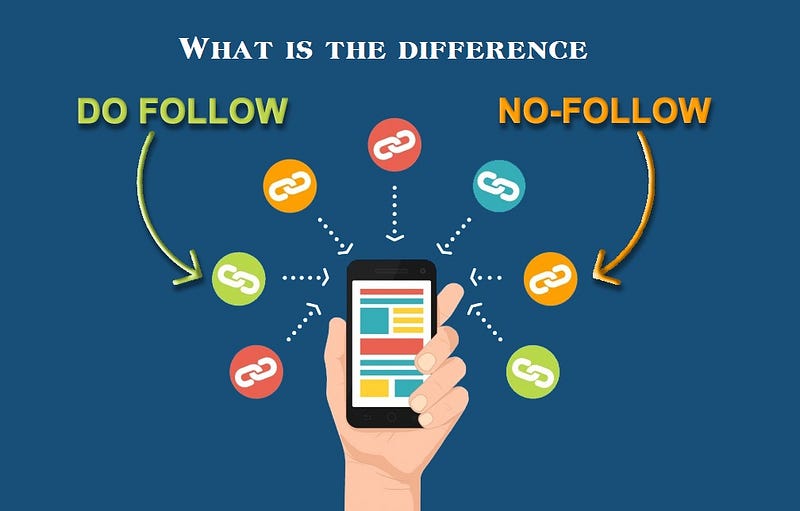
What is a do-follow link and why is it so adored by SEO specialists?
Before we see what do-follow links are, I suggest we talk a little about the “evil brother”, the no-follow link.
Nofollow is a link with an unbearable attribute: informs the search engine that the link must not influence the positioning in the SERPS ( search engine results pages), the ranking set by the search engine.
To make things as clear as possible, a regular text link, written in HTML, has the following form:
<a href=”https://www.aniteialina.com/”>Anitei Alina</a>
If the rel = “no-follow” attribute is added to this link, it will have the role of telling the search engines to stop.
In HTML, such a link will look like this:
<a href=”https://www.aniteialina.com/” rel=”nofollow”>Anitei Alina</a>
A dofollow link is a link without the Nofollow attribute. That is, it is considered by search engines. Google’s crawlers (robots) will, therefore, consider these links when evaluating sites and positioning them in the results displayed to users.
How does Google react when it hits a do-follow link?
Suppose you left a comment on a site/blog that has dofollow links. Your comment, which also contains your web address, is seen as a genuine backlink, and Google will consider it.
What happens when Google robots get to a site?
They start looking for links and, if they come across a nofollow, they get bored. When I get to the site with dofollow links, at your comment, the robots follow the link and reach you on the site. Examine it well and then report the interesting things found here, building your ranking.
It is not difficult to deduce that a site with a dofollow attracts more visitors. But a site with this attribute turns into a real magnet for spam. For this reason, many sites/blogs are of the nofollow type.
Where do we usually find links to nofollow?
In the comments of a blog, in various articles, on forums, paid links, etc., you caught the idea. If I want to give your page as an example, but I don’t want to announce that I support you or I find the page dubious, I will put nofollow in the link. Blogs usually automatically put no-follows in the comments section, as a method of preventing spam.
But there are also sites that present collections of dofollow blogs, where you can leave comments.
However, it is important to leave comments on the subject, so as not to be included in the list of spammers by the moderators of these blogs.
How can we identify such a link?
In Google Chrome, we can quickly find such a link by right-clicking on the desired link and analyzing the tag. If it contains rel = “nofollow”, that link is one with… nofollow.
A link with nofollow, however, has power: it exposes the page of the audience to that page. If the visitors of the page consider that the link to your page (even with nofollow) could be useful, they will follow it. By default, you have a new visitor.
Moreover, depending on how relevant the content of the page from which the visitor came from was relevant to your niche, they might even become a customer. Hence the importance of content relevance. In vain we have referral traffic if we do not have conversions. It means that people, although curious, refer to the original page. So they are not suitable for your niche, they do not care what you do/sell.
Conclusions
A well-placed and seriously written comment (not 3 words + link), a post on a forum that helps someone, can send quite a lot of traffic to your page.
The best way to get follow links is the right way: make quality, original content that people naturally refer to. Another method is the way of guest blogging (to write on a blog, as a guest.


