
What Nobody Told You About Academic Trauma and Life
Reimagining Education and Unveiling the Unspoken Realities of Academic Influence
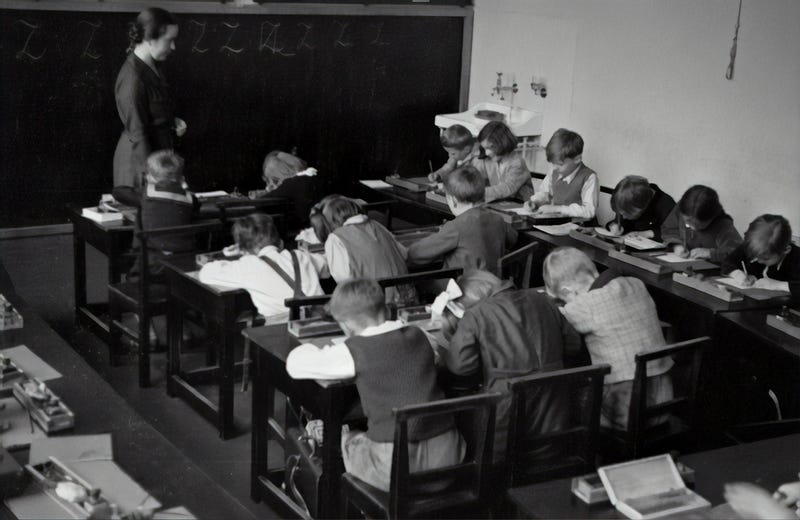
Over a 20+ years career, I have taught, mentored, supervised, and facilitated learning for students from K-12 to college age, as well as older adults, for a cumulative eight years (including my time as a teaching assistant while a Ph.D. candidate), therefore working with traditional and non-traditional students.
The opportunity to teach across such a wide age range and to students from such diverse backgrounds has provided me with the kind of on-ground observations that no amount of time spent studying theories of education could ever provide.
Could your time in school impact the rest of your life? If you were to answer in the affirmative, you are probably either positively or negatively impacted by how you did in school.
Even if you were to answer in the negative, that absence of impact is in itself an impact because the time spent was for naught — you gained nothing beyond the bare minimum.
Studies into the correlation between academic attainment and later successes in life tend to study the black and white of largely quantitative data but do not unpack what ‘performance’ means, although the same studies also acknowledge the limitations of the research.
Having been both an educator and student myself, I want to share a perspective on performance divorced from test scores but connected to building lifelong habits intrinsic to personal growth and even professional success. Before that, let's take a step back into our assumptions about studying and learning.
1. Breaking the study skills myth

With social media, there are now barrages of videos going around YouTube (and possibly TikTok) on how you could replicate the academic successes of successful young influencers.
One of the most popular ones, by views, is how you could maintain a straight A record despite studying xx% less than your cohort before they proceed to tell you their methods of studying that are not that groundbreaking in the end.
During my pre-social media and pre-internet youth, these videos were replaced by books written by the ‘study gods’ as some may call them, who would give you all their ‘tricks’ and ‘tips’ to mastering the syllabi. Using this advice as a shortcut, we proceeded to do what they did.
But when the replication of these techniques failed to provide the necessary results, we blamed ourselves for not trying harder or for not being disciplined enough to sustain the practice.
I once used one of the methods advocated in such books for a course I was having trouble with and spent more hours on this course through that method than I did for all the other courses. In the end, I still failed the course.
I never thought to ask myself, as a 21-year-old, why replicating a seemingly ‘failproof’ technique that supposedly brought success to the author had done the exact opposite for me. Was the author lying (that was a possibility), or was I misunderstanding something (self-doubt)?
2. Different Learning Styles and Motivations: the Myth of the A student

If there was one thing I had learned from having to go through college teaching training courses as a college teacher, it was the fact that many of those who ended up becoming college teachers had had a fairly successful and smooth academic path.
While this was not 100% the case, it was more often the case than not as conventional academic education systems tend to work well for them. Moreover, some might have been conditioned by the idea that if a student could not perform well within a system that had worked for them, the problem lay with the student rather than the system.
Although there is now a better understanding of learning disabilities, that understanding does not translate into the entirety of the education industry, with still too few schools and colleges catering to those who learn differently. Even then, those with mild learning disabilities or who are wired to learn differently could still fall off the curb.
In other words, if you are not the kind to learn well by rote or abstract reasoning, or if you are the kind to get distracted too easily not just by external stimulus but by over-obsession with details that others might skip over easily, then the conventional form of teaching, learning, and assessment will usually indicate that you are an under-performer.
For instance, if you are very proficient with practical, artistic, and mechanical skills but fail to grasp mathematics and abstract sciences in the ways they were usually taught, the school authorities might think you are a better fit for vocational training than the academic route.
While this might appear to be empowering at a glance, it is actually another form of disempowerment. By convincing you that your talents can only lie in particular areas and that you should not even try to go that other route if you fail, the educational establishment need not expand its resources to diversify teaching and learning.
In other words, if you are good with words or art but perpetually fail school math, you should not even think about becoming a mathematician and engineer. The inverse is true — you may love to draw but find that you do not possess the supposed ‘natural’ aptitude that talented artists are supposed to have, so you think the world of art and all it entails might be the wrong choice for you.
Some learned belatedly as adults that what they thought they could never be good enough for was complete hogwash, as documented in the work of David Edwards and Barbara Oakley, but these are the minorities and largely from the more elite sections of society. For many, they would feel that there is no turning back.
3. Is there anything that you can do about this?

That depends on your willingness and where you are at in life. For those still within the K-12 system (or if you are parents of children of K-12 students facing some of the issues I have mentioned), here are some workarounds that I wished I knew as a student and which I know very well as a college teacher.
A. Teachers are very human with their own biases, prejudices, and blind spots.
But this does not mean that you cannot make full use of what they have to offer. You begin by asking questions, and lots of them. A lesson I learned from teaching very young children is how they are not afraid to ask questions or sound stupid, and this self-confidence appears to depreciate the older they get as learning traumas accumulate.
In school or college, you may find that certain subjects come more easily to you than others, and usually, that means that how the subject is or was taught to you resonates more with how you are wired.
Find out if you could apply some of the same methods that have worked well for you in these other subjects to subjects that are your weak points. Don’t try to do this all alone — talk to your teachers or principal if possible. If you find the teacher to be less than helpful, try to look around for other potential resources for help (the Internet could be helpful if you look the right way).
B. Try thinking about the subjects you hate in the same way that you think about the topics you love.
Although I was a science student and even became a science major in college, I actually found the formal learning of science exceedingly hardgoing and uninspiring, so my formal education in science saw me with mixed grades. For the longest time, I did not understand why what made sense to others was so confusing to me.
Although I love the big ideas science carries, I could not make myself care about their mundane details. It was not until I started studying literature formally (which was the beginning of my entry into other humanistic studies), that I finally realized how naive and wrong-headed I had been about learning.
I took to studying literature easily, because a young love for stories had already wired my brain to look into multiple layers of meaning within a text, finding intentions in the interactions among characters, and even to see how events, both the tangible and abstract, could be connected to each other.
As a highschooler and, later, college student, I mistakenly thought that science was not like that when that was never the case. Those who did well intuitively understood the importance of finding your own resonance with the material you are learning rather than using another person’s approach.
Many years after that realization, I ran a project teaching STEM educators the importance of awakening the imagination of their students, not by imposing a specific way of thinking on the students, but by allowing the students to form and then examine the narratives they have formed about the topics they are learning in a way that is fitting with their experience and level of knowledge.
That project was inspired by earlier projects relating to artscience learning I had subsequently written up and published. All of these projects were my own adult exploration of the what-ifs of learning if I could relive the life of a youthful learner.
C. Struggling makes you a better person.
As a college teacher, I had taken a continuing course on college teaching with a math professor from another institution. She told the participants of the course that math did not come easily to her despite being a math educator today and that she had struggled hard as a student.
However, it was this struggle that made her an empathetic teacher and more determined to find ways to make math work even for the most math-phobic student (as an aside, math phobia can have a terrible consequence on your life, especially in how you manage your finances regardless of how successful you might be otherwise).
Many Nobel Prize winners struggled through failures before they became the success everybody wanted to emulate. Entrepreneurs live with daily failures, big and small.
If you have failed before, your ability to take calculated risks and tolerance for discomfort goes up. I came from an education system that punishes failure rather than uses it as a learning opportunity.
Hence, it is not uncommon for those coming from such educational programming to associate anxiety with dreams of taking an exam while feeling thoroughly unprepared. As an educator, it became necessary to revisit that painful past so that I could develop more empathy toward my students.
As an entrepreneur with empathy, you can create more meaningful products and meaningful work for your employees. If you are an adult today and have always had problems with a subject or in learning a particular skill due to the way you were taught, now you are in a sufficiently safe space to try again without needing to compete with another person.
I did that myself when I decided to enroll in courses on Coursera during the pandemic lockdown to work on subjects I used to have difficulties with. Without even caring about the outcome, confronting the fear left an impalpable sense of accomplishment.
Thank you for reading my story.


