
Does Your Mental Health Decline During the Winter Months?
If you always feel depressed during this time of year, you might have a condition called SAD.
Among the different types of advice and opinion stories I write about, I like to share my personal experiences about past behavior, and how it affected my mental health.
Although I’ve made a lot of improvements in my life, over the years, I’ve gone through just about anything you can imagine, so I tend to have something to say about everything.
I won’t lie, it makes me feel kind of proud to share what I’ve learned about life, and tell about the setbacks I’ve been able to recover from. That’s why I’m sharing this story now, about a condition I once had.
Challenges to My Mental Health
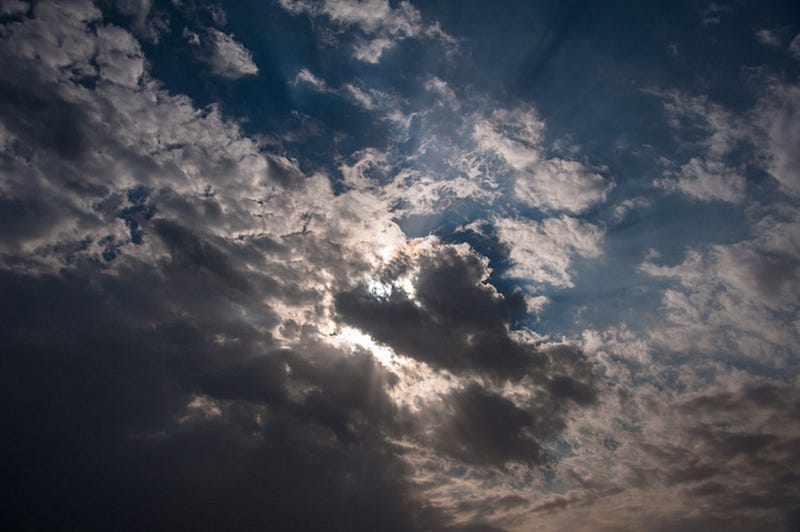
Once upon a time, gloomy days used to always make me gloomy. I used to hear people talking about how much they love a cloudy day and how warm and fuzzy it made them feel.
But for me, “cloudy” was just another word for gloomy, and if it was gloomy outside, for some reason, I used to feel gloomy too.
I’m ashamed to admit it, but I felt a whole lot better, when I discovered that other people get gloomy on these kinds of days too. I thought I was the only one, and couldn’t understand why I couldn’t shake the feeling.
What made it worse, it seemed like it would start happening every year. The reason I began seeing a pattern, was because I noticed I was driving boyfriends away, around the same time, every year. I didn’t know what the heck was going on with me.
Something like this can really start messing with your mental health, especially if you already have various emotional issues to start with. I knew something was wrong , but I didn’t realize something was wrong. Not until I read about a condition called SAD.
What is SAD?
Before I first learned that feeling down during the winter months was actually a thing, I used to wonder why the appearance of a cloudy day would almost immediately make me feel down?
It wasn’t like my life and circumstances just magically changed overnight and suddenly there was just too much to deal with.
For the most part, things would be just fine, until those gloomy depressing days came along; one dragging right into the next. I concluded that it was definitely the weather that triggered my bouts of gloom.
I can still remember vividly, all those years ago when a gloomy day would instantly flip my mood and turn it dark. I eventually came to understand that I had been experiencing mild symptoms of what I now know to be SAD.
SAD stands for Seasonal affective disorder and it is a form of depression that generally occurs around the same time every year. The National Library of Medicine described SAD as:
“…recurrent episodes of major depression that meet the following criteria: at least two consecutive years where the onset and offset of depressive symptoms occur at characteristic times with no non-seasonal episodes…”
Just like so many other mental health issues, SAD is a disorder that can slip through the cracks, when it comes to diagnosing it. Those who suffer from it may end up going year-to-year, unaware of why they feel like they feel (just like I did).
Typically, the symptoms start in the fall but will often continue into the winter months. SAD can be responsible for sapping your energy and cause the person to feel gloomy and even moody.
Personally, I don’t recall having a problem with my energy level, but I was often gloomy, moody, and irritable for no particular reason.
Fewer cases of depression caused by seasonal affective disorder are reported in the spring or in the early summertime, although there are rare cases.
Researchers have reported the connection between a dark and gloomy atmosphere and a person’s dark and gloomy mood.
This is evident by the various types of treatments given to people suffering from SAD. Among the treatments are phototherapy.
Phototherapy for Treatment
It stands to reason, if the dark gloominess of the season is a factor in the diagnosis, then some form of light therapy should be a part of the solution.
That is exactly what professionals prescribe as one of the main treatments; phototherapy, which is light treatment. Of course your next question is:
How do you use light therapy for SAD?
If you’re going to be using what is referred to as a SAD lamp, experts suggest using it first thing in the morning.
Some doctors might recommend using it during the day also, but with caution. Which makes you wonder:
Can you use a SAD light too much?
The short answer is YES. Just like anything, too much of a good thing is too much. If you over use a SAD lamp, you could end up with insomnia as a result, and there may also be other side effects.
In addition to phototherapy, SAD patients have other treatment options available to them. There is psychotherapy, and there are also medications that can be used for treatment.
Final Thoughts
If you have a tendency to feel a little low when it is gloomy outside, don’t jump to conclusions and automatically assume it’s SAD.
Although I eventually learned to track and analyze exactly what was going on with my behavior, I was never officially diagnosed.
But that didn’t stop me from doing things that I learned would help me, if I did happen to have the unusual condition.
I can honestly say, the biggest thing that helped me was KNOWING what was going on, so I could do something proactive and start taking back my control.
Here’s what I learned and gradually implemented:
- Stress and anxiety help increase SAD symptoms of severe depression, so exercise and do other physical activities to cut down or eliminate stress and becoming anxious.
- Taking care of your physical and mental health will cause you to look better in appearance, which in turn will make you feel better about yourself. This helps to lift your mood and counteract SAD symptoms.
Would you like to read more informative, valuable, and entertaining Justiss Goode stories? Just click this Directory link: choose from my OVER 150 titles (by category).
Or visit any of my Medium publications:
Black Like Me | Just Like New | Hard Knock | Short Story TIPSTER
Thank you for your: FOLLOWS | APPLAUDS | RESPONSES


