
Should you write for your reader or write for yourself?
A writer’s biggest misunderstanding

Some people think writing “for your reader” means you’re not writing for yourself. As if you have to pick.
Write what they want? Or write what you want?
Which is entirely the wrong way to think. Because once you go down that dark back alley of the brain, it takes you to crazy places. Like… — well who the heck knows what “they” want…? — and who are “they” anyway? — you can’t chase what’s popular, right? — nope, you have to be true to yourself.
Suddenly you’re a card carrying member of the “write for yourself” club. All because you didn’t understand…
Where the concept of writing “for the reader” came from in the first place…
Before you decide if you “should” write for the reader, it helps to know where the concept came from. Most people misunderstand this. Completely. No fault of yours, not like the internet is a stellar source of marketing help.
Imagine two authors, okay?
Both wrote a book and want to sell their book. Let’s call them Sue and Pam.
Sue is on Facebook hawking “buy my book, buy my book”. She made a book trailer. She’s on Twitter, joining all the author promo threads. Buy my book. Get a free chapter. Enter to win a signed copy. I could take 7 paragraphs to tell you all the promotions. They’re all about Sue. Nuff said.
Pam’s book is about a zombie apocalypse. So she starts a Medium account, and a blogger account and is having a blast writing about zombies. There’s the “would you survive” quiz. And the how to kill a zombie piece. She started an Instagram and zombifies famous people. Brad Pitt zombie. Trump zombie.
She’s just having fun. And people are eating it up. They’re sharing the content with their zombie lovin’ friends. Omg, omg, can you make a Harry Potter zombie, so she does.
Guess who’s selling books? Not promo Sue.
Is Pam writing for her readers or for herself? Well, both.
Because they have a shared interest. What a concept, hey?
So, who the heck knows who “the reader” is?
Srsly. Who knows who the reader is??? Or what they want???
Well. YOU.
You wrote a darn book for them. Didn’t you?
Another example. Becky wrote a memoir. She’s playing the Sue game. Buy my book. Watch my trailer. Enter to get sumpin free. Chasing Amazon algorithms and hawking like there’s no tomorrow. All to the sound of crickets.
Becky? STOP.
Your memoir has some real serious sh*t in it. You lived in a cult. You didn’t go to school. Write about that. Know who decides “what” the reader wants to read? You. When you wrote the book you’re trying to sell.
You decided.
Oh wait. You didn’t write a book? You’re just writing on Medium?
Well then, they’re not “your” readers. They’re Medium’s readers. Sorry. Truth.
If you want to have your own readers, you’ll need to build a list. And you know what they’ll be interested in? The stuff YOU write.
Why the heck else would they join your list?
It was never about you vs. them
Your readers aren’t the enemy. There’s no need to get torn up about what they want vs. what you want. It was never about you vs. them.
It’s only confusing if you think Medium’s readers are your readers. Some small share of them are, for sure.
When it comes to YOUR readers — what they’re interested in is the same thing you’re interested in. What they want is what you create.
Like this…
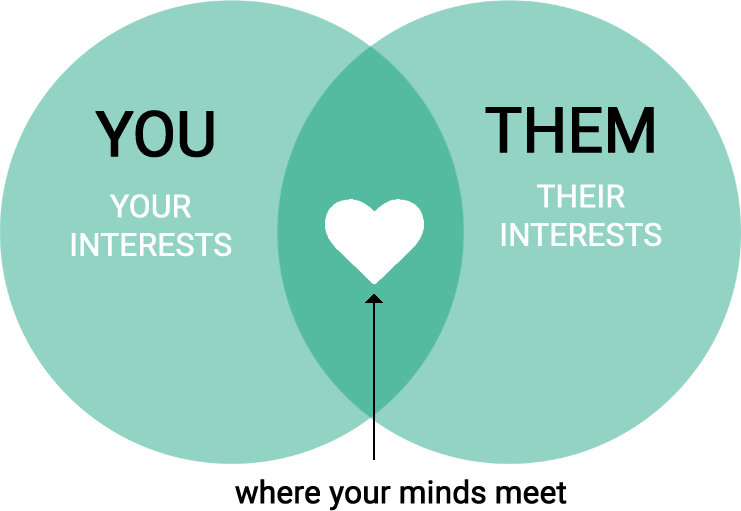
And in that magical space where your mind and their minds meet — that’s where people get reads and claps and sell books and make an income.
Just don’t get confused thinking someone else’s readers are yours. Let Medium worry about what their readers want. You just focus on yours.
:)
♥ ♥ ♥ ♥ ♥ ♥ ♥ ♥ ♥ ♥ ♥ ♥ ♥ ♥ ♥♥ ♥ ♥ ♥ ♥ ♥ ♥ ♥ ♥ ♥♥ ♥ ♥ ♥ ♥ ♥ ♥ ♥ ♥ ♥ ♥ ♥ ♥ ♥ ♥
Before you go… If you enjoyed this, check out xo, Linda. It’s a free email every Friday about writing and marketing. Have a great day!


