
Does Record Snowfall Disprove Global Warming?
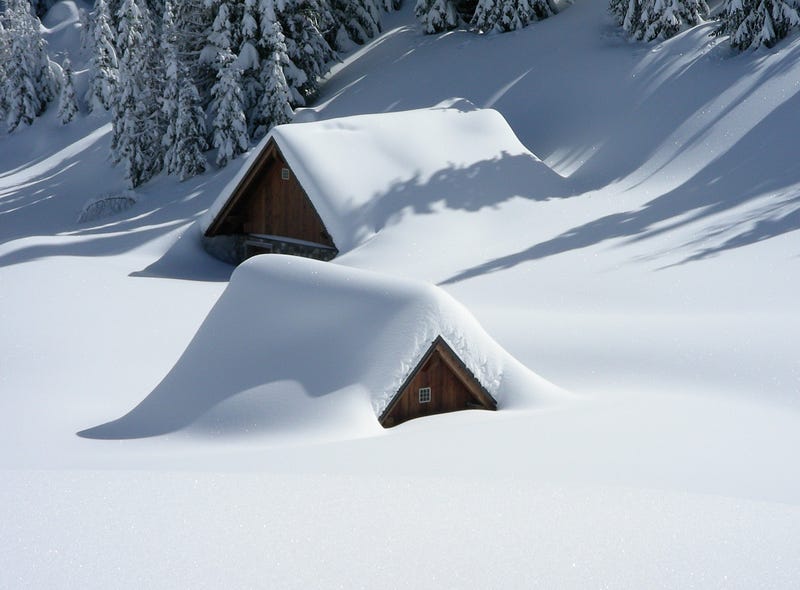
December 2020 marked the tenth anniversary of the aptly named “Domebuster” snowstorm, which caused the roof of the Metrodome in Minneapolis, Minnesota to collapse under 17.1 inches of snow. Although it may seem counterintuitive, Minnesota is experiencing more events with greater than 12 inches of snow coincident with warming winters. In other words, global warming from a rampant increase in atmospheric carbon dioxide (CO2) is causing climate change; in this case heavy snow events. I aim to explain why the climate is warming, especially in winter, and how this increases the likelihood of memorable snowstorms.
Greenhouse Effect
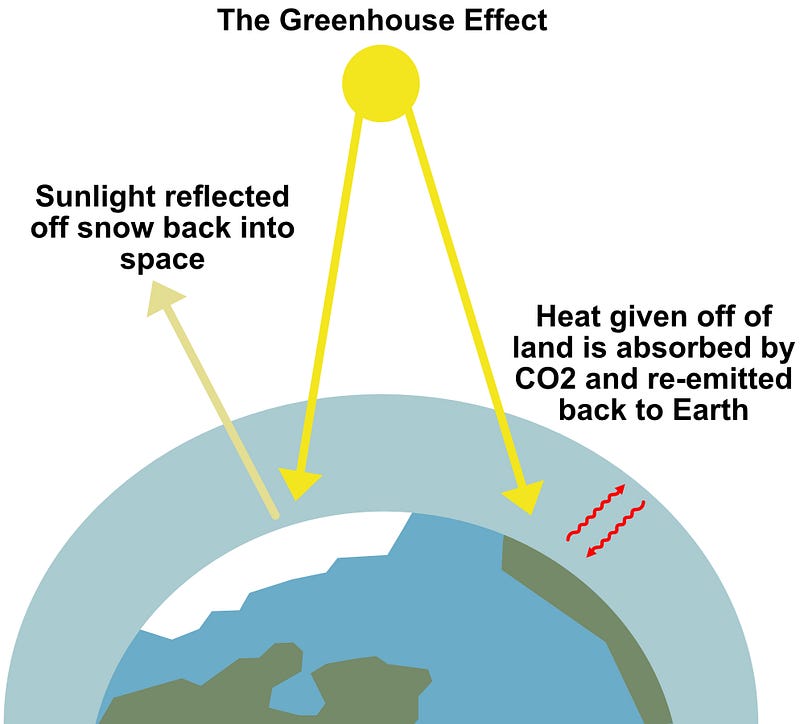
In winter, much of the land is covered with very reflective snow, which bounces sunlight back into space. This reflected light does not get absorbed by greenhouse gases, such as CO2, in the atmosphere. As sunlight beats down on snowless ground, the soil heats up and, consequently, gives off heat. It is this ground-emitted heat that is captured by CO2 and redirected back to Earth, forming a cycle that continually heats the atmosphere. This is the greenhouse effect (Fig. 1).
Winter warming
A rule of thumb for the greenhouse effect is: cold things are warming faster
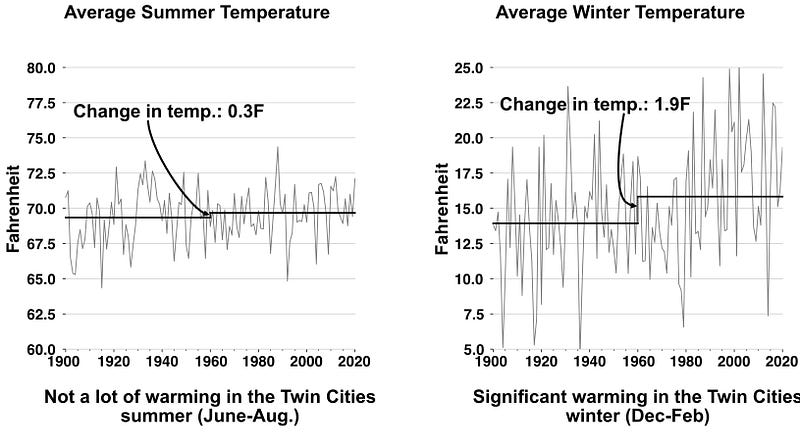
The greenhouse effect is amplified by two factors, adding greenhouse gases such as CO2 to the atmosphere and a global reduction in snow cover, which prevents some of the sunlight from being reflected back into space. The atmosphere is our planet’s jacket, keeping it at a hospitable temperature. Adding additional CO2 to the atmosphere is akin to replacing a wind-breaker with a parka. As a result of reduced snow cover, winter is warming faster than summer (Fig. 2); a prediction made by Svante Arrhenius in 1897 which is now coming true. Winter warming faster than summer, along with many other lines of evidence, is a fingerprint for the greenhouse effect. A rule of thumb for the greenhouse effect is: cold things are warming faster. In addition to winter warming, nights are warming faster than days and the arctic is warming faster than the tropics.
Warmer winters = increased snowfall
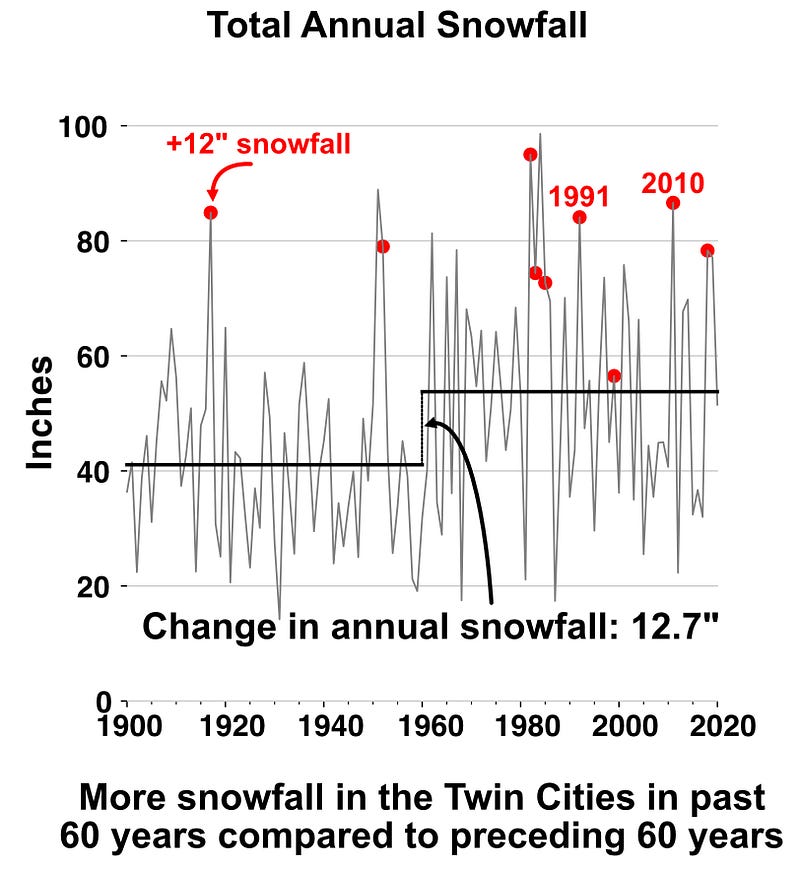
So, now that we know why winter is warming faster, how does this increase the chance of extreme snow events? The first reason is that a warmer atmosphere can hold more moisture, via evaporation from oceans and lakes. The increased atmospheric moisture means more of it can be dumped as snow. The second reason is that heavy snow typically occurs when the atmospheric temperature is between 15–32 degrees Fahrenheit. This Goldilocks range is when ice crystals can lock together, forming the large fluffy flakes we all find so pretty. Snow that forms at colder temperatures is more like diamond dust. Thus, a warmer, moist atmosphere in the Minnesotan winter sets up conditions conducive for extreme snow events. So, if the conditions are right, this extra moisture can get dumped as snow in a short period of time. In the Twin Cities, snow events greater than 12 inches have seen a marked uptick post 1960, which occurred seven times in the past 60 years and only twice between 1900 and 1960 (Fig. 3). Bringing the above information together, we see that maybe extreme snow events under global warming are not counterintuitive after all and record snowfall does not disprove global warming.
In 1991, I was only two years old during the epic “Halloween blizzard,” where a record 28 inches of snow got dumped on parts of the Twin Cities. It is said that history doesn’t repeat itself, but it often rhymes. Maybe we won’t see another “Halloween blizzard”, but there will definitely be similar events. So, if you enjoy sledding at Theodore Wirth Regional Park or snow-ball fights on the quad, you can be rest assured knowing the warming we are causing in the atmosphere is not making snow-days in short supply.
Thank you for reading and supporting Medium writers


