
Does Everything Matter?
What are we responsible for?
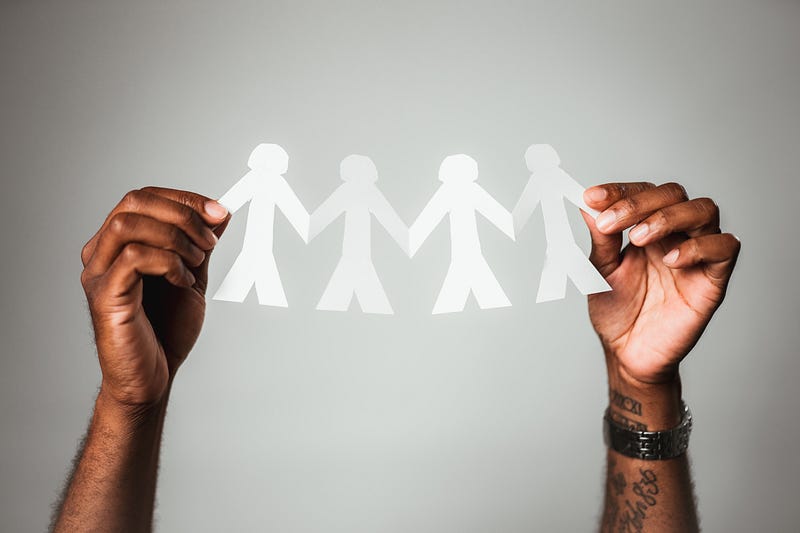
When we’re young, every event that happens to us feels important, full of meaning we don’t yet fully understand —
Are we right, or just inexperienced?
Does each interaction change us? Are we the accumulation of life events, big and small, the result of a string of relationships? Does a relationship of 20 years ago still affect the way you live your life today?
How damaging are small negative incidents in our lives? How damaging are the negative aspects of positive relationships? How responsible are we for other people? How much do we admit that others are responsible for us?
Is every moment of your life a link in an unbroken chain, making you what you are right now?
Or is a chain a false metaphor?
Can we keep accounts of the minutia of our emotional development? Is it healthy or sensible to try?
I did a terrible thing, 20 years ago, and it hurt one of my friends. It was an act of bullying, schoolboy stuff, but much worse than schoolboys ever realize. Maybe it messed his life up, maybe it messed up mine — how far do these things matter?
He deserved it –
In a sense, you can only hurt people in ways they are destined to be hurt. You can’t create someone’s character, you can just help them grow into it.
The thing we did hurt Carl so much because it landed smack in the middle of his sense of himself, where pride and shame mingle in an intensity of feeling.
Back then, Carl was a model. He was signed to an agency, went up to London now and then for shoots, and occasionally appeared in magazines. He loved James Bond films too, and only a very little bit beneath his surface these two interests formed his emerging self-image. If he could be said to have a character weakness, back then, it would be vanity. He liked how he looked.
Whilst he in no way deserved what we did, and it was all our responsibility and guilt to live with for the next 30 years, pride comes before a big fall, and his character, you could say, made him vulnerable to our particular attack.
But also, he did deserve it. For years after I’d swear that he deserved it because a few months before ‘the incident’, we’d fallen out over his getting together with my ex. Now this, I thought, broke every rule of friendship. And it hurt. Mainly because she liked him a lot better than she did me. They were pretty good together though it didn’t last long.
So from my point of view, at the time, yeah — he deserved it.
Responsibility
The word responsibility is surprisingly modern. Its first use was political, relating to a government’s responsibility to its people. In the 19th century, it figured in the question of free will (and therefore responsibility) Vs determinism: are we responsible for our actions?
Yes, we are —
Modern philosophers have agreed that we’re responsible, but not in control of everything. Twentieth-century politics has also raised the question of collective responsibility — are we responsible for one another? How far?
Legal responsibility is decided in courtrooms and classrooms and in families across the globe, but moral responsibility is blurred and hidden. There’s the retrospective responsibility that looks back in time and decides who is to blame or at fault for what happened, and there’s prospective responsibility that decides what we should be looking after now and in the future.
There are so many different types and grades of responsibility that it’s very easy to find loopholes and wriggled free from the idea altogether.
But what if we’re hyper responsible and every time we sneeze we set off a hurricane that sweeps across some ocean and always lands somewhere? Once in our psycho-geography and once in the world?
Social Responsibility
An Inspector Calls, by J.B Priestley, explores this question from a 1945 perspective. The Second World War had just ended, and Priestley was advocating the successful socialist agenda of building the Welfare State in Britain. Labour was voted into power in 1945 to create a more equal society with more access to healthcare, education, and housing for everybody through higher taxes.
Mr. Birling represents the old capitalist view. He laughs at the idea that we are all responsible for each other. He’s a trickle-down economics businessman.
“If we were all responsible for everything that happened to everybody we’d had anything to do with, it would be very awkward, wouldn’t it?”
But An Inspector Calls tells the story of Eva Smith, a factory worker whose life is destroyed by the influence upon it of the wealthy Birlings — one by one they use their privileges and wealth to degrade her life chances — they get her sacked from her jobs, have affairs with her which lead to her being pregnant, heartbroken, alone, then they refuse her charity.
Priestley’s point is that you may think, as Birling does, that you are responsible only for yourself & your business & your family, but as you follow these personal responsibilities, there’s a world of moral responsibility that shadows you, phantom-like, in which your actions, thoughts, and words impact other people, and for which you are also responsible.
So, what is it — are we responsible for the lives of strangers or not? If we are, are we doing enough, by paying taxes and having manners and following social rules, to fulfill those responsibilities? If we’re not, are we being misled by the idea of collective responsibility to not fulfill our personal responsibility fully?
He didn’t see it coming
It was a school fundraiser. To raise money for Guide Dogs for the Blind, we put on a school fashion show and it was a big deal because it was at the Girl’s School and boys from the Boy’s school (us) and girls from the Girl’s school were both involved in the planning, the clothes, the music, the scenery, the modeling, etc. — making it a teenage dream, a nexus of fertilization that rarely happened…
When you’re 17 something like that approaches like Mount Doom — January, February, March — it’s almost here…
On the day, we got to have time off school to go to the tailors in C — and pick up our clothes. We all had a few outfits: beachwear, casual wear, evening wear, etc.
We started to put our plan into action. To be honest, I started it.
Personal Responsibility: 6 Archetypes
In The Sense of an Ending, Julian Barnes creates a character called Tony Webster who spends the novel learning and thinking about his responsibility for the suicide, thirty years earlier, of his best friend from school. He discovers in the past the links in the chain that led to the suicide and he finds in the present the links came after. Like Priestley, but in a personal rather than social way, he suggests we’re more responsible than we like to admit.
Consider 6 types of people. Emotionally, how do we respond to the idea of these types of people — rationally, are we right to respond in those ways or are we swayed by stereotypes and prejudices?
1. A Greta Thunberg or a Swampy, a Martin Luther King or a Gandhi — people who give their lives to a cause and subscribe to a big idea of social responsibility. Following their example, we should all be out there campaigning for social causes.
2. A Mr. Birling type — the right-wing archetype who believes that working on yourself will create jobs and wealth for others.
3. The Evangelist — a street preacher or priest — wants to persuade everyone that their responsibility is not to themselves or to society but to God.
4. The Anarchist — believes that society is so corrupt that our only course of action is to be irresponsible, to step out of the rat race, and not contribute to the mess we’re in.
5. The Introvert — obsesses over her responsibility. she can hardly function in social life because of her hyper-awareness of responsibilities past, present, and future, her social footprint.
6. The Suicide — was hurt badly and wanted an escape from the pain.
7. The Underdog Champion — was also hurt badly, but used the pain to create a desire for success and affirmation, to prove herself — think of a John Lennon turning the pain of his broken family into the engine behind the Beatles.
All of these shed a light on responsibility — have any of these people got it totally right? Should we be all of them? Could they exist in a kind of pyramid?
The plot
I wrote a sign with a ‘humorous insult’ — if you’ve seen the movie, Wayne’s World you might guess what the sign said — which was to be stuck on Carl’s back just before he walked down the catwalk.
The hall was packed and the music was thumping, beam lights followed each of us up and down the catwalk as we strutted out little teenage butts in front of a big lively crowd.
It was John’s idea. I wrote the note, and Tim patted it onto Carl’s back just as he was about to walk down the catwalk in a tuxedo, dark glasses, hair slicked back, chest out. etc –
As he turned at the end of the catwalk, hilarity broke out. When he got back to the stage, someone showed him the note on his back — the sensational response made sense to him and he went home.
He certainly never forgave us this, and you could say it influenced quite a few of the life choices he made subsequently.
The Self-Development Paradox
Should we try to self-actualize? There is one point of view that holds that we should seek to be as successful, influential, happy, wealthy, and developed as we can to spread our success, creating better humans. On the other hand, is the idea that the self-centered focus of self-actualizing, is an ideology that encourages people to pursue individualistic goals, which, when all combined, lead to late-stage capitalism, exploitation of less privileged people, global warming, etc.
This is Person 1 and 2, debating again. Capitalism Vs Socialism. Personal Responsibility Vs Social Responsibility.
Hegel says that,
Truth is found neither in the thesis nor the antithesis, but in an emergent synthesis which reconciles the two
In theory, a synthesis is easy — self-actualize in line with social principles. Work hard to lead movements you believe are good for society. Become a leader of a trade union to promote social justice, be active in an environmental movement — this leads us to Person number 4.
But within your social justice or environmental movement, the thesis and antithesis will continue to collide frequently — the further you get into a position of power the more obviously your social cause supports you and your self-actualizing, the more you might be said to be using the idea of social responsibility as your personal ladder to power and influence. the power and influence, you could argue, that’s needed to make real change?
Meanwhile, the facts of our lives, measured in the size/value of our houses, the neighborhoods we live in, where our kids go to school, the kind of care our parents get at the end of their lives, what we put in our sandwiches and what we can do in an emergency to rescue ourselves and our loved ones — these continue to build outside of our working field, for the Capitalist and the Socialist. For Jeremy Corbyn as for David Cameron. For Friedman and Marx.
Person #3 says again that if the system is inherently corrupt and power is corrupting, then we should step outside of it and abandon our desires for power and influence since they harm the planet and the race.
Then this attitude can lead us to Person #5 and #6, in that order — the person who is too sensitive and obsessive over what is right rather than grabbing the bull by the horns and taking dominance. Too much time in this pose might lead to suicidal ideation, as you feel inherently weak, surrounded by aggressive, hostile people, and ashamed of your non-becoming (which probably leads to social weakness). Which might or might not trigger the release of Person #7 who says screw that, I’m not going to die of this pain, I’m going to thrive, I’m going to live and find everything I’ve missed so far — love, popularity, fame — everything—
And so we revolve through a series of lenses, more or less intensely felt according to our different circumstances and temperaments. Problem is, as we keep shifting our ideas of what we’re responsible for, we are almost always being irresponsible by some metric that we recognize as valid, so we accumulate guilt and degrade self-esteem.
30 Years After
Carl is now a journalist reporting from Ukraine for various news channels. He was in Baghdad until recently. His view of responsibility is the social, large-frame view. He’s a liberal, left-leaning journalist who aims at discovering and reporting on injustices around the world.
You could say it’s his James-Bond vanity still working which propels him across the globe and through cyberspace with his journalist’s profile, that he’s Person #3, the social campaigner.
As a war correspondent, he lives as an alien in another culture. His wife lives in another country, and his family in yet another one. At 40, he doesn’t have kids. He’s merged Person 1 and 3 — he wants to make a successful career as a social activist.
You could plot a chain of events from his embarrassment that day to his current life situation. Already alienated from his parents, he was further alienated from his friends and the social world around him. He responded, perhaps to that moment after he stomped off the stage, put his clothes own back on, and walked home smoking countless cigarettes, by thinking 1. Screw my friends, I’ll never trust them again. and 2. Screw all those people who laughed at me, it doesn’t matter what they think anyway.
Perhaps that path led straight to Baghdad, to Ukraine?
Maybe he’s happy, maybe he’s not — life will never really supply a neat narrative for us to decide on that.
Our Responsibility
You never forget those bad things you do to people. they stay in your ecosystem for life. I’m ashamed of my actions that day and I know that there’s nothing I can do to make it up. If I ever try to bring it up with him, he shuts me down. The damage has been done.
That link in the chain led to the next, to the next, to the next, building who he is — he doesn’t want to think about it.
It’s also a link in my chain. Doing nasty things, create the certainty that the world is nasty. That you are nasty.
I guess that we pushed him further on towards quite an extreme lifestyle with our bullying and that we’re responsible for that. I also know that I broke an excellent friendship. And that I polluted my psycho-geography by being part of bullying.
This is a deliberately small incident, but it’s a big part — because of how it recurs in my thoughts and conversation over time — of my little life and some other people’s lives around me.
Why did I do it?
Security and belonging to the group. I’d experienced my share of bullying at school and the lesson I’d learned was that you don’t want to be on the receiving end, so you need to always choose the giving end quickly and instinctively.
It was the weakness of my character that led me to act in that way. He had taken up with my ex-girlfriend because that relationship had failed, he was better with her because he was more confident —
Essentially, like so many teenagers, my inner life was a crumbling chaos of old childish structures, with emotions, ideas, and desires boiling up like rising lava — I acted in a way that was irresponsible and cruel because I was not being responsible for myself.
I felt as if the battle for power and happiness was outside of me — that I had to act instinctively to avoid being bullied by bullying others.
The reason for what I did to Carl was the essence of all prejudice, hatred, conflict, and exploitation — my own insecurity as a person.
It was mine combined with my other friends who were in on the plot and doing it for the same reasons. We wanted to pull something funny off, to be part of the group, to solidify our position by alienating someone else. None of us would have done it on our own, but as Nietzsche says,
‘only individuals have a sense of responsibility
This is why today I think personal responsibility is so important. Looking after your own thoughts, your own goals, and your own life comes first — before social activism — because we impact people for better or worse depending on how good we feel about ourselves.
Stupidity consists in wanting to conclude
I want to conclude with an idea of hyper-responsibility: everything matters.
We are responsible for much more than we currently admit. Decisions that Carl makes today are influenced by my actions back then. If he had gone the other way and let it lead to depression and suicide then I would certainly be very responsible and guilty for that.
My thinking and decisions are also influenced by the ‘fashion show’ event and my active part in bullying. It degraded my view of the world and myself.
Degradation
That’s what we can’t escape.
I count Carl as one of my best friends, as pretty much the only person I can guarantee to tell me the truth about our lives from an intelligent, considered perspective — we have great memories together — I started really thinking about stuff in discussions with him about whether maps were real representations of the world, or how if there was a meaning to life it wouldn’t be able to be put into a human language —
But he can never trust me now. (Perhaps I can never really trust myself?) I degraded the relationship. I can build it back, invest time and even outright apologize, I can repair but not replace.
That’s what we do — we degrade things until they break.
It doesn’t seem to matter at the time. The laughs of the prank and the minor celebrity of being the ones to pull it off and the unity of us conspirators were more of an intense sensation than the guilt — but the guilt lasted and the rest was superficial.
In so many ways in our lives, we degrade the things we love. Each time we lie, we degrade our self-respect and our faith in there being any ‘truth’ worth anything. Each time we think critical thoughts about people we love, we degrade them in our hearts. which degrades us, since they love us. Each time we drop litter we degrade the environment. Every time we arrive home and complain about our job with our kids listening, we darken their world, our world, everything is degraded and the future shrinks and dims.
Responsibility starts at home.
Worst of all, in our thoughts, we degrade ourselves, to the point where we are capable of being crappy people chasing crappy prizes.
Every negative thought we have about ourselves, every time we blame ourselves or mock ourselves, and every time we overreach and claim some greatness or genius or destiny — each inaccurate piece of self-talk counts, it degrades who we are.
By 17 years old, my childish ego was well-degraded, though it had years to live. The reason I acted like a turd was that I didn’t have a higher idea of self-respect and how to treat people. I thought nothing mattered. you could just send out signals and they would float out of your orbit.
That’s why I think responsibility starts at home. you need to be self-centered, even selfish, and to work on yourself first. You need to rid your thoughts of negative loops by deciding what you value in life and how you can build those things; you need to build good daily habits, make good use of time, get your life in order — so that your self-esteem and confidence can grow to the point that you can positively impact others.
Focusing on large social issues is unlikely to make us confident people because a) we can’t change or control these large issues so we feel helpless b) in attempting something so big, there’s often a touch of pride and egotism that we don’t examine c) we spend too much time considering corrupt systems, enormous problems. Instead of working on improving our own lives, day by day, we move between egotism at believing we’re saving the world and despair at our uselessness. The difficulty of the problem, the corruption, can become a kind of psychological excuse in our minds for allowing our daily practices, thoughts, words, actions to be corrupt, and instead of helping the situation as we intended, we mirror it and become a tiny part of the problem.
The fashion show was to raise money for the blind. At that time we were all hippy, peace & love, communist hipsters with flowers on our trousers — but we acted like common little bullies and show-offs. Unless you’re responsible for yourself, social responsibility is a facade.
We can’t be superman or James Bond and go out and solve injustice— that mentality is part of the problem.
Before becoming a vegan, or a campaigning social activist, examine your own life — the way you treat people close to you, what you do with your 24 hours, how you treat yourself, how you speak to yourself — only a strong person, whole and healthy, as little degraded as possible, can contribute to a better world. Otherwise, it could be vanity and hiding from yourself.
In my actions at the fashion show, and a few other things I’ve done memorably but millions of things I’ve said and thought and done that aren’t particularly significant or memorable (but which degrade) are the germs of injustice, racism, sexism, anthropomorphism — in acting in a tribal way, seeking my security and popularity and showing a willingness to outcast someone I liked — I was creating the basis in myself for every ism.
Instead of getting a T-shirt with Martin Luther King on it, or writing a Feminist quote on a placard, or chaining myself to a tree — I needed to address and remove the basis of prejudice and irresponsibility in myself.
If you read this Carl — sorry about what I did. Hopefully, this article won’t annoy you even more — I’m gonna publish it anyway because I want to be as honest about things as possible.
Your Compass
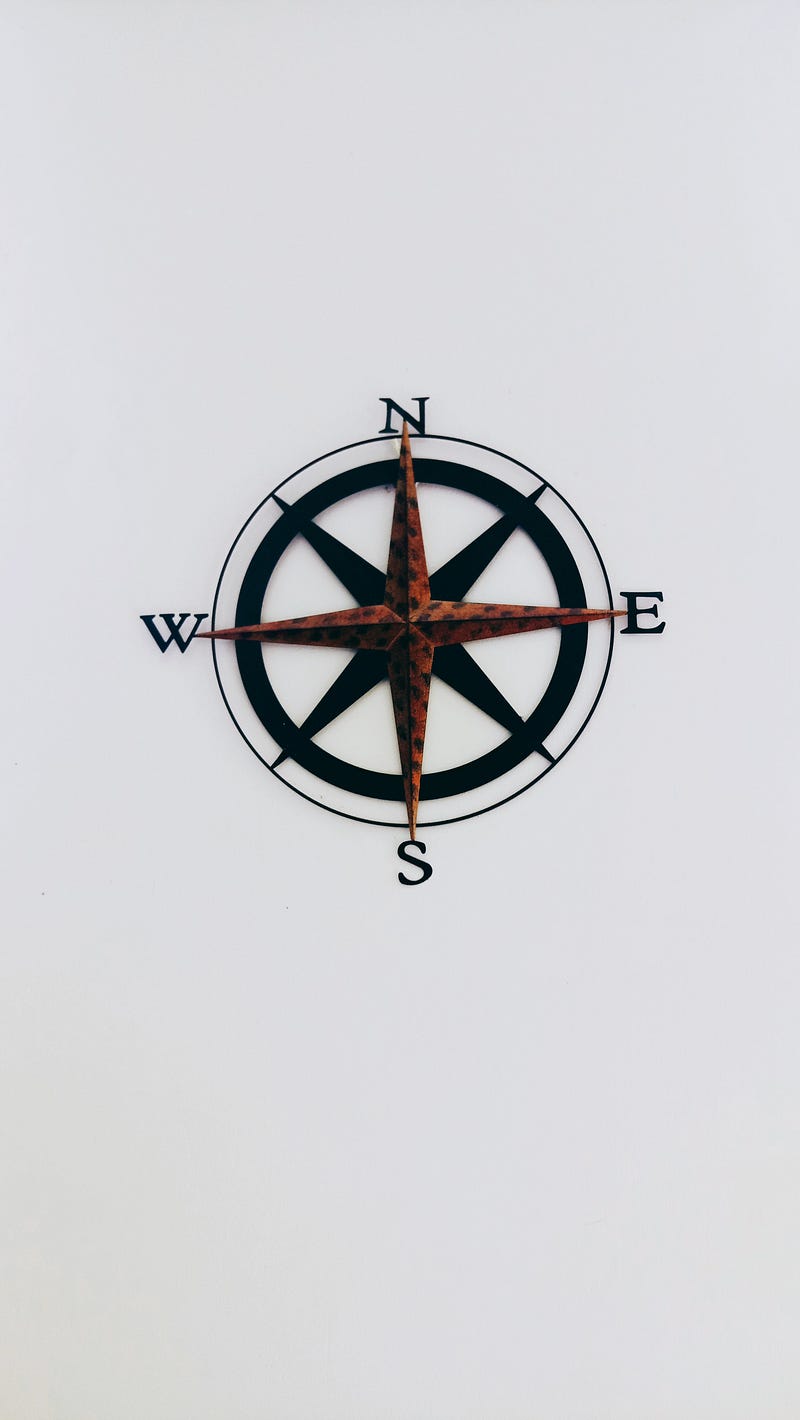
Imagine a compass inside your chest — your responsibility is to keep the compass true; to keep the needle pointing North.
There are many things, in this metaphor, that can mess up a compass — lack of sleep, addictions, bad relationships, physical and mental pain, a stray word said by someone, a TV show that gets you thinking the wrong way — endless things, small and big, that will distort the needle of the compass.
If you are aiming at true North, you will do good by everyone, you will automatically and unintentionally fulfill the otherwise unimaginable idea of hyper-responsibility — you’ll be a model friend, a model citizen, a role model for everyone and you’ll spread good like a bee spread pollen —
Bees don’t intentionally carry out pollination — its the unintentional product of their efforts to gather pollen to stock their nests as food for their young,
North is self-actualization and it comes from knowing what you value and doing your best to build it. To build something, rather than to dream about it, or throw yourself at it, fail and give up — takes an understanding of time —
· we can use time to build our values day by day
· the change that will happen in our character and our lives will be slow, like evolution, too slow for one ‘Ego-Me’ to appreciate(following the idea that we change our Ego-Me roughly every 6 months according to changes in our lives)
· the resource of change is you — your time, your energy, your good-will, your motivation. Self-care is therefore very important. You can’t allow yourself to get burnt out. You need to be smarter than that. You need to rest, relax, enjoy — to be a good person — (that’s the problem with hustle culture which can lead people to work too hard and focus on external metrics of success like money and popularity.)
Your responsibility is to preserve the integrity of your compass.
So that:
1. You can work on doing good in all aspects of your life
2. Your natural response is to do good, as a bee does, by your pollen rubbing off.
It’s this internal view of responsibility that the left-wing has ceded to the right-wing — individual, personal responsibility does not mean being a capitalist and not a socialist, still less being a sexist and not a feminist — socialism, as Marx saw it, was the end-point of capitalism —
You should know the things you love and work on them without caring about the results, only caring about how you feel — are you doing your best to work towards your values? Is your North true?
Then look at your life — the challenges and struggles — your obligations and relationships — do they distort your needle — are they like a big magnetic field pulling you off track so that you’re never happy and self-actualized and you start to pick up toxic traits as a social member?
Does the mismanagement of your time result in you forming the basis in yourself of prejudice and injustice?
Hyper Responsibility
Ultimately, we are responsible for everything — all of the social ills find a reflection in our lives — the more we perfect ourselves, the more perfect will the world be —
We’re not ready for real democracy, lasting peace, equality, or real security — internally, we’re not that good. We do mean stuff like hurt our friends for popularity points.
Sometimes we are good enough. When our needle is pointing true North. But it gets skewed so easily and we spend a lot of our time pointing North East or North West, and once we’re off, we can get pulled South.
Feel your needle- is it balanced today? Is it true? What do you need to do to make it true or keep it true? How should you respond to the next external event? Think about the needle rather than the external event and you’ll likely choose the best course of action.
It could be that you find yourself in Martin Luther King’s position, and to keep your compass true you need to tell everyone about your dream. But maybe that’s not your role (in which case maybe don’t think too much about your dream) — maybe that’s not your role yet, and maybe not ever.
It all comes down to the tiny compass in your chest. Are you at peace with yourself?
If you are, then you’ll do good to the world — and you’ll be responsible for peace treaties, new babies you never see, inventions made 500 years from now, functioning democracy in a better social system that evolves in the late 45th century…
Everything, past, present, and future, is our responsibility. Responsibility is power. The more we live up to hyper-responsibility, the more we’ll grow as people, the happier we’ll be, and the better we’ll treat each other and the world around us.


