
Does China Benefit From the U.S. Stripping Cameroon of Its AGOA Privileges?
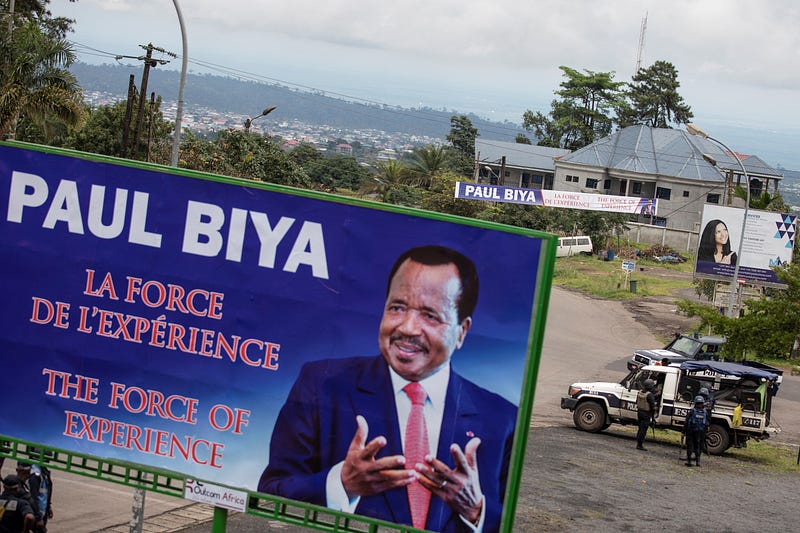
At first glance, it would seem that the Trump administration’s decision to revoke Cameroon’s free-trade privileges would be counterproductive at this time when the U.S. is battling hard against the Chinese for influence in Africa. After all, Washington sanctioning Youndé on human rights plays right into the hands of the Chinese who say this is exactly the kind of thing they would never do.
But it’s not that simple.
Last week, President Trump notified Congress that he will terminate Cameroon’s preferential trade access to the U.S. market as of January 1 due to “persistent gross violations of internationally recognized human rights.”
Cameroon: This Has Nothing to do With Human Rights, It’s All About China
In an interview with CNN over the weekend, Cameroon’s Minister Delegate at the Ministry of External Relations Felix Mbayu bluntly accused the United States of being disingenuous about its concern for human rights. “The simple truth is that the U.S. is unhappy with a certain stance we take with China,” he said.
There’s no doubt the Trump administration is vulnerable here to Mbayu’s critique. In sharp contrast to his predecessors, the U.S. president has downplayed the role of human rights in U.S. foreign policy. Instead, the administration has embraced the leaders of a number of authoritarian countries with well-documented human rights violations including Saudi Arabia, Russia, North Korea, and Egypt among others. So, by sanctioning Yaoundé on human rights grounds, it shouldn’t come as any surprise that a lot of observers regard U.S. policy as inconsistent at best or cynically disingenuous at worst.
“Washington’s move could push Cameroon and other African states further into the waiting arms of China and Russia — countries that do not ask questions about human rights.”
Chris W. J. Roberts, POLITICAL SCIENCE INSTRUCTOR AT THE UNIVERSITY OF CALGARY
Given that the two countries did relatively little trade with one another, the economic stakes are not very high, prompting Mbayu to brush off the White House announcement: “The government has no move to make; we have other partners like China, Russia, and Singapore who are ready to do business with us… We have no reaction to the U.S,” Mbayu told CNN.
The Optics of This in Africa Don’t Look Good for the U.S.
Cameroon is now the second country in as many years to have its AGOA privileges stripped following Rwanda’s suspension last year over its refusal to accept used clothing imports from the United States. This combined with tariffs on South African steel and aluminum exports all give the impression of a more hostile U.S. trade policy towards Africa just as China is making moves in the opposite direction.
In Cameroon, at the same time that its U.S. foreign aid back in February and is now removing trade access, the Chinese instead wrote-off part of the country’s debt earlier and is now hosting Cameroonian officials in Shanghai to participate in this week’s China International Import Expo where they’ll try to gain more access to the Chinese market.
It’s the same in Rwanda where Zhejiang province teamed up with Alibaba and Dubai Ports World to open the country’s newest dry-port.
These examples are admittedly rather small-scale but they do point to a larger, more important narrative that China appears to be open for business, working collaboratively with African countries and the United States is not. Whether that assessment is actually true is beside the point because in this kind of geopolitics these kinds of optics are very important.