Does Artificial Intelligence Help or Hinder Mindfulness and Growth of a Mindset?
An inquiring mind wants to know
An inquiring mind wants to know! Do you think artificial intelligence helps or hinders mindfulness and growth of a mindset?
I am truly curious how others feel about it. As an advocate for mental wellness, mindfulness, and practicing creative expression to change our mindsets, I am still on the fence about artificial intelligence.
Of course, I typed in my keywords into a lesser known AI writing program and it informed me AI can play a significant role in overcoming a fixed mindset. Using the AI tools, people can experiment without the fear of failure and encourage experimentation.
Given my Aquarian nature, I have experimented with several AI programs, driven by my creative and tech-savvy inclinations as an artist, writer, and curious individual.
But I am still not convinced.
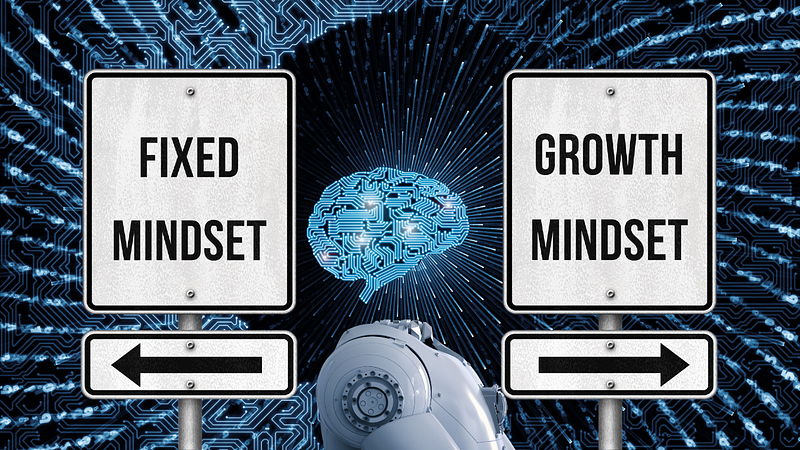
Comparing a fixed mindset to a growth mindset.
Those who have a fixed mindset believe that intelligence is unchangeable, whereas individuals with a growth mindset understand that it can be cultivated.
Individuals with fixed mindsets often seek approval by trying to appear intelligent, leading them to avoid challenges, give up quickly, struggle with accepting criticism and feedback, dismiss the importance of putting in extra effort, and feel envious of others' accomplishments.
A desire for learning and a willingness to embrace challenges are key components of a growth mindset, which seek out challenges. Learn from criticism and feedback, find different perspectives or techniques for setbacks, and gather inspiration from others’ success.
If I use artificial intelligence to write articles for me or create art, does it provide me with a false sense of confidence? Or does it develop confidence in a new skill of writing prompts?
Does it lead me to avoid the challenges to improve my writing skills? Am I using AI because I am envious of other accomplished writers? Or am I gathering inspiration from this buzzing technology and using different perspectives and techniques?
During my studies of mastering our mindsets, I learned that confidence builds on the foundation of moving your mindset out of a fixed position. It begins with awareness, just like mindfulness. You pay attention to your self-talk, your reactions, and the experiences they come from.
Next is moving toward different perspectives and realizing you have choices. You always have a choice. Perhaps none of them are the most desirable, but there is always a choice. Adopting multiple viewpoints when approaching situations broadens our horizons, enabling us to escape the limitations of feeling trapped or limited in one stance.
The last step towards confidence is the actions we take from this point forward. It is no longer just thinking different thoughts but acting and reacting differently that brings the confidence to us, thus naturally creating the space for change and growth. It comes from within us.
I don’t know about you, but for me, those action steps often involve emotions and spirituality in some form. I guess that’s one reason I am still on the fence about artificial intelligence.
Some of the bigger questions for me are present moments, non-judgment. and truth. Artificial intelligence and concepts originated back in the 1950s. Where, when, and how are the data components chosen?
If all of this machine learning is based on data and algorithms, how current and correct is the data it is analyzing?
As AI continues to grow, they say it will reach cognitive thinking abilities such as reasoning, learning, and self-correction.
I read recently that a couple of current goals are to teach it emotional intelligence and moral reasoning.
But then I question how it will teach such deep subjects when it often can’t create a human hand picture with just five fingers? How will it find moral reasoning when it can’t distinguish copyrighted and trademarked content?
Emotional, spiritual, and social intelligences are the human aspects beyond IQ’s. They are the keys to creative endeavors that reach out and grab our hearts and our spirits.
How do you teach a computer to analyze the patterns of these intelligent practices when they are so individualized?
I believe it will ultimately be a matter of human will and the way individuals decide to employ artificial intelligence.
I will continue to question if it will help or hinder mindfulness and the expansion of our mindsets, but one thing I think I can rely on is that creativity will continue to be a human trait.
But let me know what you think?