
TRUE STORY
Does Anyone Still Want to Grow Up to Be President?
Once upon a time, growing up to be president was the aspiration of every American child. Perhaps the job’s appeal has worn off.
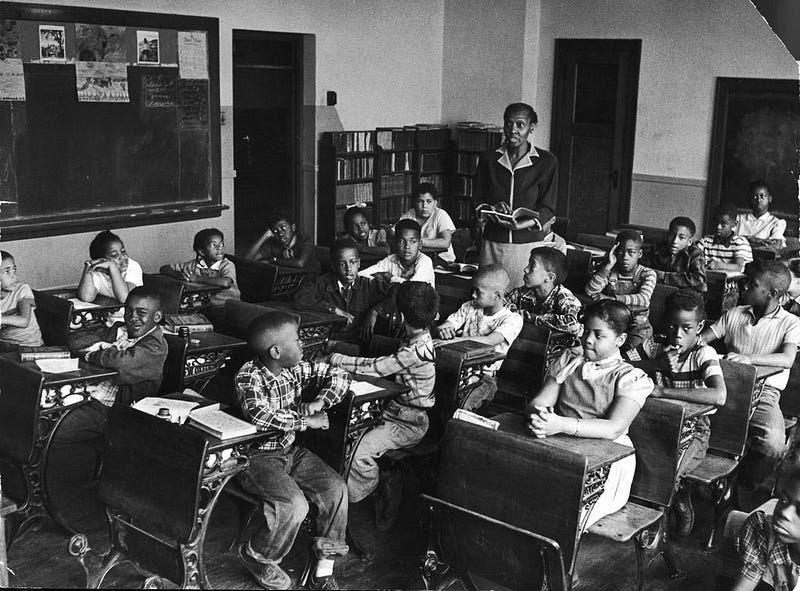
When I was about six years old, Theresa Roundtree, my first-grade teacher at Rightsell Elementary, asked the students in my class to answer the following question: “What do you want to be when you grow up?”
The year was 1964. Despite the effort to integrate Central High a few years earlier, nearly all Black children in Little Rock, Arkansas, attended segregated public schools.
I can still remember writing “COMMISSIONER” as my answer to Mrs. Roundtree’s question in my Big Chief tablet. Since Batman was my favorite television show, I knew Gotham’s Commissioner Gordon had an important, albeit fictional job.
Of course, I had no idea what a commissioner did, but I knew he could call up Batman whenever the city was in trouble, so it had to be an essential job.
As it turned out, my answer was in the minority that day. Nearly all the other students in my class — both boys and girls — wrote the same answer. They said that when they grew up, they wanted to be the president of the United States of America.
“Why didn’t I say that!” I recall thinking to myself.
During the first few weeks of school that year, I was one of a small group of boys in our class that Mrs. Roundtree summoned to assist in sorting through several large cardboard boxes of ragged books. Our job that day was to help her cobble together enough matching textbooks to teach her class.
What my six-year-old mind did not realize at the time was that similar cardboard boxes, filled with ragged books, went not only to each teacher at Rightsell Elementary but to every Negro teacher in the Little Rock System’s segregated school system.
The delivery of used books was a yearly ritual at the city’s so-called ‘colored schools.’ In 1964, my hometown’s school system required schools like mine to make do with old, hand-me-down books sent to us from the white schools on the other side of town.
Since there were never enough books in any one subject to go around, none of us ever had a book of his or her own for homework. When it was time for our class to read, we shared the few books we had, sometimes three students to a book.
On the occasions when there was only one book to read from, each student read a paragraph, passing the tattered book around the reading circle, from one first-grader to the next.
Decades later, I can still remember thinking that — Jerry — the name scribbled over and over inside one of the few books assigned to me, was a much more desirable name than the one given to me by my parents.
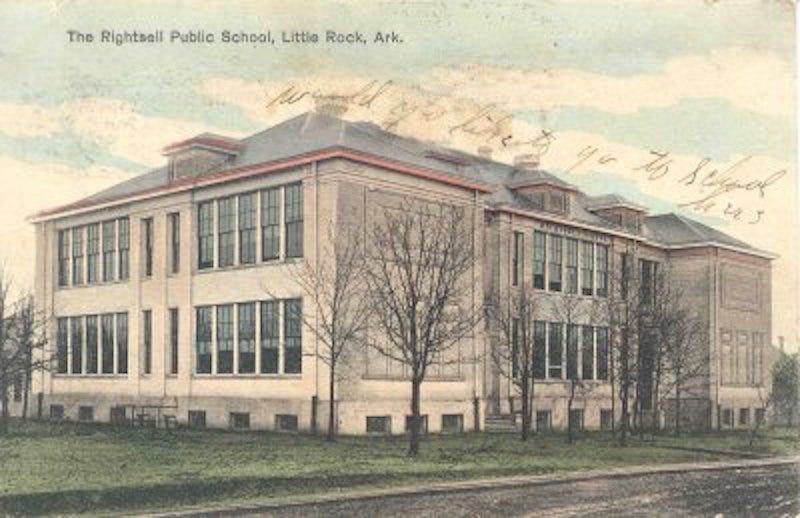
The students in my class — in my entire school — would never have access to the same educational tools as our white counterparts across town. Being shortchanged in this way was so commonplace no one even complained. There was no expectation that things could be any different.
While ‘Separate But Equal’ worked perfectly in theory, this was how it worked in practice. It would be five more years before I received my first brand new school book. It would be even longer before I went to school with a white child.
But I can still remember the sight of Mrs. Roundtree on that September day, looking over her cat-eye glasses as she thumbed through our answers. I can again see her raising her head and smiling as she looked around the classroom.
I remember her taking the time to praise the students that had the gumption to set their sights so high. But looking back all these years later, I am convinced that she knew then what I know in my heart today:
Not one of us in her first-grade class that year had a snowball’s chance in Hell of ever being President of the United States of America.
More than fifty years have passed since that day in my first-grade class. I never forgot Mrs. Roundtree, and more importantly, she never forgot me. When I graduated high school, she was one of the first to send a congratulatory card with a few dollars hidden inside.
Whenever I came home from college, I always made time to stop by her home to let her know how things were going. The last time I saw my first teacher, I noticed how much smaller she was than the person I remembered from so many years ago.
Years later, my wife and I left Little Rock behind for New York City. Sometimes I told colleagues my story of segregated schools and boxes filled with worn-out books. Their reaction was always a combination of disbelief and amazement.
What my former colleagues never understood was that for me, that story is a kind of testament to Mrs. Roundtree — and those like her — making bricks without straw to prevent their young charges from falling through the cracks of a system that could have cared less.
I have my own family now. My youngest two are old enough to recall the previous president and to question the fitness of the current occupant of the White House.
Ironically, they both are likely to finish high school, having never had a teacher of color. But if Mrs. Roundtree could see them, she would probably smile, proud of her former student, the would-be commissioner.
In my mind’s eye, I still can see her, rhinestone-studded glasses hanging from a chain coiled around her neck, wondering if — unlike her 1964 first-grade class — they have a snowball’s chance in Hell of being President of the United States of America.
I wonder if they would even want the job.

Thank you for reading! My writing is reader-supported, so if you enjoyed this piece, please consider becoming a paid subscriber to The Journeyman, my new weekly-ish newsletter! You can also like my newsletter on Facebook or follow me on Twitter.


