
Do You Want to Live In a Friendlier World?
Change your perspective
“Everything we hear is an opinion, not a fact. Everything we see is a perspective, not the truth.” (Marcus Aurelius )
The Oxford English Dictionary defines ‘perspective’ as
- A particular attitude towards or way of regarding something; a point of view.
- True understanding of the relative importance of things, a sense of proportion.
A perspective is a prism through which we view people, their actions, external events, and life’s experiences. We develop our perspectives right from an early age when we are under the care of mothers and other caregivers. Over time, we develop habits, beliefs, patterns of thoughts, and behaviours which shape our perspectives.
“The optimist sees the donut, the pessimist sees the hole,” (Oscar Wilde)
The optimist sees the glass as half full; the pessimist sees it as half empty.
In the Indian tale of the elephant and the five blind men, each man touches a distinct part of the elephant’s body and comes up with their own descriptions of the animal.
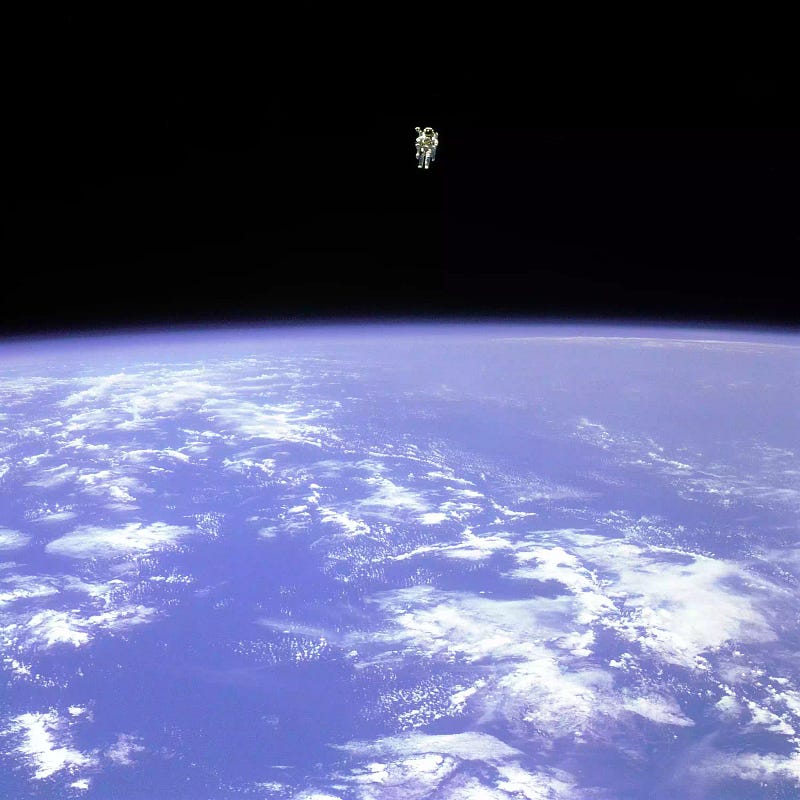
Astronauts will tell us how a shift in perspective can be a mind-altering experience.
When they view the earth from space or from the moon’s surface, they undergo the “overview effect”, a term coined in 1987 by space writer Frank White.
The view from the spaces makes the earth appear as a tiny and vulnerable ball and a mere speck of a vast universe indifferent to human designs and purposes. They don’t see the earth’s national borders from space. The futility of human conflicts on earth flashes before their minds as transcendental truth.
Reframe questions
We can achieve a shift in perspective by reframing questions that we ask of ourselves. For instance, when the boss shouts at you, the immediate question that arises in your mind is, “why is she shouting at me?”. You are asking this question from your perspective. You are the victim, and the boss is the perpetrator.
Suppose you reframe the question as “what is the boss going through in her mind to lose her temper?” Your perspective shifts immediately. You can come up with explanations like “maybe she is having serious personal problems” or “she is under some kind of pressure and I just crossed her path at the wrong time”. You are no longer the victim. You have shifted the perspective and changed the narrative from victimhood to acceptance and empathy.
Reformulate your perspective
The reformulation of perspective is a permanent mental shift that will gear our habitual patterns of thought and behaviour towards seeking mental pauses before responding to people and situations reflexively.
“Between stimulus and response, there is a space. In that space is our power to choose our response. In our response lies our growth and our freedom.”
Viktor E. Frankl
We are prisoners of our cognitive biases and belief systems. They are so deep-rooted that we may not even be aware of their influence on us. One way to escape their influence is to expose ourselves to novel experiences and try to understand those with whom we disagree.
For instance, I was a liberal in political thought and considered other points of view as unacceptable. I read conservative journals like City Journal and books by authors like Thomas Sowell. I realized that conservatism has a valid basis in some of its postulations, like the need to preserve traditions in that they unified society. According to G. K. Chesterton, if there is a fence, there is likely a reason for it. We should not change existing institutions without considering the reasons for which their creators built them.
Objective truth is elusive
“There are no facts, only interpretations.” (Frederich Nietzsche )
We cling to our opinions and beliefs as if they were the ultimate truth. Self-righteousness blinds us to reality.
“You will always defend events in a manner which will validate your agreement with reality.” ( Steve Maraboli )
Reality is a complex phenomenon. It is multi-layered. Our self-constructed reality is merely a subjective abstraction.
“And those who were seen dancing were thought to be crazy, by those who could not hear the music.” (Frederich Nietzsche )
Instead of searching for the ultimate reality, making peace with ambiguity and accepting its subjective underpinnings will shift our perspective about life. Instead of treating life as intrinsically unfair, we will start internalizing the perspective that life is what we make it out to be. Nobody is conspiring to undermine our efforts.
When adversity strikes unexpectedly, instead of asking “Why me?”, you will pose a different question : “How can I ride out the storm, bounce back and emerge stronger than before?”
Art as a tool to change perspective
Art can not only heal our wounded hearts, but it can also help shift our perspectives. Poetry, literature, painting, sculpture, cartoons are really about offering multiple perspectives than what they appear on the surface.
You can either practice an art form or appreciate art. Either way, you hone your skills to look far beyond the horizon, to look for deeper perspectives than what the artist ostensibly tries to convey.
“Nobody I think ought to read poetry, or look at pictures or statues, who cannot find a great deal more than the poet or artist has actually expressed. Their highest merit is suggestiveness.”
(Nathaniel Hawthorne)
One of art’s central themes is “appearances are deceptive”. There is always more than what meets the eye.
The world looks unfriendly to us because we view it through the prism of our self-constructed notions of fairness and objectivity.
“You have your way, I have my way. As for the right way, the correct way, and the only way, it does not exist.” (Frederich Nietzsche )
A shift in perspective is the perfect antidote to the perplexed mind’s sense of cluelessness about how the world functions.
Thanks for reading.


