
Do you Want to Learn Patience? Grow A Bonsai
It is not an activity for the impatient
The entrance to the Supermarket was lined with miniature live Christmas trees. Red metallic wrapping paper transformed the unattractive black plastic nursery pots into festive items of desire.
On impulse, I picked one up and examined it a little closer. A white plastic label identified the specimen as a Picea Glauca Conica commonly known as a Dwarf Alberta Spruce. It was a beautiful tree, about as tall as my forearm, symmetrically shaped with bright green soft needles.
It came home with me. The tree delighted my young daughter who decorated it with cranberries and assorted homemade doodads. It was during that holiday season that I came across a book titled Bonsai: Illustrated Guide to an Ancient Art.
It was published by Sunset Books, a company that in pre-internet days had cornered the market in self-help, do-it-yourself, how-to books.
Below a color photo of a smallish Chinese Wisteria in bloom the first sentence in the book read:
“To evoke the spirit of nature — that is the essence of bonsai.”
I found the statement inspirational. The book contained a chapter on creating your own bonsai, a “step-by-step guide” as it were. It occurred to me that the Alberta Spruce could be a good candidate for a bonsai.
The book came home with me.
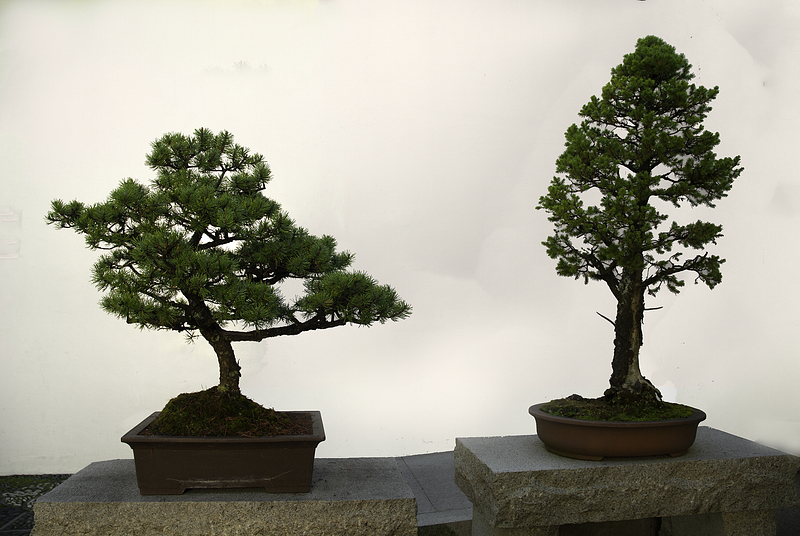
I soon learned that the art of bonsai is guided by a distinct set of rules, developed over centuries. The ultimate goal is to create a tree that displays all of the characteristics of a century-old specimen, but miniaturized.
Japanese masters have established mathematical ratios that create depth, balance, and proportional structure to enhance the illusion of age. The depth of the pot, for example, should be equal to the width of the trunk, while its length should equal two-thirds of the height of the tree.
That is only the beginning. Aside from the design guidelines that control how a bonsai is created, there are also horticultural timetables that one must adhere to in order to keep the tree alive.
The Alberta Spruce would have its roots trimmed, and be transplanted into its brand new unglazed Japanese bonsai pot at the beginning of Spring.
Spruce me up
The day I removed the Spruce from its nursery pot to replant it into its tiny new container I felt like I was performing open-heart surgery on a dying patient.
After soaking the root ball in a bucket of water to remove the nursery soil I was left with a soil-less root structure ten times bigger than the pot that was supposed to hold it. It felt like stuffing an elephant into a Smart car.
Panic set in. If the roots dry out, the tree may die!
I cut the taproot almost to the soil line then I trimmed the fine feeder roots to make them fit inside the new pot. It went from hippie locks to military buzz cut in minutes. I filled the container with special bonsai soil. Fingers crossed. A few weeks later the tree started to show signs of new growth. I felt elated, I had not killed the poor thing. The next steps required trimming and wiring the tree to establish its shape.
The Spruce survived accidents and occasional neglect over the decades. Once blown off its pot during a winter storm. (I had not wired its roots to the pot) Fortunately, it was raining so the roots stayed wet. It survived.
On another occasion, someone turned the gas barbecue on while the Spruce was sitting on its side shelf. Some branches got scorched. It spent a year in the Intensive Care Unit of a Bonsai Hospital. It survived.
Let’s try a Juniper
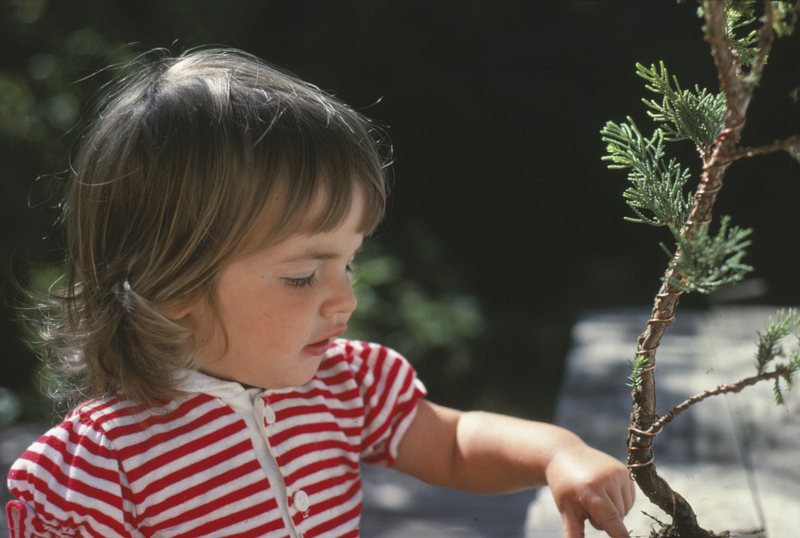
My second bonsai attempt, a spindly Spartan Juniper was not so lucky. My rudimentary skills at trimming and wiring a bonsai caused irreparable damage. The tree did not survive. Bonsai is not an activity for the impatient. It can take years to develop the highly desirable thick trunk structure that tapers beautifully into its terminal point.
After years of watching the Spruce slowly develop into a graceful bonsai, I decided that training a deciduous tree would allow me to witness its changes throughout the seasons. I chose a Japanese Maple.
Charmed by the Maple leaf
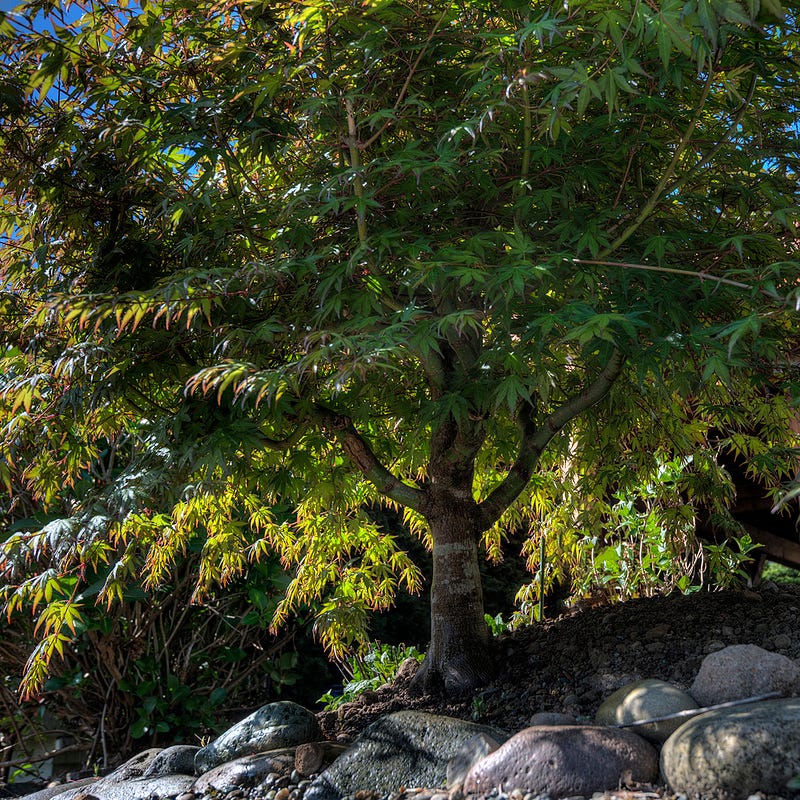
The Maple turned out to be an impetuous teenager. It would explode with growth every Spring sending long branches in every direction as fast and furious as a fireworks display.
I trimmed it back every Summer allowing the trunk to gain girth. It turned out to be the best trunk of any bonsai I ever trained. When the Fall colors came, it blushed beautifully, as if embarrassed by its wild behaviour.
A rescued Katsura
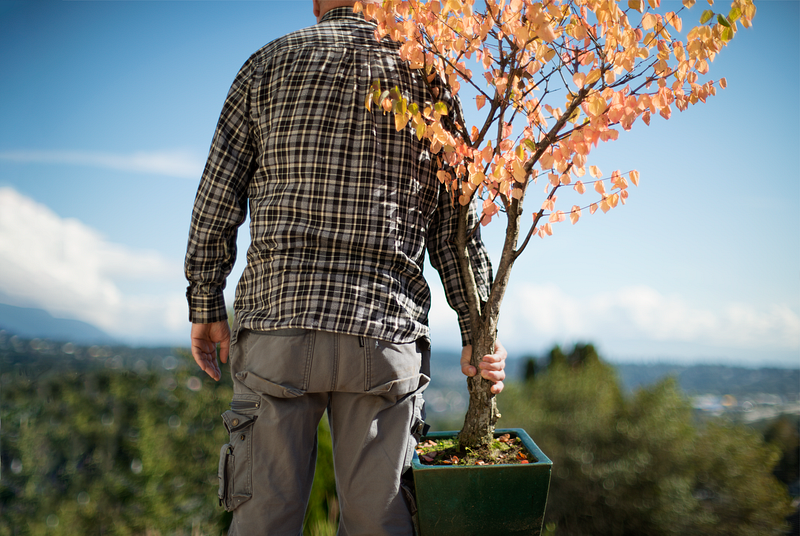
I then trained a Red Pine, followed by my favorite tree, a Japanese Katsura. I found it in a bonsai nursery when it was seventeen years old. It was wild, untrained, unwanted, discarded in a corner of a greenhouse, but I saw amazing potential.
For the next fifteen years, I concentrated on developing its trunk. Its foliage showed chameleon-like properties changing from soft greens to deep reds to sunset oranges to lemon yellows. A truly magnificent specimen. A few years ago I was admiring the old Alberta Spruce and reflecting on its history. Initially a victim of the untrained hand then lovingly cared for in times of need.
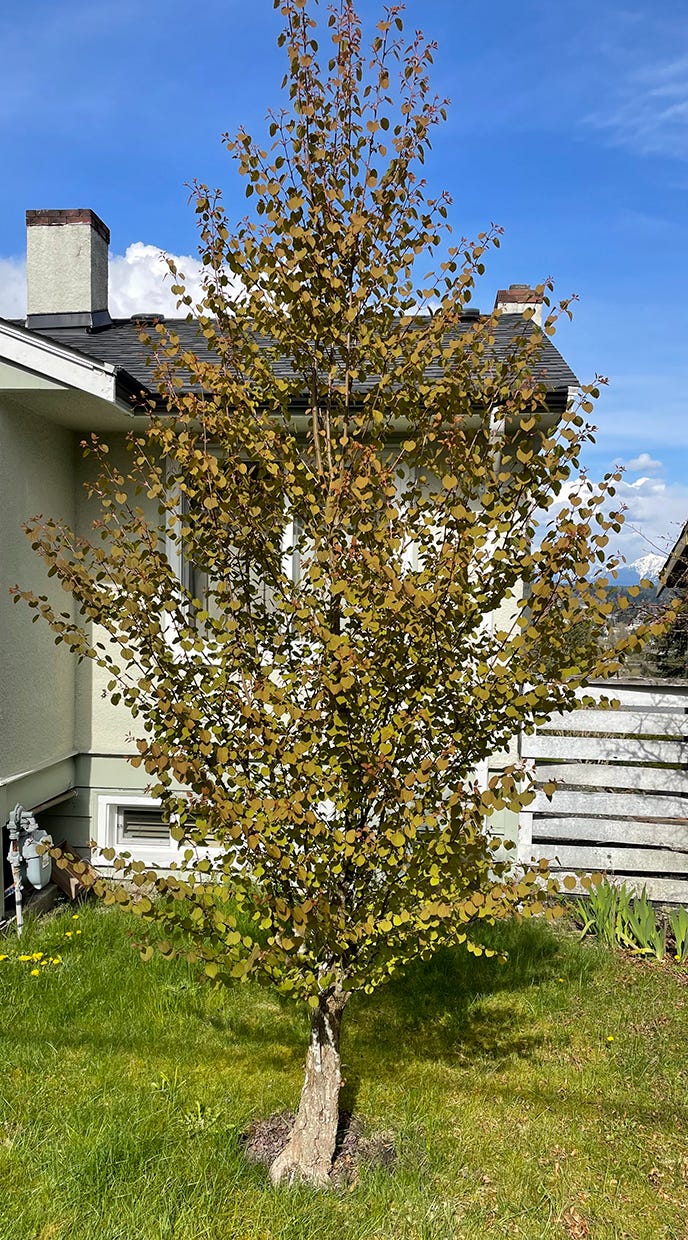
According to my calculations, I had incarcerated that tree for over thirty years. I dug a hole in the yard and set it free. It quickly thrived in its new location. Soon the Pine followed, then the Maple. The last bonsai, my beloved Katsura was planted in my neighbor’s yard. Free at last, free at last, thanks Rodrigo, we are free at last. Here it is today:
It was time to turn over a new leaf.


