
Do You Want to Curb Your Drinking Habit? Replace it With a Better Habit
The pastime that was instrumental in helping me stay on the wagon
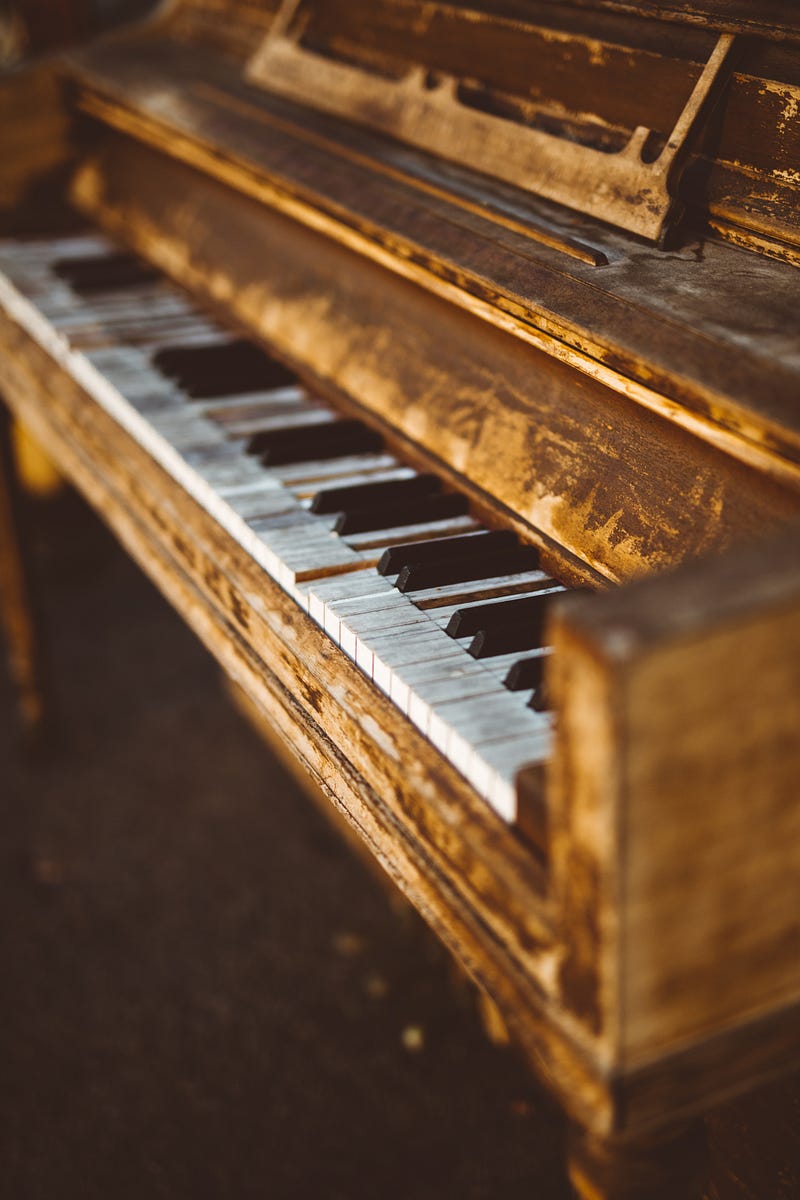
Some time ago, a social media acquaintance of mine posed the question, “How does one cut out, or at least cut back, on one’s drinking?”
I am careful about how and to whom I dole out advice, but I was at the time about halfway through a second 100-day alcohol-free challenge. I was feeling a little chuffed, and at least semi-qualified to weigh in on the issue.
Over the course of my several successful alcohol-free periods, I have amassed a new collection of habits and hobbies. Some are indisputably beneficial to mind and body, such as reading, writing, and running. Others are a little more questionable, such as consuming entire pots of Earl Grey tea in one sitting and eating spoonfuls of French vanilla frosting directly from the plastic tub. (Whatever. Neither of those things result in heart-rattling hangovers, so I give myself a wide berth.)
But I attribute a large part of my success in those early days to a single habit, one that evolved from being merely a pleasant pastime to something of an obsession.
“The thing that helped me most,” I replied to my acquaintance’s inquiry, “is taking up an instrument.”
Like a lot of people, I took piano lessons as a kid. I enjoyed it well enough at first. I sat down to practice “Swans on the Lake” and “Hot Cross Buns” without too much pestering from my parents. I regularly earned stickers and smiley faces from my teacher. I performed well at recitals.
But, as with a lot of kids, my interest waned as my teacher’s expectations escalated. Once I had to do something that looked suspiciously like math (How many counts per measure in 6/8 time? I have no idea), I practiced less and my parents pestered me to practice more. I made a few more halfhearted attempts. Then I begged to quit.
“You’ll regret it,” my parents told me.
“No, I won’t,” I assured them.
They let me quit.
I regretted it.
So when my son began lessons a few years ago, I did too.
I have never mistaken myself for a natural musician. Nor would anyone who has ever heard me play. I have no rhythm. Time signatures like 12/8 seem to me a mathematical impossibility. I forget to release the damper pedal. I understand the difference between forte and mezzoforte in my head, but my fingers don’t interpret my brain’s signals and they land on the keys in two decibels — loud or quiet. Oh, and all those squiggles that are supposed to indicate rests? Indistinguishable to me.
In spite of this I played on, if intermittently at first, as my kids were small at the time and were usually tugging at my sleeve. I was also beholden to the inherent limitations of our piano — a battered upright Yamaha that was precisely 3082.5 years old. Without headphones, I could only practice when my kids were awake, and not tugging at my sleeve. In other words, I could only practice for about three and a half minutes a day.
Still, I played. Mastering a scale or a single measure of a new piece was the kind of mechanical task I craved in early motherhood, the kind that furnished me with a sense of accomplishment, and had the added benefit of being more soul-replenishing than emptying the dishwasher.
Over time, I got a little better. Then, in a stroke of luck, we acquired a gently used keyboard. With headphones now, I could practice any time, day or night. (As long as they were plugged in. All the way in, as I learned one noisy evening).
Over more time, I got a little better still. I also got hooked.
Psychologist Mihlay Csikszentmihalyi is well-known for his work on “flow,” which can be defined the state of “concentration or complete absorption with the activity at hand and the situation.” As I improved, it was in this state, meditative and joyful at once, in which I found myself suspended on many an early, tranquil morning, when for a couple of hours nothing mattered but my piano, my headphones, and me.
The joy only inflated with effort. I began to practice whenever I could, and I got better still. The first time I played Bach’s “Prelude in C Major” without a making a mistake, I threw my arms across the keyboard and squeezed it. “You give me reason to live,” I lovingly cooed. (My husband looked on with the appropriate mix of jealousy and bemusement).
My confidence at the instrument grew, and I set challenges for myself. I agreed to play in a few recitals. I prepared and sat for a Royal Conservatory exam. The prospect of a recital or exam got me out of bed at 5:00 every morning to practice. It got me into flow, and that flow became so important to my daily well-being that it became non-negotiable. I would allow nothing, especially not a single glass of wine that could lead to the faintest hint of a hangover, to jeopardize it.
The challenges I set for myself were probably over-reaches. I flubbed of couple of recitals, but did okay in others. Sometimes guests would compliment my performance after, which always felt nice. I passed my exam, but just by the skin of my teeth with a 66%. In her notes to me, my examiner told me how thrilled she had been to see an adult student, and encouraged me to continue in my studies. That felt nice too.
But the compliments and certificates, I’m realizing now, were never really the point. The point was that my practice kept me accountable to myself, and it kept me on the wagon.
In the two years since my exam, my passion has waned a little. I don’t take lessons anymore. I have traded in my early morning practice for early morning reading and writing. I really only tinker a little while I’m waiting for the kids put their shoes on in the morning or for the kettle to boil.
I still enjoy it. I may get serious about it again one day, or I may never play another note.
It’s fine either way. Because the point of learning piano, I see, wasn’t really learning piano at all.
Disclaimer: I am not an addictions counselor or a licensed therapist. If you are concerned about your drinking, please seek professional help.


