
Do you really know what ’listening’ is?
“You don’t even listen to me!”
Ouch! That hurt! Especially as it was said by someone very close to me — my son.
My first reaction was: “Hey, that’s not true at all — I’ve been listening to you very well!” I mean, after all, listening is a big part of the job I am good at. Maybe that’s why it hit me hard when I heard that sentence?
That evening, I set out to gain more clarity about listening.
The Orchestra of the Beach

My first stop was the beach.
I sat down, intent on listening to the sea. At first, I only heard rhythmic sounds that quickly became familiar and rather monotonous, turning into background noise for my busy thoughts.
Determined I went back to my ‘project. Over and over again, I called my attention back to the sea.
And then I heard them: the individual sounds of the various instruments playing in the ‘orchestra’ on the beach!
The swish of the sand, the in-breath sigh before the water flows back, the strong breaking of the larger waves, and the gentler curling of the smaller ones. Each of these movements bringing its own note to the melody.
Again and again, I brought my focus back to this nightly beach concert. Until I dropped deeper, and felt fully surrounded by the music. And then, for milliseconds, I not only heard the tunes, I was part of the waves’ rhythm and vibration.
If THAT experience was listening, then yes, he was right.
I had not been listening.
The Nest of Listening
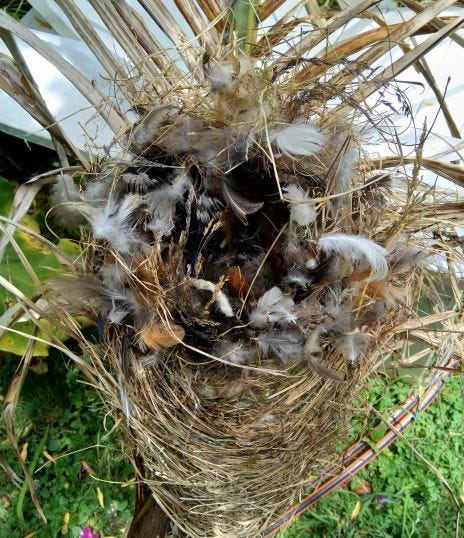
Real listening feels like you building a nest and holding it out to me. In this nest I am secure, accepted and protected with what I bring and how I am in the moment. The nest is open, giving me space to grow and fly, even if right now I want to sink into its safety and comfort.
In the moments of listening, I am the only thing important to you. I feel with every fiber of my being, that your concentration, your focus, your attention, your heart are all here, only for and with me.
You don’t think about how and if you can help me. You don’t ask yourself whether I expect something from you, whether you should do something. You do not have films of your own experiences running in parallel. You don’t compare.
In fact, it feels like you have never heard anything like what I am telling you in your life. I can feel you listening. Even if I don’t see you and your body. Even if I don’t hear you. This is how it is for me when you really listen.
As soon as you move away just a little, maybe to stay objective, if you follow your own thoughts for a moment, if you are distracted by something, or if you follow a formula to paraphrase every other sentence, then I notice that you are not listening. I notice it right away. And it hurts
It hurts, because once again an old idea seems to be confirmed. The idea that I am not worth your attention / care / love.
It hurts, because I don’t need your solutions, your confirmations, your advice. I need you. Your closeness. And in that moment, it feels that you can’t or won’t give that to me.
Allowing the Unfolding

As I stepped deeper into the process of real listening, I began to wonder: “Why does it seem harder to really listen to someone very close to me, than it is to listen professionally?”
When I feel emotional closeness, I often experience a strong sense of responsibility for ensuring that you are okay. When you tell me about pain, disappointment, and frustration, I feel the urge to do something. And so, I start thinking about solutions, while you speak.
Why? Because I do not want to appear uncaring, incompetent, or inactive. I want to do much more than ‘just’ offering you a nest. I would like to feed you, stroke you, cover you, and remove every twig that might prick you.
And then I’m no longer with you. I no longer let you have your experiences. In fact, when I do this, I judge the situation you are telling me about as bad, and your ability to deal with it as inadequate.
That rescuer sense of responsibility is less aroused when I listen professionally. My attention remains more on providing you with that Nest of Listening, than on a parallel process of looking for solutions.
When I do not allow these primal urges to dominate me, I have the freedom to just be there with you, whoever and wherever you are.
The reflective dive into real listening, showed me that listening and helping are two related but very different things: Focused listening can help, but when I focus on helping, I cannot listen.


