
Writing
Do You Need A Formal Education To Actually Be A Writer?
Four Examples That Might Prove You Don’t
I read another writer’s work just this past weekend, and it really saddened me. Now, I’m not going to out this writer to the world, but her message kind of hit my heart like a load of grapeshot from a cannon.
Hey, if you’ve never been hit by grapeshot, trust me, the seeds are tough to get out from between your teeth.
This writer, who did what I thought was a pretty good job with the piece, maintained she was sailing along on the path to higher learning and then was struck down with a mental illness that crippled her.
The illness was so severe she couldn’t continue, couldn’t think, couldn’t remember a single lesson course. It was so bad this writer refused to leave the house, her mind in shambles, with almost no control of being able to process a single coherent thought.
To compound an already terrible situation, this writer believed she would never be able to pursue her life long ambition to become a writer without said education.
Because we all know you have to have a formal education to be a writer, correct?
Okay, full transparency here. I ain’t that educated. I never got a formal degree, and at my tender young age of sixty-seven, I have absolutely no desire to get one. All of my reader and writer friends already know I’m always late to the party, ain’t the sharpest tool in the tool shed or the brightest Crayola in the box.
But by George and Harriet, I’m a writer.
Now I’m certainly not knocking higher learning. Formal education is almost guaranteed to help broaden one’s horizons, provide unusual perceptions someone otherwise may not have ever thought about.
I believe if one feels the need to pursue a degree, whether it’s a bachelor’s master’s or doctorate in any field to improve their career aspirations or their sense of self-worth, they should lock-n-load and rock and roll.
H*ll I’ll be the first to stand in the bleachers and cheer when someone receives their diplomas. Well, not much chance of a public gathering of that magnitude at the moment, but you know what I mean.
Maybe I can be a Zoom cheerer.
But formal education does not a writer make. Writing makes a writer. Writing tight prose and captivating stories is what makes you a writer. Please, please, please, never hamstring yourself by thinking you need a formal education before you can be a writer.
As writing goes, formal education can certainly help get on down the road, but not having one is not the ultimate show stopper.
So to all of you who are holding yourself back because you believe you must first gain a formal education before you can be a writer, here are four classic examples of why that belief may not be so accurate.
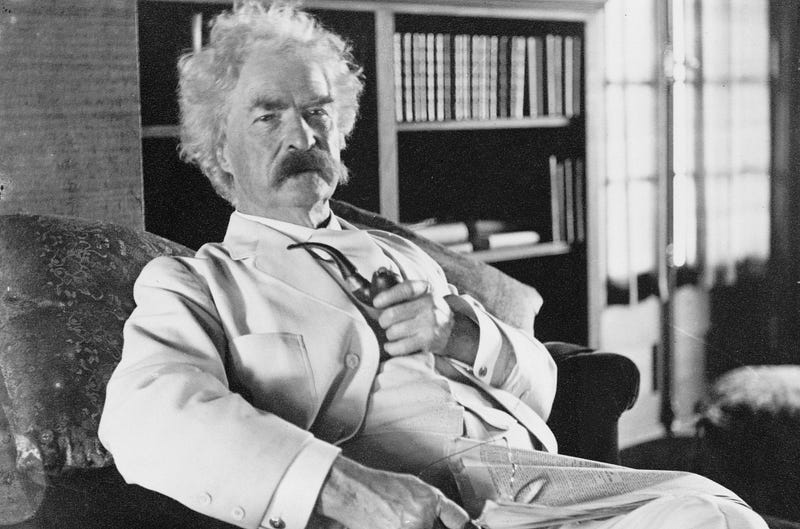
Number One On My Hit List — Samuel Clemens A.K.A. Mark Twain
Mark Twain left school when he was twelve years old after his father died. That would have put him somewhere in the sixth or seventh grade. H*ll I could barely spell when I was that age. Some folks say I can’t spell now, but spellcheck proves ’em wrong every single time.
His stories are humorous, capture the southern flavor of his surroundings at the time, and are rift with beautiful worlds gained through personal experiences on riverboats and country living.
Introduced to his passion and true calling while he worked as an apprentice to his brother, a printer, Samuel Clemens started writing and never looked back.
Number Two — George Bernard Shaw
Known to all who were close to him as merely Bernard Shaw, throughout his writing career, he wrote over sixty plays. A prolific writer, Mr. Shaw, even won a Nobel Prize in literature.
Often noted as one of the best dramatists the world has known since Shakespeare, George Bernard Shaw left school when he was fourteen. He was often quoted as saying he found little value in formal education and preferred to write.
Number Three — Charles Dickens
When Charles Dickens’s father landed in debtor’s prison, Charles had little choice but to abandon hopes of gaining a formal education.
After a time, Charles did try to pursue his education again, and yet he finally abandoned attempts to gain a formal education altogether and became a clerk in a law office. Some of his most noted characters were based on his own life experiences.
Number Four — Jack Kerouac
Football star and scholarship winning Jack Kerouac had his academic future almost set in stone at Columbia University. But it was multiple arguments with the coaching staff, constant benching, and finally, a cracked tibia that led to Jack dropping out of college.
Known for his spontaneous prose, Jack Kerouac is also best known for his defining work of the Beat Generation and post-war counterculture. On The Road, a story of two protagonists seeking God amongst a world of jazz, drugs, and poetry, is one of his most famous works.
These are just four examples. There are so many gifted writers out there who either by circumstance or choice never gained a formal education. Again, there is nothing wrong with higher learning.
In some ways, it could make one a better writer.
But here’s a final observation to think about. Being a writer is all about transforming thoughts and ideas in our hearts and minds into images on the page. And yes, it takes years of practice; years and years of writing these thoughts down until a writer finally discovers the magic of bringing them to life.
Did the four writers discussed in this piece rely on formal education to help them create masterpieces? No, they didn’t. So what it all comes down to is, it’s a personal choice, and ultimately, each of us knows the choice is ours because most times, we know what’s best for us.
I challenge you to listen to your mind and feel your heart. I challenge you to write and continue to write. Write whether or not you pursue higher education. Write about how you’re feeling at the moment, what you see, or hear. H*ll, write about the challenges of gaining formal education.
If you’re a writer, write something.
Thanks So Much For Reading
Let’s keep in touch: [email protected]
© P.G. Barnett, 2020. All Rights Reserved.


