Do You Know What Toxic Followership Looks Like?
Be careful who you choose to stand behind you
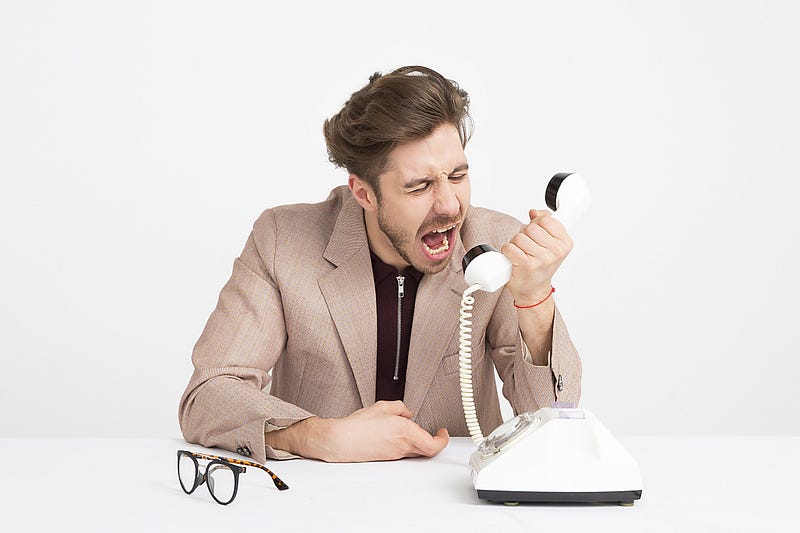
In his 2006 testimony, Ken Lay painted a wholesome picture to the jury. A story. His story. A portrait of a poor Missouri farm boy who made good.
From the dock, he said: “I’ve worked hard my whole life. I’ve enjoyed working hard my whole life” (Goodwyn, 2006).
The former Enron Chairman then went on to point the finger at his followers.
His friend, Jeff Skilling, the former CEO who jumped ship before the sinking, was not one of those in his crosshairs. No. Lay firmly laid the blame at Andy Fastow’s doorstep, his whipping boy.
“The biggest mistake I ever made was hiring Andy Fastow, Lay said. The second biggest mistake I ever made was promoting him to chief financial officer.”
Lay also apportioned blame on investigative reporters. In the weeks before Enron went bust, a series of whistleblower articles were published about what was really going on behind the scenes.
Lay went on to describe Enron’s collapse as a “classic run on the bank”. He claimed that these journalists had “spread panic about his company”, implying that they contributed to its demise (Goodwyn, 2006).
The jury didn't buy it. They found Lay guilty.
His sudden passing, however, meant that he didn't serve the punishment handed down by his peers.
This poses the question, what is toxic followership and what does it look like?
Being led … astray
Leaders can be led astray, by their own tribe, their followers.
The disgraced ex-chairman of Enron, “may not be entirely wrong in blaming unscrupulous subordinates and advisers for his company’s demise”, the fact is “followers can derail executive careers” (Offermann, 2004).
When leaders are vulnerable, absent, or trust the wrong people, followers can become toxic. Especially when they unite to influence a course of action.
“People tend to be what psychologists call “cognitive misers,” preferring the shortcuts of automatic thinking over considered examination.” (Offermann, 2004)
The Enron case straddles both sides— toxic leadership and toxic followership.
The outcome from which can result in poor decision making. As was the case with Enron. At least in part.
This problem is magnified by the kind of leaders who attract and empower strong followers.
The following discussion investigates Lynn Offermann’s article, her proposition, published in the Harvard Business Review in 2004.
Raising a second question: is her argument still valid two decades later?
The potential toxic triage
Offermann proposed three scenarios for leaders to be mindful of, as follows:
1. The silent conformers
Leaders pride themselves on their willingness to take an unpopular stand. It’s considered to be a leadership skill.
That said, “research has consistently demonstrated that most people-including leaders-prefer conformity to controversy” (Offermann, 2004).
The pressure to conform can increase in parallel with the level of agreement or conformance by those around you. It’s very appearance can be hard to resist, even if it's not widespread.
Therefore, it’s important for leaders to not only hear what’s being said but to listen to what’s not being said.
2. Being fooled by flattery
Being swept away by follower-flattery is just the tip of the iceberg in terms of influence. A triangulation of sorts, something that leaders need to be wary of.
Followership influence can be subtle, a gentle form of influence — persuasion with guile.
We learn quite early in life that the easiest way to get people to like you is to show that you like them. Likability is linked to agreeableness. Conformance.
A sincere compliment is loved by everyone. Underpinning likability.
Those who “already think highly of themselves” are the very ones who are “most susceptible to flattery’s charms” (Offermann, 2004).
Being on the good side of the Boss is a form of influence.
One study indicated that “successful ingratiators gained a 5% edge over other employees in performance evaluations” (Offermann, 2004).
This margin tips the scale in one’s favour when a promotion comes calling. Let’s not fool ourselves about this fact.
Ken Lay obviously liked or at least thought that Andy Fastow was competent. There’s no other explanation as to why he promoted him.
3. Information overload steeped in (dis)trust
Follower conformance and flattery can tempt leaders “to keep their followers at a distance”, to think about certain scenarios. This is not an option in today’s workplace (Offermann, 2004).
CEOs have a tonne of information coming at them every day. Complex information. So it’s impossible for them to know everything about everyone in their own organization.
So what are the risks here?
We know that executives often don’t have full knowledge of what’s happening in their business. They experience sleepless nights, being “forced to make decisions based on incomplete information” (Offermann, 2004).
Yet lack of sleep leads to poor decision making.
Leaders have no choice. They have to rely on others — their followers — for detailed, accurate, trustworthy and unbiased input.
How do they know if their followers’ support is grounded in trust?
What can they do? What would you do?
Final thoughts
To conclude, I think it’s relevant to review the “six ways to counter wayward influences” as recommended by Lynn Offermann.
1. Keep vision and values front and center — It’s much easier to get sidetracked when you’re unclear about what the main track is.
2. Make sure people disagree — Remember that most of us form opinions too quickly and give them up too slowly.
3. Cultivate truth tellers — Make sure there are people in your world you can trust to tell you what you need to hear, no matter how unpopular or unpalatable it is.
4. Do as you would have done to you — Followers look to what you do rather than what you say. Seta good ethical climate for your team to be sure your followers have clear boundaries for their actions.
5. Honor your intuition — If you think you’re being manipulated, you’re probably right.
6. Delegate, don’t desert — It’s important to share control and empower your staff, but remember who’s ultimately responsible for the outcome. As they say in politics, “Trust, but verify” (Offermann, 2004).
The global financial collapse happened just four years after Offermann wrote When Followers Become Toxic— just 48 months later.
It seems that little was learned following the Enron collapse and the protracted legal battle thereafter.
Almost two decades later, Offermann’s simple six-point roadmap is still relevant today. Even moreso in light of major events since 2004, such as the financial crisis, Cambridge Analytica and Edward Snowden to name a few.
Clearly her guidance is grounded in trust. The lesson for leaders is to find those followers who they can trust, and give the same respect in return.
That leaves us with one unanswered question: Is toxic followership a byproduct of poor leadership?
I look forward to reading your comments below.
References
- Goodwyn, W. (2006). Former Enron Chairman Blames Others for Collapse. [online] Npr.org. Available at: https://www.npr.org [Accessed 4 Mar. 2020].
- Offermann, L. (2004). When Followers Become Toxic. [online] Harvard Business Review. Available at: https://hbr.org [Accessed 4 Mar. 2020].