
Do You Know The Powerful Benefits of Meditation?
I will guide you through several styles so that you can calm your mind and gain clarity.
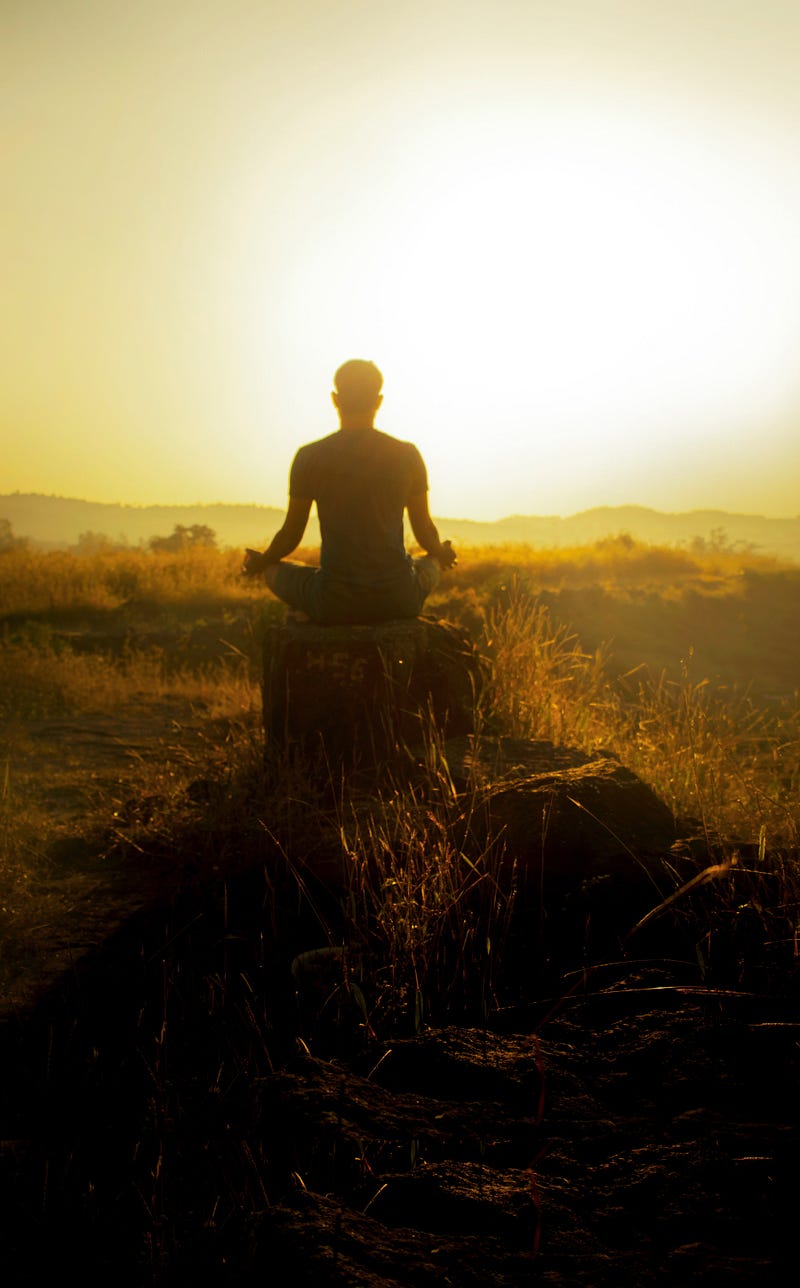
Many people are intimidated by meditation because they associate it with quieting the busy mind which is difficult. But meditation, according to Yoga International, “is a precise technique for resting the mind and attaining a state of consciousness that is totally different from the normal waking state.” In meditation, we tune out the distractions of the external world and go within where we are calm and focused. So, when we think of it like this rather than trying to stop thinking altogether meditation becomes much more approachable. What we resist will always persist. Allow the process and trust that the results of meditation will be worth the effort.
The Benefits of Meditation:
There is growing scientific evidence that mediation is good for us. In Deepak Chopra’s book, Perfect Health, he explains how meditation is being used as medicine. “Meditators have 87.3% fewer admissions to the hospital for heart disease and 55.4% fewer admissions for tumors of all types.” Meditation is also known to be an effective way to link the body and mind.
Other significant benefits include:
- Stress Reduction
- Improved focus
- Improved sleep
- Controls anxiety
- Increases Awareness
- Lengthens attention span
- Generates patience and kindness
- Helps to battle addictions
- Helps control pain
- Decreases blood pressure
Meditate for Concentration, Clarity, & Calmness
What we do in meditation is train the mind to focus on one thought or point of interest such as a candle or our breath. It is very similar to training muscles when we work out. Each time we meditate, even for short periods of time, we develop concentration, clarity, and calmness that then stays with us after our practice and carries into our daily life. We become more compassionate mindful people. Meditation, by activating our parasympathetic nervous system, lowers our blood pressure, reducing that fight or flight syndrome, and producing calmness which also reduces stress. We are able to improve memory, concentration, and our overall performance in all activities as a result of meditating.
Types of Meditation
- Mindfulness Meditation: Buddhists call vipassana or insight meditation, focussing on what is happening around you and being aware of your thoughts and feelings during the process of meditating. Your mind should be open to your true feelings free from judgment or thoughts of those feelings. This is a common practice for Buddhists and Monks to use for the process of Awakening. One can start by watching the breath, then move your attention to thoughts in the mind, then surrender. The key is to not judge.
- Breath watching: as the name suggests, this type of meditation focuses on the breath. Start in a comfortable position. Close your eyes, begin to breathe in deeply through your nose and out deeply through your nose. Pay close attention to your breath and how you feel. As your mind wanders redirect your attention back to your breath and feels the air, the life, moving throughout your body.
- Walking or Running Meditation: This technique involves moving your body and is great if you have trouble staying still. You can meditate while walking down the street, pacing around the house, taking a jog, or immersing in nature. As your feet connect with the earth focus on the movement and your body parts. If your mind wanders engage your senses and redirects your mind to the present moment and the connection of your feet with the earth. Notice the sights and sounds around you.
- Empty Mind: This requires a more advanced “letting GO” of thought. Allowing the mind to silence and a sense of peace to take over.
- Transcendental Meditation: involves the continuous chanting of a mantra, until a dreamlike state of the mind is attained. Useful for those who are easily distracted. You can chant “So” on your inhale and “Hum” on your exhale.
- Guided Meditation: guided meditations are where an instructor leads you through a narrative that keeps your mind focused on mental imagery and is sometimes accompanied by relaxing music.
The Nitty Gritty of How To Meditate
There is no right or wrong way to meditate. If you do not have an hour take five minutes. Be gentle with yourself. The more we try to force ourselves into something the harder it will be. Here are a few of the tips that I believe help when you are trying to establish a practice:
- Set aside a special place. Maybe light a candle.
- Choose a consistent time each day. I prefer first thing each morning.
- Regulate your breathing. Nice slow deep inhales through the nose, nice slow exhales through the nose. I prefer to keep my eyes closed for fewer distractions.
- At first, if the mind wanders, acknowledge those thoughts and then set them aside for later.
- Sit comfortably either on a pillow or folded blanket. If you are not comfortable it will be hard to relax into it. (unless you choose a walking meditation)
- Turn on ethereal relaxation music in the background until you have a well-established practice. Or, consider following a guided meditation on Headspace or YouTube.
When you finish your meditation consider journaling how it went and what you experienced. Sometimes the answers we seek come when we quieten the mind and least expect them. The mind is truly amazing and when we look at it as a giant muscle that we are capable of training it is powerful. We can all become more mindful each day through meditation. We can train the mind to become positive and generate the outcomes that we desire bringing us the abundance and happiness we all crave. The power is within us, we simply have to tap into it.