
Do You Know the Emotional Triggers Behind Your Overspending Habits?
As we approach the holidays, it’s important to take a close look at our emotional spending habits.
In that ramshackle house on an empty Tennessee road, life was incredibly bleak. My mother’s penchant for hoarding animals meant there was always a mess, and that only got worse when the septic filled up and the roof came caving in. Rainwater flooded into the house whenever there was a storm. Sewage flooded the carpets whenever we flushed or took a shower.
My childhood home was like a black hole, sucking in all the darkness and filth that surrounded us — and my mother only made it worse.
Her hoarding didn’t stop with animals.
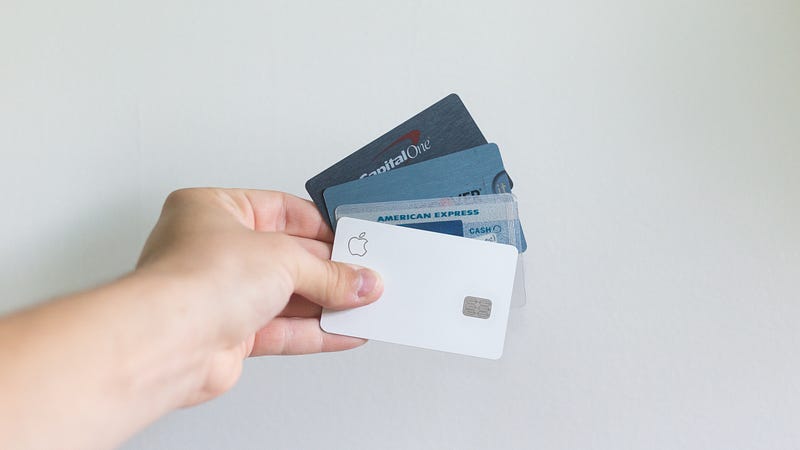
Kathleen Johnson had a spending problem that accelerated as the years went on and she realized her husband was never coming back. It started small at first, but it grew and grew.
Without my father keeping an eye on the bill, she was free to take out credit cards and spend her weekends exploring yard sales. Once my mother fully understood that there were “no consequences” for her spending, she discovered the Home Shopping Network, then Amazon. Every time she had a bad day (which was often) the cards came out.
My mother was a woman comprised entirely of emotional triggers.
It was those emotional triggers that controlled her spending, that pushed her to buy, buy, buy whenever she was feeling sad, lonely, or unfilled in her life. Which was all the time.
In that respect, my mother wasn’t unique. Millions of people around the world are triggered into overspending every single day. Instead of regulating themselves, regulating their emotions, they reach for their wallets whenever they are stressed and feeling low.
That’s no way to build stability for yourself, especially not if you’re trying to buy a home, start a family, or advance a career or a business that is really important to you. Money matters. It’s a foundation of our lives and a reflection of our mental and emotional health as much as anything else around us.
There Is a Direct Emotional Tie Between Our Spending Habits and the Way We Feel
We spend a long time talking about how our trauma and our emotions affect our relationships, our careers, our friendships, and our families — but we don’t talk about how it affects our ability to be abundant. Your feelings (and your ability to regulate and respond to those feelings) affect the way you spend and manage your money.
My mother, a narcissistic person, had a complete inability to self-soothe. So, when her emotions became intense her spending did too. That’s pretty typical when you’re dealing with emotional spending. What is that?
Emotional spending is a behavior that happens whenever we’re triggered by stress or big emotions like fear, sadness, grief, anger, or anxiety. Unable to regulate the physical effects of the emotion, or the cognitive waves of that same emotion, one pulls out the wallet and starts spending.
There are thought to be different mechanisms behind this. For some, big emotions make them feel powerless. They believe that they can’t control the way they feel, or what’s happening to them, so they spend. That spending gives them a sense of control, but it also gives them a hit of dopamine (which is the real seller).
Our emotions shape the way we behave and they shape the way we spend. You can have the best intentions, you can have the healthiest outlook on money. But if you’re not able to regulate your nervous system and regulate your response to your emotions, you’re still at risk. When the waves of big emotion come, you’ll be vulnerable to those overspending triggers.
Some of the Emotional Triggers That May Lead To Overspending
If my mother had been a more self-aware person, with more self-respect, she would have confronted her emotional triggers. Doing that is difficult, however. For one to identify what it is that can push them to overspend, one has to look in the mirror at what’s going on in their lives and within their hearts. When the layers are peeled back, the emotional triggers become obvious.
Relationship breakdown
The loss of a relationship is hard to swallow, no matter what your background is. When we lose someone to a breakup or death, grief is the only constant. It doesn’t matter if you lose a friend or a partner. That loss makes people feel lonely and isolated. When that happens, it’s easy to overspend. By buying things, those left behind feel “not so alone” and like they have some control over the chaos occurring.
Lack of stimulation
What we don’t always realize is that there’s a certain amount of emotional stimulation (and cognitive too) that’s needed as a baseline for most people. We like to feel things, and when we don’t it can push us to create actions that make us feel more connected. Overspending can certainly simulate that feeling…for a short time. Primarily, it meets the need for novel experiences.
Rumination patterns
For trauma survivors, rumination is a spiral always being dodged. Slipping back into the past, they question the things that happened to them and can believe that thinking about it will release them. When that doesn’t work (magical thinking) some of them turn to spending. Where the rumination and trauma make them feel out of control, the spending provides them with a concrete means of controlling their environment.
Sudden excitement
It’s not just the bad emotions that lead to emotional spending like my mother’s. Positive emotions can be just as powerful in pushing you to pull out the credit card, and that’s worse. Because we don’t necessarily see a “danger” in positive emotions. All the same, a flood of positive emotions that you don’t have an outlet to discharge (like talking with friends, celebrating with loved ones, etc.) encourages one to spend, spend, spend like there’s no tomorrow.
Social expectations
Social expectations are always bearing down on us, and that can create a lot of excess pressure. During the holidays especially, people feel like they have to perform a certain way. Survivors get triggered by cyclic reminders, and the rest feel numb as they’re told what to buy, eat, wear, and do. It can create a lot of negative emotions, which you are encouraged to void through overspending.
Crush of the wheel
Social expectations and holidays aside, most of us are feeling the crush of life’s wheel. Maybe you work in a high-stress environment, or you may have a high-stress family lifestyle. Whatever it is, being stacked with too much stress creates the feeling that you’ve lost control. The more you tread water without getting the rest you need, the more out of control you feel. Spending helps to correct that, but the stress can trigger more overspending.
It’s important to note that these aren’t all the emotional triggers that may push someone into overspending. Humans are complex creatures, and they have a complex range of emotions and intense internal experiences. Any range of big life changes or upheavals can result in overspending, which leads to even bigger upheavals down the road.
What Can You Do to Beat Your Triggers and Ease Your Overspending Habit?
What could my mother have done? If she had sat down, looked at her spending, and said, “I have a problem.” What could she have done? Could anything have been done at all? Of course. There are so many things that can be done to counter overspending before it becomes a life obstacle. Doing them, however, is a conscious choice that has to be made by the person who is caught in the overspending trap.
If you, or someone you love, is in an overspending habit, it can be overcome with patience and by:
- Figuring out your triggers: There’s no defeating emotional spending without identifying triggers. Identify your specific triggers and learn about the psychology behind your response to them. Why do certain experiences make you feel out of control? Why does spending provide you with a sense of joy, clarity, or control?
- Learning to differentiate: A big part of overspending for a lot of people is justification. They see something they think they need and they will go beyond the limit to get it. If this is a part of your overspending habits, then you have to learn to differentiate between wants and needs. Then prioritize those needs over simple desires.
- Creating an action plan: Triggers are going to happen in overspending recovery. Your job is not to get rid of triggers. It’s to create better responses to those triggers so you stop overspending when you encounter them. Plans are a must to do that. Create an action plan that includes preventative measures to manage the stress that leads to overspending.
- Finding creative alternatives: The energy behind emotions encourages you to overspend. By creating alternative channels to express that energy, you will lower your spending habits and address your overspending urges at the same time. Be creative. How can you simulate the feeling you get from spending without breaking the bank?
- Figuring out support systems: A big problem with overspending is a lack of accountability. You need to have people watching you, taking the journey with you, so they can call you out and help you when you slip up. Have support systems around you to rely on. Don’t be afraid to get professional help.
Figuring out your triggers is a starting place, but it’s not enough. You can’t stop the work here. Be a proactive part of your own self-improvement. Find new ways to simulate that high you get. Jump into a high-intensity exercise routine. Connect with loved ones. Pick up a hobby or a craft.
Overspending isn’t some quirky bad habit. It’s a serious pattern that can derail your life, and it’s not enough to know that it’s there. Emotional spending is rooted in your psyche, and many of us need to take serious steps to find the peace of mind to stop.
As Khwan Hathai, a certified financial therapist, told U.S. News, “Addressing overspending from a purely financial perspective is often insufficient. One must delve into the psychological dimensions of their spending habits to enact lasting change.”
If you can’t control yourself, get the help you need. Reach out and find a qualified professional who can help you take charge of not just your finances, but your emotional health as well. This includes the wellspring of trauma you haven’t faced up to. The past that is haunting you needs to be put to sleep so that you can live a financially free and stable future.
Overall, it’s important to recognize the signals of emotional spending and how those signals can indicate a deeper problem going on within. It’s not easy for any of us when emotions cloud our judgments, so it’s important to be aware of both our overall financial health and our emotional baggage.
There is no one-size-fits-all answer to overcoming emotional spending; but with some effort and guidance, you can find the tools that work best for you. The first step is understanding what situations trigger your emotional spending: creating an awareness of those triggers is critical.
From there, find a collection of tools that help you manage your feelings in relation to money as well as use good budgeting practices that help you ensure your spending aligns with your priorities. Don’t forget about finding support whenever possible for yourself or for loved ones who struggle with this same issue — constructive care can go a long way in aiding positive financial decisions.
Thank you to Claudia Rivers for this prompt.
© E.B. Johnson 2023
I am a writer, coach, and podcaster who helps women create more fulfilling and authentic lives. Join my mailing list for weekly advice, or click the link below to learn more about me.


