
Do You Have To Love Your Family?
Or are you just supposed to?
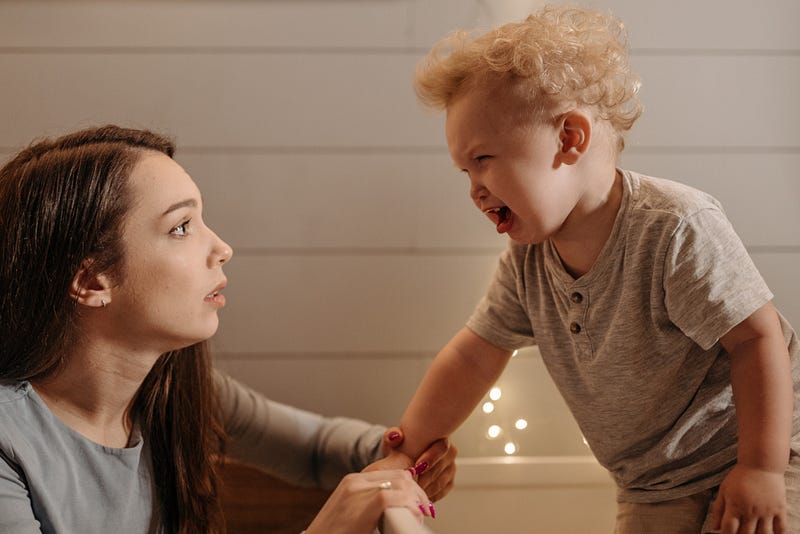
There’s something pernicious at the heart of Western civilization. I’ll call it kinship. Our culture has, as a prerequisite, the concept that we must love our family. There’s no real reason why you should love them, let alone like them apart from perhaps genetic preference, but that’s not good enough.
You can’t walk down the street or turn over the TV without being assaulted by images of happy families. Some of them are traditional, some of them a consistent advert for a future woke utopia.
You’re nothing without your family.
But here’s a fun thing from a decade of social work. Some families are shit.
And that’s okay.
And I don’t mean the families you see on shows like Shameless. Those families are dysfunctional but are often filled with love. Poverty is bad for people, but nowhere near as bad as emotional poverty. There are entire hordes of families out there who peddle emotional abuse like it’s going out of fashion.
Most of it is middle class in nature and flies under the radar.
I have a friend whose mother is so overbearing she evokes real fear in her adult children. When she leaves the room there’s often crying and shaking. The damage that woman can do with a single look is profound and likely stems from a narcissistic personality disorder.
My friend is a lovely person, but her Mum is an absolute monster and I won’t be left alone in a room with her. I advise my friend to put the same rule in place — but sometimes the guilt is a little too much to bear.
I can’t imagine what growing up with her must’ve been like — but there are occasional drunken nights and softly spoken conversations where I glean just enough of an insight.
Like peeking through the gates of hell itself.
See, if you’re part of a loving family… good for you. If you realize that your family doesn’t really love you, you’re perhaps an accessory rather than a human, it pays to work that out very quickly.
It pays to open that psychological door and sort through your feelings
Some people have shit families and ‘unconditional love’ is just two meaningless words tossed out into the ether. If society parades the default that everything is like an episode of the Waltons, how do you tally that with your own experience?
I’ve met more than one person in my career who doesn’t love their parents as well as young people who have loved too much when perhaps they shouldn’t have done.
I worked closely with a girl who attended her father’s funeral out of obligation before confiding in me she never really loved him. He was cruel. He judged her. He said some things she could never really forgive. Some things will stay with her for a very long time.
She pretended to care for her mother’s sake and to keep up appearances to the wider family, but she owed him nothing and felt no guilt.
I had and still have no problem with this. Excellent self-defense.
Throw in some intergenerational complexity too and you’ve got grandparents who feel obligated to right the wrongs of their own parenting. A fresh start. A do-over. My grandparents were all heavily involved in my childhood and I love them all dearly (I have three left) — but I realized very young I was in the minority.
Many of my friend’s parents were beholden to grandparents whose advancing age made them less tyrannical. However, the family trauma had their fingerprints all over it. Should you love your grandparents by default? Of course not, they should earn your love like every other person on the planet.
And you should feel zero regrets about keeping your children away from your own parents if they weren’t good parents to you.
Should you pretend to love your grandparents? That’s your choice. I don’t think being in the will is enough of a prerequisite to pretend, but then my grandparents don’t have massive fortunes to hand down.
What about siblings and cousins? Doesn’t that depend? What if your family is comprised entirely of co-dependent people? What if your brother never leaves home because your Mum is afraid he is the only thing holding the family together?
What if your cousins are criminals?
What happens if there’s inter-familial abuse?
If you can’t respect your family can you love them?
If we lived in different times do you think your family would still be together? Do you think you would’ve been married off to the nearest available Lord? Do you think, as I do, that family can be the best thing and the worst thing?
And sometimes both at once.
Your family is really those people you keep around you. Those people you grew up with the outside of the house. People who see the unguarded version of your true self.
If your family isn’t what you need it to be, then you build yourself a new one.
I have worked in social work long enough to know that real families can be created by social engineering as well as brought into being by the magic of childbirth.
People with similar dysfunctions in their families will find each other and can help each other heal — although a big word of caution about emotional co-dependency should go in here.
Friendships aren’t imbued with the same magical status as a family. Though perhaps they should be. Of course, friends are flawed too; they will hurt you from time to time and if they do, we can dispose of them in the way we often can’t with family.
Nobody has to explain on a fundamental level why they’ve stopped talking to a friend in the same way they’ve stopped talking to their parents.
So perhaps we should start to downplay the importance of family and unconditional love. Perhaps there should be conditions and we shouldn’t expect the impossible from people who must damage themselves beyond measure to accommodate an old-fashioned notion of love.
If we’re honest, every family is a million miles away from those glossy adverts of people eating pudding together like they’re on opioids.
Want something a bit more tongue in cheek?


