
Do You Have Autumn Anxiety?
What Causes Fall Freakouts and How to Manage Them.
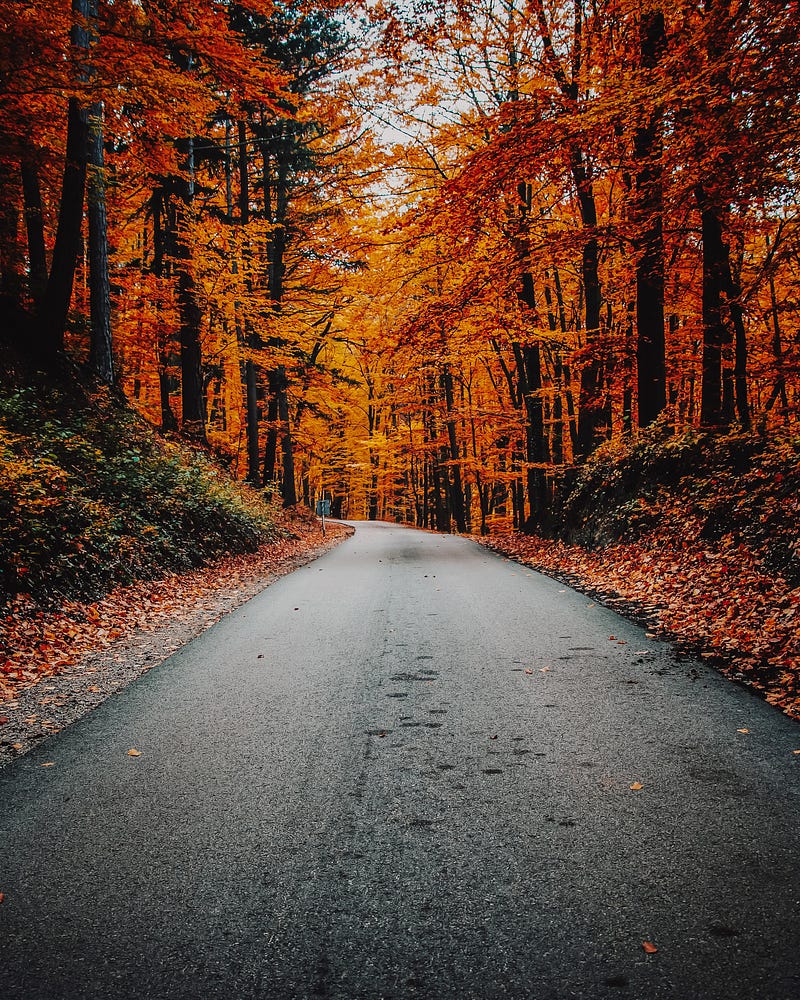
Oh, fall. The crisp air. The crunching of leaves. The warm mugs of apple cider.
The shorter days.
The back-to-school, ultra-structured urgency.
The ongoing, surging international pandemic.
Yikes.
If you find yourself holding both the beauty and the stress– or just the stress! — that comes with the fall months, know that you are not alone. Autumn Anxiety is a term that describes the increase in worry, fear, and stress related to the changing of the seasons. There is typically not a specific or identifiable external trigger; for some, it may occur annually at about this time.
Symptoms may include:
- Sleep disturbances
- Appetite changes
- Increases in illness or pain
- Irritability
- Low mood
- Excessive worry
- Lethargy and fatigue
There are several different reasons why Autumn Anxiety might strike, some related to our biology and some related to our environment. But all are valid, can impact our functioning, and all mean that the changes we feel are NOT just in our heads.
Let’s pause if reading this first bit has you freaking out already. Put your phone down if that’s how you’re reading this. Breathe your natural breath. Create a bit of heat by rubbing your palms together a few times. Create cups with your palms, and place them gently over your eyes. Keep breathing and hold this for as long as it feels good.
So, first, let’s think about transitions as potential stressors. If you have or spend time around children, you’ve seen this potential in action. Moving from activity to activity, class to class, or thing to thing are the prime times for big meltdowns. Consider all the transitions inherent to fall: back to school, changes in schedules, shorter daylight hours, and specific to this fall, everchanging guidelines regarding the COVID-19 and Monkeypox public health crises. Dr. Sonia Lupin at the Center for Studies on Human Stress — a place that sounds like an absolute blast — describes the perfect recipe for stress using the NUTS framework. But because that is an ableist term, we will call it the STUN framework (see what I did there?).
Sense of Control. Situations where we have no control over what is happening or what outcomes may be. Threat to Ego. Situations that leave you feeling as though your competence is in question. Unpredictability. Having no way of knowing when, how, or why a thing is happening. Novelty. A situation or an aspect of a problem that is new to you.
The stress response likely becomes activated when a situation contains one or more of the above elements. What does that mean? Let us turn to the work of Dr. Bruce Perry and the Neurosequential Network: as information comes into the brain–both from inside the body as sensory information or from the outside the body in the environment– it enters through the bottom part of the brain, where ‘core regulatory networks’ (remember this term, we’ll come back to it) exist that control the entire body. Suppose that information is deemed threatening or challenging. In that case, the stress response activates, which means those core regulatory networks will turn off parts of the brain you don’t need and activate the parts you need to ensure your survival.
It is a brilliant and efficient system. But ultimately, it means that when we are under stress, we are functioning mainly from the more primitive, survival parts of the brain and not the sophisticated, ‘thinking’ parts. We might be reactive, impatient, impulsive, or numb, checked out, and shut down. We are decidedly not intelligent, logical, or rational.
The bigger the threat or challenge, and the longer it sticks around, the more significant the impact. When we say stress shows up in the body, this is why. When the survival parts of the brain are running the show, there is a natural (intentional!) increase in muscle tension and heart rate and a decrease in the function of the immune and digestive systems. If they continue to run the show for an extended period, we are more likely to experience pain, illness, and hypertension, among other physical problems.
Another quick brain break. Breathe in, and drop your chin toward your chest. Notice new sensations in the back of your neck or upper back. Look up toward the sky. Continue this up-down motion, or roll your neck slowly in circles for another few breaths.
Now. Those core regulatory networks (I told you we’d return to this) are made up of three neurotransmitters: serotonin, dopamine, and norepinephrine. You may have heard of these, at least the first two. They are thought to be related to our mood and motivation. They play significant roles in our emotions for the reasons stated above.
When days become shorter, and we are exposed to less and less daylight, our levels of these critical neurotransmitters drop. A study at the University of Pennsylvania found that when rats experienced constant darkness for six weeks, the neurotransmitters involved in transporting dopamine and serotonin died. Those poor rats were miserable, experiencing a ‘depression-like condition’ where they became more immobile and showed signs of despair (I mean, I would, too). Studies like this support the biological basis for Seasonal Affective Disorder, a series of mood and physical changes that occur during late fall and winter and is similar to Autumn Anxiety, the differing factor being the worry associated with the latter.
Here’s the **good news** portion of this piece. Knowledge is power, so if you’re reading this and realizing that Autumn Anxiety is impacting you or the people you love, you’ve already taken the first step in managing it. There are many ways to navigate the fall changes and return to a place of ease — here are a few ideas to get you started.
Explore What STUNs you. Go back to the STUN acronym and consider which elements you find challenging. Is unpredictability hard for you? Do you freak out when you don’t have control? What supports can you put in place to make things easier?
Get Outside. Lack of daylight is no joke. See about finding ways to sneak outside, even just for 5–10 minutes at a time, throughout your day. Bundle up if you need to. There’s no such thing as bad weather, only bad clothes.
Move Your Body. Of course, exercise is great, but even small doses of movement can make a significant impact. Take a walk, dance to a few songs, or stretch any areas that feel tense. Schedule bits of activity every few hours or so.
Try Something New. This one may feel counterintuitive for those struggling with the ’N’ in STUN. But, beginning a new hobby, routine, or ritual in the fall can help you to reframe the changes as not necessarily being all bad.
If you find that the anxiety, stress, and worry significantly impact your functioning, reach out to a healthcare provider or mental health support. There is NO SHAME in resourcing yourself in this way.
Above all, be gentle with yourselves and each other.
Dr. Jennifer A. King is the Co-Director of the Center on Trauma and Adversity and an Assistant Professor at the Mandel School of Applied Social Sciences at Case Western Reserve University.