
Cellphone Technology
Do We Really Need 6G Cellphones?
Is this new cellphone technology just for technology’s sake or a worthwhile step forward? Who needs it anyway?
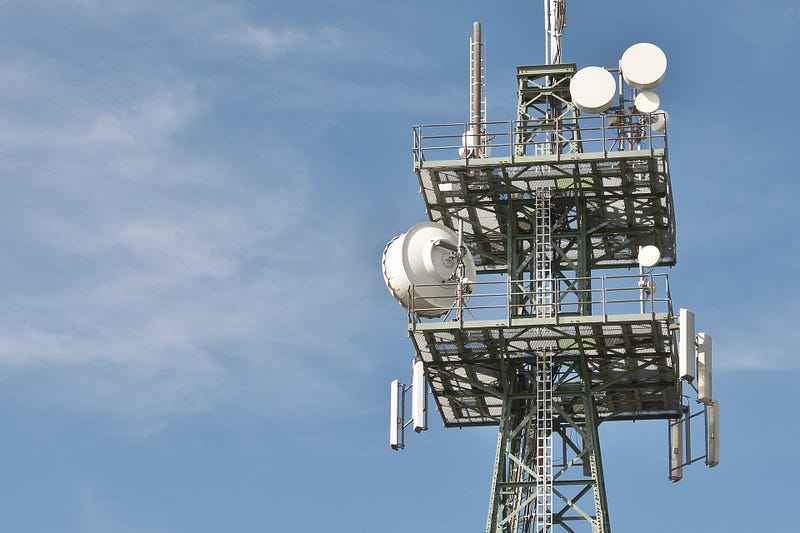
Almost unlimited possibilities’: new Chinese tech is milestone in 6G race
That was the headline in a recent press story I read, reporting that:
Chinese researchers say they have achieved a record data streaming speed using a revolutionary technology that could help China take the lead in the global race for next-gen wireless communication, or 6G
The test setup was used during the Beijing 2022 Winter Olympics.
Using vortex millimetre waves, a form of extremely high-frequency radio wave with rapidly changing spins, the researchers transmitted 1 terabyte of data over 1km (3,300 feet) in a second.
What is 6G?
6G wireless technology is the next step in wireless evolution, set to offer even faster data speeds and more reliable connections than current 4G and 5G technologies. While still in development, 6G technology is expected to eventually offer download speeds of up to 10 gigabits per second (Gbps), compared to 1 Gbps tops for 5G.
6G technology will also make use of new spectrum bands, including millimeter waves (mmWave) and terahertz (THz) frequencies. These higher frequency bands offer more bandwidth and can carry more data than lower frequency bands, making them ideal for supporting the high speeds and capacity requirements of 6G networks.
One of the key challenges facing 6G development is ensuring that the mmWave and THz frequencies can be used effectively in crowded urban areas. These frequencies can be easily blocked or disrupted by buildings, trees, and other obstacles, making them unsuitable for use in many settings. However, researchers are working on new technologies and strategies to overcome these challenges, paving the way for a successful rollout of 6G networks.
So far, only a few countries (including South Korea and the United States) have announced plans to develop 6G technology, but it is expected that more will follow in the coming years. With 5G still in its early stages of deployment, it may be some time before 6G networks are actually available to consumers. But as the demand for faster and more reliable wireless connections continues to grow, 6G is sure to be a key part of the future of wireless technology.
Do we really need this this stuff?
I ask the question because I worked in technology for more than 20 years. Way back, I built a computer from components. I thought it was great stuff.
We pursued more power in smaller packaging, Moore’s Law. And then came the personal communications revolution.
But now?
Now I’m disillusioned.
In the West it’s all about pursuit of technology for profit’s sake and in the East it’s about trying to achieve technological superiority — which the West has to counter. More profit. And the Chinese now have the profit motive too, they need the foreign currency to raise the living standards of their population — or the People’s Party will fail.
The story in the South China Morning Post reports the status of 6G patent filings:
A survey by Nikkei and Tokyo-based research company Cyber Creative Institute in September last year found that China owned more than 40 per cent of the world’s 6G patent filings, followed by the US with 35 per cent, Japan (10 per cent), Europe (9 per cent) and South Korea (4 per cent).
Health Concerns
I know that out on the mad, wild left- and right-frontiers of public opinion there are those who have concerns about 5G technology. I don’t. Well, not really, but I am getting concerned with 6G.
Most microwave ovens in our kitchens operate at a frequency of 2.45 gigahertz (GHz). This is in the microwave part of the electromagnetic spectrum with wavelengths of about 12 cm.
That’s still an order of magnitude or so away from 6G technology. But it’s getting closer.
Now I live and write on a boat, and we yachties are warned about microwaves.
X band (10GHz) and S band (3 GHz) radars are the norm on small boats. Don’t stand in front of the antennae! Most yacht and poweboat radar antennae are mounted above head height so that’s not usually a problem. Yacht radars have a PEP (peak output power) of up to 4 kw and it’s focused power along a beam, like a searchlight.
4 kw is hugely more power than a mobile phone and equivalent to a domestic microwave oven. But don’t forget the inverse square law which governs intensity of signal at a distance.
Cellphones are up close and personal, microwave-lengths from our brains.
Anyway, as I said I’m not too concerned about 4G and 5G - I don’t personally have a cellphone clamped to my ear for most of the day.
But this new research is using vortex microwave signals. That’s a whole new technology. Spinning the beams. So besides frying my brain, it’ll be in a complete spin.
Do we really need it?
But do I — or you — really need those kinds of download speeds? How many streaming video feeds can you watch simultaneously on a smartphone FFS?
I’m beginning to think we need to have a complete re-boot on technology.
The onward march of artificial intelligence is already scaring the crap out of me and now I’m reading about re-fried brains with 6G (my speculation).
And so it goes, as Kurt Vonnegut wrote in Slaughterhouse-Five.
Full story:
About me: I write on a variety of topics including humor, tech and travel, together with daily news events and the minutiae of daily life on a boat. I also write techno-thrillers…and about…
…re-fried brains, technology and the future of mankind
If you enjoy reading stories like these and want to support other writers and me, consider signing up to become a Medium member. It’s $5 a month, giving you unlimited access to incredible stories on Medium. If you sign up using my link below, I’ll earn a small commission at no extra cost to you.
You can follow me on Facebook Twitter @jamesmarinero . On Pinterest you will find many of my research photos from around the world. Check out my website where I occasionally have a free book on offer.


