
Do We Need to Be So Cruel?
Has our cruelty to animals crossed the line
British spelling
There are two different articles in my story, I hope you find them interesting and educational.
This is not a pleasant read but we need to know the truth about how farmed animals are treated.
Where do chickens come from?
It is thought that chickens are descendants of the Red Jungle Fowl (Gallus gallus) from southeast Asia.
Arguably, domestication of the birds began over 3,500 years ago. The distribution of chickens occurred rapidly because of their ability to provide meat and eggs.
Wild chickens still exist today but you would have to travel to the forests of Southern Asia to see them.
One estimate for the number of captive chickens alive today is over 34 billion.
Chickens used for meat and egg production are born into highly mechanized, unnatural environments.
Chickens on factory farms are the most abused of all animals bred for food and egg production.
Layer chickens. Egg-laying chickens.
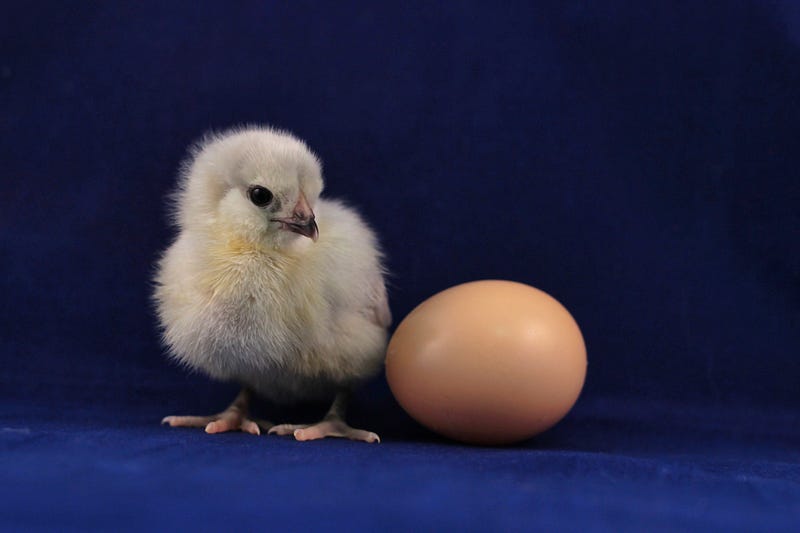
The cruelty starts when the chicks are only one day old, male chicks are considered an unwanted by-product of egg production. The reason is they cannot lay eggs and they are not suitable for meat production.
Male chicks are mostly disposed of in two ways, gassing and maceration, although both of those options are horrendous they must be better than the miserable lives the female hens will have to endure.
Special breeds of hens are most commonly used for egg production, they have the ability to lay high volumes of eggs, and most of them are confined to battery cages where they are unable to stretch their wings.
Wild chickens lay between 10 and 15 eggs per year, but hens bred for egg production can produce around 300 eggs in a year which can lead to many health problems. After about two years egg production decreases and commercial laying hens are sent to slaughter and replaced.
Broiler chickens.
Broiler chickens are bred and raised for their meat and are treated very inhumanely. After hatching, many birds will undergo the practice of debeaking without any pain relief. Stress and confinement can lead to cannibalism which is why portions of their beaks are severed. Parts of chickens’ toes and combs can also be cut off.
Chicks are placed inside large buildings capable of housing hundreds of thousands of birds. Their miserable lives are short, after about 47 days they are sent for slaughter which is maybe not so bad considering the horrendous lives they lead.
Chickens in an outside environment can live for over six years.
Not all hens are confined in an enclosure for 24 hours a day. Some factory-reared hens have access to the outdoors and can roam freely.
These free-range hens can experience the rain and the wind, breathe fresh air and feel the heat of the sun. Would it be unreasonable to give all chickens that opportunity, of course, it all comes down to what people are prepared to pay at the shop or supermarket.
Now it is time for their miserable lives to end.
One method of killing factory-farmed chickens is called live shackle slaughter. the bird’s legs are forced into metal stirrups and hung upside down, from there they are passed through an electrified bath of water which hopefully renders them unconscious, the next part of the process is getting their throats slit. Then it is time for their bodies to be tossed into boiling water to de-feather them.
And we call ourselves civilized!
Your comments would be appreciated.
Thank you.
Here is my second article.
What they can withstand is truly amazing
I am describing the near-microscopic Tardigrades.

Tardigrades are the hardiest organisms on our planet.
Tardigrades were discovered in 1773; they were found to have eight legs, each one tipped with four to eight claws. There are currently 1,300 known species in the tardigrada phylum classification category.
They are also known as “water bears” or “moss piglets.”
They are found on the highest mountain peaks and in the deepest parts of any ocean.
It seems that the hardiest of them live on land in wet, damp areas.
Most tardigrades are less than one millimetre long. They have a specialised mouthpart that allows them to suck the nutrients out of plants and other microorganisms.
Tardigrades are known for their ability to survive in extreme environments, including very high and very low temperatures and pressures.
A few weeks ago, I accidentally put my hand under the boiling water tap/faucet. You can imagine how quickly I withdrew my hand, but I still had large blisters and a very painful hand.
At sea level, water boils at 100 degrees Celsius, or 212 degrees Fahrenheit.
You would think that no living thing could survive in boiling water, but a Tardigrade can. They can survive for up to an hour in boiling water.
That last statement is a bit misleading. To survive in boiling water, tardigrades must be in a stage of dormancy that resembles death, called the tun state. It is thought that some tardigrades could be in a state of dormancy for 30 years.
They have a strategy for surviving harsh conditions called cryptobiosis. Dry conditions can trigger cryptobiosis.
To enter the tun state, these amazing animals have to get rid of almost all of the water in their bodies; their metabolism goes down to as little as 0.01% of its normal rate. Their cells are protected from damage by proteins that are unique to tardigrades. They retract their heads and legs and curl up. The final outcome is a lifeless-looking, crusty ball in a state of suspended animation.
Researchers have found that tardigrades in the tun state can, for a certain period of time, withstand temperatures of minus 200 degrees Celsius or minus 328 degrees Fahrenheit.
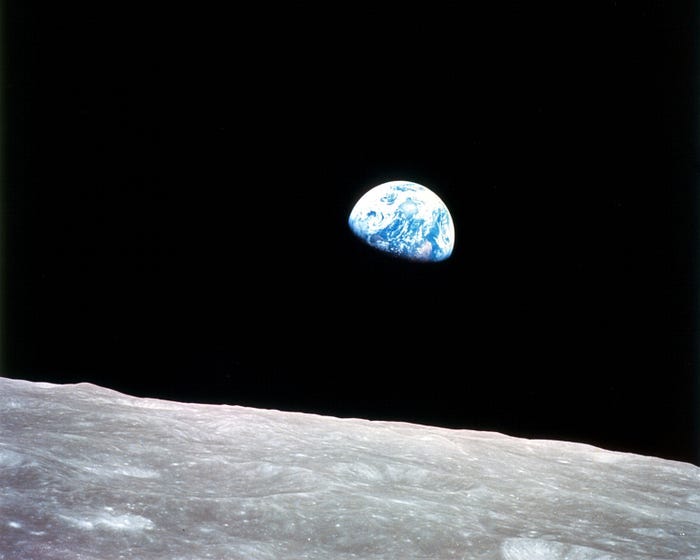
In 2007, a team of researchers sent Tardigrades into space. They orbited the earth on the outside of a Foton-M3 rocket. Although they were in the cold vacuum of space for 10 days, 68% of them were still alive when they returned to Earth.
A tardigrade’s lifespan varies from species to species. So how long do they live in their natural state? Some live for a few months, while others can live for up to two years.
What about radiation? It is said that tardigrades can withstand 1,000 times more radiation than other animals.
When do they come back to normal from their tun state?
If the conditions become favourable and they detect water, they hydrate, wake up, and get on with the rest of their lives as though nothing has happened.
They have also survived five mass extinctions.
The end.
The evolutionary path for life has been extremely long, but we have finally arrived.
Our highly developed brain has given us intelligence and curiosity; now we can try and make sense of our existence.