
Do We Need a World Happiness Report During a Pandemic?
A World Misery Report seems more realistic now
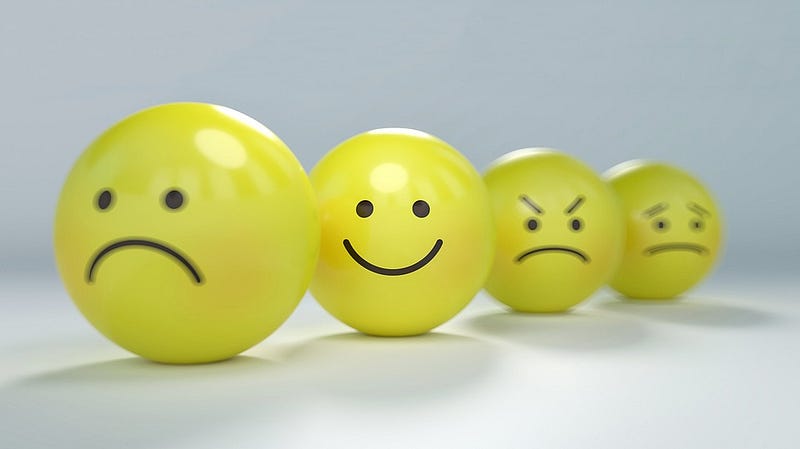
What’s the dominant mood in the world today? It’s a pervasive sense of gloom, helplessness, and hopelessness, at least in nations that have been badly hit by the pandemic. Over three million people have died. Millions have lost their jobs. Millions of families are struggling to make both ends meet. The trauma is palpable.
It looks odd that a world body should celebrate happiness during a pandemic. The Sustainable Development Solutions Network ( SDSN)published its eighth World Happiness Report ( WHR 2021) last month. Jeffrey Sachs, one of the report’s co-authors said in a self-congratulatory mode:
“What we have found is that when people take the long view, they have shown a lot of resilience in this past year.”
People are resilient. They always have been. That doesn’t mean we should sweep human misery under the carpet. Suffering is a real experience; resilience is a response to suffering. Ignoring suffering and trumpeting resilience trivializes the unfolding human tragedy.
The allure of numbers
The SDSN measures the happiness index of countries on a 1–10 scale. It takes in the World Gallup Poll data of three years ( current as well two preceding ones). Each nation’s final score takes into account its per capita gross domestic product and life expectancy. The WHR relies heavily on the self-reported views of respondents, measured on a 1–10 scale, about how much social support they feel they have if something went wrong, their freedom to make their own life choices, their sense of how corrupt their society is, and how generous they are.
The physical sciences as the name suggest, deal with the matter, whereas the social sciences deal with the problems faced by people and societies in which they live. Social scientists seem to suffer from ‘physics envy.’ They want to examine human emotions and experiences through the prism of mathematical models.
Numbers are precise and lend credibility to theories. But precision is the enemy of nuance.
Human skills such as intelligence and emotions like happiness are complex phenomena. They are irreducible to numbers. Just as the Intelligence Quotient ( IQ) ties to capture multi-faceted human intelligence in absolute numbers, the WHR tries to measure the happiness of nations as a scalar quantity.
The WHR’s authors deny they are naive to measure an emotion like happiness. They noted that the key to measuring happiness is differentiating between happiness as emotion (“I feel happy”) and as an evaluation of human well-being (“I am happy with my life”). This brings us to the most glaring inadequacy of the WHR.
The WHR’s sample size is a cruel joke
The typical sample size of respondents is 1000 people. It can go up to 3000 if we consider the data of three years.
Finland has been ranked as the happiest nation in the world. What’s its population? It’s 5.5 million.
India has been ranked as one of the unhappiest nations in the world. Its population is about 1393 million.
Look. I don’t envy the Nordic people. I am happy that they are happy even if the Finns themselves are surprised about their ranking. Their social democracy takes care of pretty much of their lives. Their expectations about life do not clash with any harsh realities.
History is kind towards some nations while it oppresses many others. A momentary snapshot of happiness that blindly ignores historical tragedies like colonialism approximates closer to a political project than it is an objective international study of social development.
Diversity mocks the Happiness Index’s weighted averages
The absurdity of a thousand Indians deciding the happiness ranking of their billion-plus compatriots is shockingly hideous. About half of India’s population is middle class. This segment has no reason to be unhappy with its lot.
India’s middle classes have seen perceptible improvement in their lives ever since India liberalized its economy in 1991. They are aspirational and look at the future with hope. If Gallup’s pollsters had asked the views of even 1 % of India’s middle-class population, the story would have been different.
India’s poor offer lessons in resilience. They also hope to climb the social ladder.
The pandemic has hit India hard. But it has weathered many storms in the past like devastating natural disasters and wars with its hostile neighbours.
India is diverse in terms of social and economic development. Southern states like Kerala and Tamil Nadu boast of social indices that are on a par with developed nations. Entrepreneurship flourishes in many Indian states. It disproves the notion that all Indians lack the freedom to take charge of their lives.
I have cited India as an example to expose the hollowness of labeling nations as happy and unhappy not because I am a hyper-nationalist. It is because I cannot talk authoritatively about any other country.
To sum up
The WHR has become predictable over the years. The top 10 and bottom 10 mostly remain the same with a few exceptions now and then. Effectively, the repetitive data is labeling countries as happy and unhappy based on a minuscule sample of self-reported life evaluations.
If the pollsters had posed the questions to 10,000 Finns, instead of the sample 1000, I doubt whether Finland would retain its top spot in the WHR.
The WHR also does not consider the suicide rates of some of the ‘happy nations.’
Happiness is not merely about life’s circumstances; it is also about culture, genetic make-up, and individual attitudes to life’s meaning and purpose.
The WHR 2021 claims to examine the impact of COVID-19 on the people and how nations have handled the crisis. It is premature to talk about people’s and nations’ response to COVID-19 as the pandemic has not blown over. Many countries are currently under the grip of the pandemic’s second and third waves. We do not celebrate resilience when the storm is still blowing.
For a change, the SDSN should have brought out a World Misery Report because the pandemic has not spared any nation from its havoc.
Thanks for reading!