
Do We Create Culture or Does Culture Create Us?
The social construction of reality
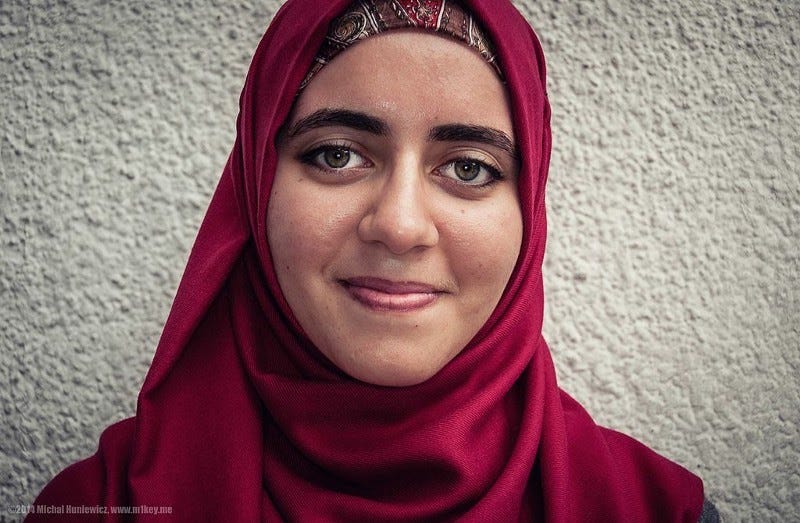
I’m standing in a crowded, noisy courtyard, outside the Bankstown Arts Centre.
Bankstown is a vibrant southern suburb of Sydney. It’s considered one of the most multicultural areas in Australia with residents from all over the world.
It’s a pre-Covid time and everywhere there are people in colorful clothes, talking with their hands and bodies and speaking unfamiliar languages. Eventually, I reach the front of the line and buy my ticket from a large bearded man with a big smile.
“Hey brother, just find a seat anywhere”
Stepping into a hall of laughter and noisy chatter, my partner and I manage to squeeze in between two young Arabic women. They smile and make room for us.
Before long a woman in a bright red hijab strides onto the stage and looks around the audience.
“Hi, I’m Sara, and welcome to the Bankstown Poetry Slam. Tonight we have fifteen slam poets eager to tell you their stories. You can click your fingers if you like a poem. There are two exits on either side of the room, in case Mark Latham turns up.” (1)
Mark Latham is a controversial local politician and everyone laughs and hoots.
“The competition is judged by you — I choose five people from the audience. The first judge is the guy in the front row wearing purple flares with pink sneakers. Give him a big round of applause, cause it takes guts to wear that.”
Sara’s got a wicked sense of humor and the audience love it.
“Our first poet of the night is Layla,”
Layla comes out of the audience up to the microphone. Her face is warm and her voice direct.
“I’m not what you expect
Born in the first world, but Lebanon’s my home
It’s not easy you see, I wait in line
I’ve been spoken over so many times
I write rhymes so quick, got that intellect
And when I get loud, all they talk about is disrespect…” (2)
There are looks of recognition from the audience and the sound of clicking fingers. They know what it’s like to be invisible and ignored. This is an audience of mostly young people from diverse cultural backgrounds, finding their place in suburban Australia. Following Layla, more poets pour out their hearts and the whole audience is with them.
Prior to Covid, the Bankstown Poetry Slam (BPS) has been held monthly for the last two years. It regularly attracts more than 300 people and has now toured to many festivals and other events. BPS is suspended for now, due to Covid.
So why am I telling you about a poetry competition in suburban Australia?
I’m a community worker and my job is to help build healthy, resilient communities. I’ve discovered, over many years, that live events are one way to do this.
There’s often a lot more happening at live events than people realize. While it appears that people are simply sharing ideas, they’re actually contributing to the continual process of constructing culture.
This sounds a bit grandiose but it’s the viewpoint of a group of sociologists called Social Constructionists. Their basic proposition is that people continuously create a shared culture through actions and interactions with each other.
“The social world is not simply given, it is not natural, it is not revealed, it is not even fully determined. It’s made and made up by people. It is transmitted by people. The social world could therefore be otherwise, it could be altered, the social reality in which people live is not inevitable, it is not natural.” (3)
These ideas challenge the popular notion that social reality is based on universal, objective truths. They propose that our cultural world is jointly constructed between people. Humans are agents in the process of culture building and are not simply puppets controlled by their culture.
Seth Godin, a prominent online author and activist write:
“Culture is created by all of us. It might feel as though it is done to us, but it is also created by us.” (4)
Seth is optimistic that people can actively shape their cultural world.
For some people this viewpoint is controversial. They say it’s not that easy to shape our cultural world. There are bigger forces in society that define culture in a way that maintains the power of the dominant players. Michael Foucault, one of the leading scholars of post-structuralism, calls this a “regime of truth” (5). According to Foucault, elite actors shape the dominant discourse. He suggests the language used to create and sustain meaning and truth serves the favored actors’ interests.
In other words, Foucault asserts that dominant voices construct culture.
Does this mean that cultural construction is necessarily oppressive? On the contrary, by identifying the process, reveals the opportunity to question the dominant discourse and develop alternate narratives. These alternate narratives allow these communities to tell their own stories and thus construct their own cultural reality.
That night in Bankstown everyone embraced this opportunity. We were swept along by the vitality of the host, the authentic voices of the poets, the energy of the young audience, and the richness of ideas. The event challenged dominant cultural narratives and sought alternative, more uplifting, and meaningful ways of being in the world. Everyone, including my partner and I, left the event feeling freer, stronger, and more connected to each other.
The Bankstown Poetry Slam was a magic night. It reminds us we can be agents in the construction of our cultural world. Thanks, Sara, Layla, and the whole community.
This article has explored the social constructionists and post-structuralists response to the question:
Do We Create Culture or Does Culture Create Us?
Their answer is that culture determines our reality but is also generated by us. It creates us, but we create it.
What do you think? Is culture determined by dominant voices or can you shape it? I’d love to hear your thoughts and comments.
Cheers Thor
My background is in community work, the arts, and event making. If you liked this article, follow me for more articles about live event design, culture, and community building in a post covid world.
(1) Sara Mansour, co-founder, and director of Bankstown Poetry Slam
(2) Layla MKH’s part poem “Ode to Myself”
(3) Dr. Dennis Hiebert: “What does ‘The Social Construction of Reality’ Mean? https://www.youtube.com/watch?v=SqFhd-Igs6w
(4) Seth Godin https://seths.blog/2020/12/stand-up-and-fight/
(5) Daniele Lorenzini: “What is a ‘Regime of Truth’?”, in: Le foucaldien, 1/1 (2015), DOI: 10.16995/lefou.2