
Do Statins Increase Diabetes Risk?
An important correlation since both diseases often come together
There is a saying in medicine that no drug is benign. Every medication has a side effect. Even common drugs like Tylenol can cause liver toxicity in high doses. Too much Motrin can cause a stomach ulcer or even kidney failure.
However, sometimes drugs are necessary to reduce the risk of developing a chronic condition or mitigating the damage of an existing one. In starting a medication, the benefits must outweigh the risks.
One of the most common medications in the United States is a class called statins. 1 in 4 people over 40 years old, on average, takes a statin. Statins are inhibitors of an enzyme that helps to make cholesterol. They lower “bad” cholesterol, called low density lipoprotein (LDL), while increasing “good” high density lipoprotein (HDL). HDL takes cholesterol away from your arteries and back to the liver. Then, it’s processed so that excess cholesterol is removed from your body. LDL does the opposite and deposits cholesterol in blood vessels. It can contribute to plaque formation (a hard, fatty deposit). Plaque narrows the arteries and reduces blood flow. This is called atherosclerosis.
Atherosclerosis increases the risk of heart disease and a possible heart attack. Reducing its development reduces risk. But new evidence is showing that, like with other medications, statins have side effects.
What’s metabolic syndrome?
First, let’s discuss an important medical topic. Metabolic syndrome refers to the presence of risk factors that increase the risk for cardiovascular disease, diabetes, stroke, or all three.
According to the National Heart, Lung and Blood Institute (NHLBI), the cluster of metabolic factors involved includes:
- Abdominal obesity. This means having a waist circumference of more than 35 inches for women and more than 40 inches for men. An increased waist circumference is the form of obesity most strongly tied to metabolic syndrome. Here’s some info about the nuances of various obesity types.
- High blood pressure of 130/80 mm Hg (millimeters of mercury) or higher. Normal blood pressure is defined as less than 120 mm Hg for systolic pressure (the top number), and less than 80 mm Hg for diastolic pressure (the bottom number). High blood pressure is strongly tied to obesity. It is often found in people with insulin resistance.
- Impaired fasting blood glucose. This means a level equal to or greater than 100 mg/dL.
- High triglyceride levels of more than 150 mg/dL. Triglycerides are a type of fat in the blood.
- Low HDL (good) cholesterol. Less than 40 mg/dL for men and less than 50 mg/dL for women is considered low.
When physicians determine the need for a statin, they use a calculator which includes many of those risk factors. They use the American College of Cardiology (ACC) Atherosclerotic Cardiovascular Disease (ASCVD) Risk Calculator. This tool assesses the chances of a person ages 40 to 79 developing heart disease over the next 10 years. This is what the calculator looks like.
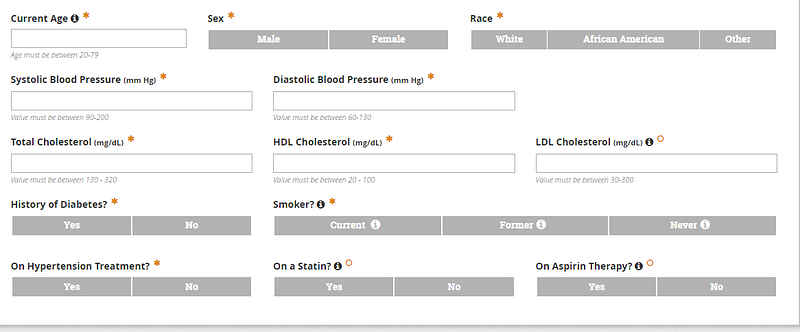
You can see how some of the factors in metabolic syndrome are used to calculate the need for a statin, not just elevated levels of cholesterol. That being said, if you have no other risk factors but your LDL is above 190 mg/dL then you should start a statin.
That calculator tells you the risk of developing heart disease over the next ten years: low-risk (<5%), borderline risk (5% to 7.4%), intermediate risk (7.5% to 19.9%), high risk (≥20%). Once that risk is determined, there should be a process of shared decision-making with your health team to determine the need for a statin.
So, if diabetes increases the risk for heart disease, which increases the need for a statin, why do statins increase the risk of developing diabetes?
Statins can cause insulin resistance.
Just as in the case of a person having LDL above 190 or with someone with pre-existing heart disease, there is no question as to the benefits of a statin. The question of whether to start one or not, especially when in the borderline or intermediate risk groups, has to be weighed against potential harms.
There have been studies that show a correlation between insulin resistance and statin drug use. Insulin resistance means that your cells do not respond to insulin well, and therefore, insulin cannot do its job of removing glucose from the blood to be used as energy. Glucose and insulin move together from the blood and into body cells.
One study showed that atorvastatin, a very common cholesterol-lowering statin, increased insulin resistance by a median of 8% and insulin secretion by a median of 9%. More insulin secretion increases the chances of your body cells becoming insulin resistant as its action will become less effective with repeat exposure. The data correlates with another study that showed a 9% increase in the risk of developing diabetes when using a statin. The reasons behind this have been unclear, but one new study may have a fascinating explanation.
A gut feeling
There is a strong connection between the microbes living in your intestines and overall health. This is called your microbiome, and it has an effect on drug metabolism and toxicity.
A recent study in Cell Metabolism made an interesting discovery. It identified a decrease in a bacteria called Clostridium with atorvastatin use, which plays a role in GLP-1 regulation. You may recognize GLP-1 because the new weight loss drugs like Wegovy mimic its actions to increase glucose metabolism and reduce insulin resistance. Atorvastatin was found to decrease the ability of the bacteria to convert a certain enzyme that regulates circulating GLP-1. This causes lower levels of GLP-1 and increased insulin resistance.
The higher the dose, the higher the chance it causes insulin resistance. This stinks because those at most risk of heart disease need the higher dose as the lower the LDL, the better for your heart. For those at the highest risk, statins are needed to decrease coronary artery disease, regardless of the chances for diabetes to develop. It is likely that someone with an unhealthy lifestyle will increase their chances of developing diabetes even without the added help of the medication.
What do I recommend you do from my medical practice?
While the risk of developing diabetes remains low on a statin, especially if you maintain healthy lifestyle habits, it is still something to think about when discussing with your health team regarding starting the medication.
Regular follow-ups on blood pressure (can be checked at home) and cholesterol levels (usually checked yearly) are important in controlling metabolic risk factors.
Checking your glucose levels, along with HbA1C, should be done when taking a statin. HbA1C is a type of bloodwork done every 90 days and is the best way to gauge trends in your glucose levels. The level is reported as a percentage because it looks at your red blood cells and how coated they are in glucose. Levels are reported as:
- Normal: A1C below 5.7%
- Prediabetes: A1C between 5.7% and 6.4%
- Diabetes: A1C of 6.5% or higher
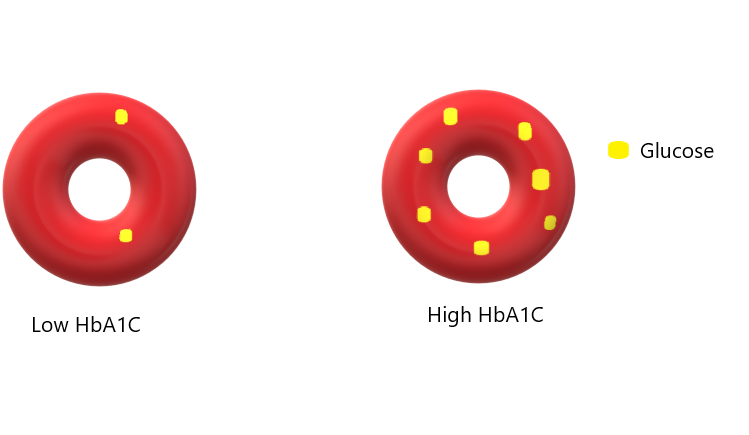
HbA1C levels should be closely monitored if you have elevated risk. For a diabetic with poor glucose control, every three months is highly recommended. For everyone else, it depends on risk factors and whether the levels are trending up or down. This should be a shared decision-making process with your doctor, just like the decision to start a statin.
The risk is low in developing diabetes when you are taking a statin. However, since the risk is slightly elevated, it is even more imperative to understand your health and how to optimize it.
Lab values do not dictate health on their own. Every approach to good health must be comprehensive. But it must start with a foundation in understanding why a drug may be beneficial and what potential side effects can be. Only then can you make informed decisions about your wellness when it comes to medication.
Do you take a statin? Please comment and tell me your story so we can all learn from one another to remain healthy.
Thank you for reading my story. I wish you a healthy life.