
Do Most Books Sell Less Than 12 Copies Per Year?
And other questions from a pivotal publishing trial
Writers often think of success in terms of being published by one of the big houses. Hachette, Harper Collins, Penguin/Random House, Macmillan, and Simon & Schuster were roads to recognition. In 2022, this image shattered for many during the anti-trust trial of the supposed merger between two of these giants, Penguin Random House and Simon & Schuster. Numbers of sales, such as the claim that more than half sell less than a dozen copies, shocked social media users. Statistics tell a more nuanced story.
The table is set
Publishing’s true state might never have sparked discussions if it were not for a set of events. It all started when ViacomCBS Inc. (now Paramount Global) put Simon & Schuster on sale in 2020. In the end, Penguin/Random House won the bidding war for one of its largest competitors. This news became sort of lost amid the news cycle of the Covid-19 pandemic.
A year later, Joe Biden began his term as president of the United States, which also signified a sea change in the approach to anti-trust cases. The new administration took a tougher stance on monopolies and monopsonies. An example of this is the Competition and Antitrust Law Enforcement Reform Act. Soon enough, the Department of Justice sued the involved parties to block the merger, because it would create a powerful corporation that would use its heft to hurt authors.
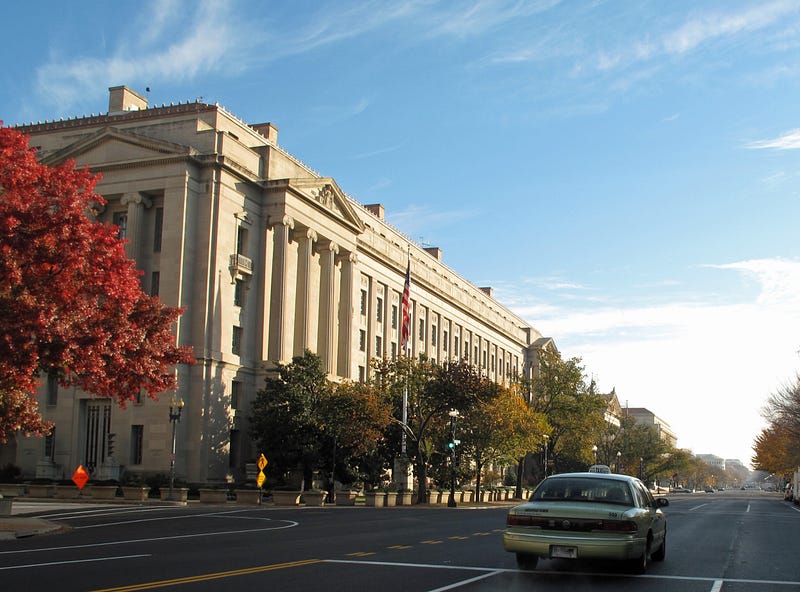

The government claimed the new publishing conglomerate would have as much as a 50 percent market share in the top sellers’ category in the American book market. They theorize that the entity would create an imbalanced buying market, a monopsony, wherein they could drive down the prices they pay authors.
Penguin Random House and Simon & Schuster’s defense was that the merger would, in their opinions, increase the advances they could offer writers. In all likelihood, Judge Florence Pan will deliver a verdict in late 2022.
Stark realities of a dream
This brings us to the numbers. During the trial, the DOJ pointed to the figures that more than half of the 58,000 trade titles sold less than a dozen copies. Kristen McLean, an analyst from Bookscan, provided a more in-depth breakdown of the frontlist sales of big publishers (over a period of 52 weeks that stretches until 24 October 2022) in a comment:
0.4% or 163 books sold 100,000 copies or more
0.7% or 320 books sold between 50,000–99,999 copies
2.2% or 1,015 books sold between 20,000–49,999 copies
3.4% or 1,572 books sold between 10,000–19,999 copies
5.5% or 2,518 books sold between 5,000–9,999 copies
21.6% or 9,863 books sold between 1,000–4,999 copies
51.4% or 23,419 sold between 12–999 copies
14.7% or 6,701 books sold under 12 copies
Thus, among the frontlist titles of the ten biggest American publishers, around 66,1% sell less than a thousand over the course of a year. The time period is key. This is not the data for lifetime sales, as some have claimed on social media. It nevertheless paints a bleak picture for hopeful authors.

McLean’s data also illustrates the big publishers’ reliance on the sales of a small selection of their titles. Only 0,4% reach the 100 000 mark, for instance. Big publishers have, for the most part, ceded the inexpensive book market, the former domain of cheap paperbacks in newsagents and drugstores, to online entities such as Amazon. Traditional publishing now focuses on the premium, top seller category.
In the crowded marketplace, where buyers increasingly turn to Amazon, books without big or established names fall through the cracks. The algorithm only rewarded success with success. For instance, Temporary, a magical realist novel by Hilary Leichter, was on various award nominee lists, but sold only a few thousand copies in 2021.
Love is in the air
One resurgent category is the romance genre. In fact, it’s the most vibrant growth category for print books in 2022. Romance’s growth has been steady since July 2020 (with some dips). BookTok, the literary sphere on TikTok, perhaps contributed to the increase ever since the pandemic. Alison Flood wrote about one title’s rise in this sphere in 2021:
Adam Silvera’s 2017 novel They Both Die at the End is one of the books to have benefited from the BookTok effect. Users recently started filming themselves before and after reading the book, sobbing as they reached the finish line. In March, it shot to the top of the teen fiction charts, selling more than 4,000 copies a week.
Publishing houses have also partnered with certain BookTokkers. It’s easy to see why. The videos they create are concise, vibrant, and informative. A video can serve as an effective introduction for new readers. Because it’s created by fellow readers, there is less distrust among viewers. Romance is also well-suited to TikTok because the genre has so many micro-segmentations that cater to readers’ preference for certain tropes, sub-genres, or story elements.

Social media thus could be one avenue of visibility. Whatever the outcome of the anti-trust trial, the future of book marketing will probably include a closer relationship with readers. Data science could also grow in importance, so that publishers are better able to gauge the likes, dislikes, and purchasing habits of readers. The removal of risk is their holy grail, after all.
Sources:
Alter, A & Harris, E.A. 2021. “What Snoop Dogg’s Success Says About the Book Industry” in The New York Times.
Atkinson, C. 2022. “When is a bestseller not necessarily a bestseller?” in BBC.
Beckett, A. 2009. “You can’t be serious” in The Guardian.
Bekiempis, V. 2022. “So Who Won the Antitrust Trial?” in Vulture.
Flood, A. 2021. “The rise of BookTok: meet the teen influencers pushing books up the charts” in The Guardian.
Gladstone, B. 2022. “The Emergence of the Next Mega-Publisher” in WNYC Studios.
Grady, C. 2022. “Book publishers just spent 3 weeks in court arguing they have no idea what they’re doing” in Vox.
Graham, L. 2022. “Romance is the Leading Growth Category for US Print Books This Year, NPD Says” in NPD Group.
Kjellberg, A. 2022. “How Amazon Turned Everyone Into a Romance Writer (and Created an Antitrust Headache)” in Observer.
Michel, L. 2022. “No, Most Books Don’t Sell Only a Dozen Copies” in Counter Craft.