
Monthly Challenge | Street Art
Do Living Statues Qualify as Street Art?
On our European travels we encountered some statues that breathe and sometimes move.
Our distinguished Globetrotters editors have designated the topic of the August 2023 Monthly Challenge to be Street Art.
We were on our first trip to Spain in 2010 and walking toward the Plaza Major in central Madrid when we came across a copy of August Rodin’s famous sculpture “The Kiss.” We stopped and gazed for a minute or so admiring the work of art. And then they moved!
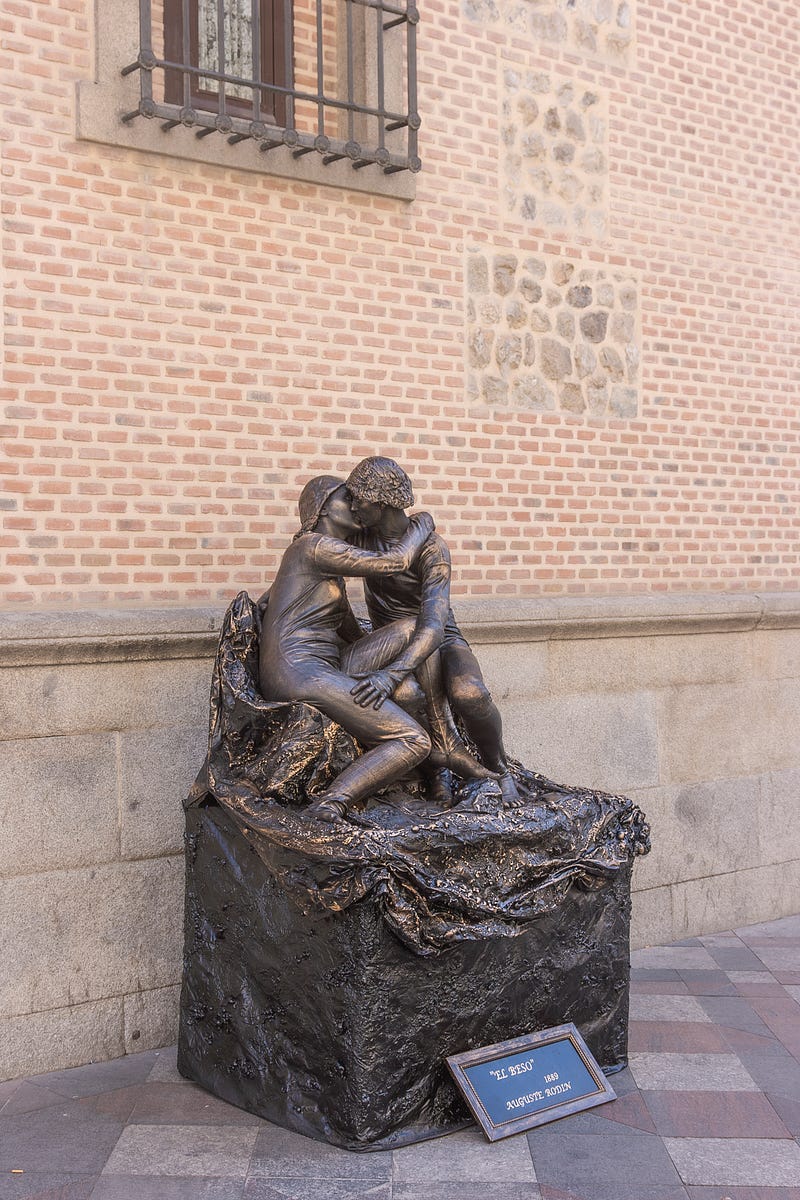
It was our first encounter with a living statue in Spain and we were fooled!
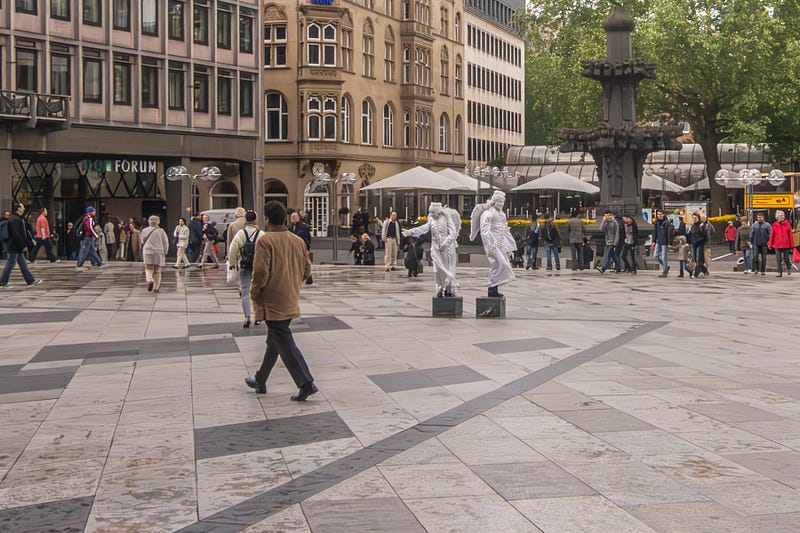
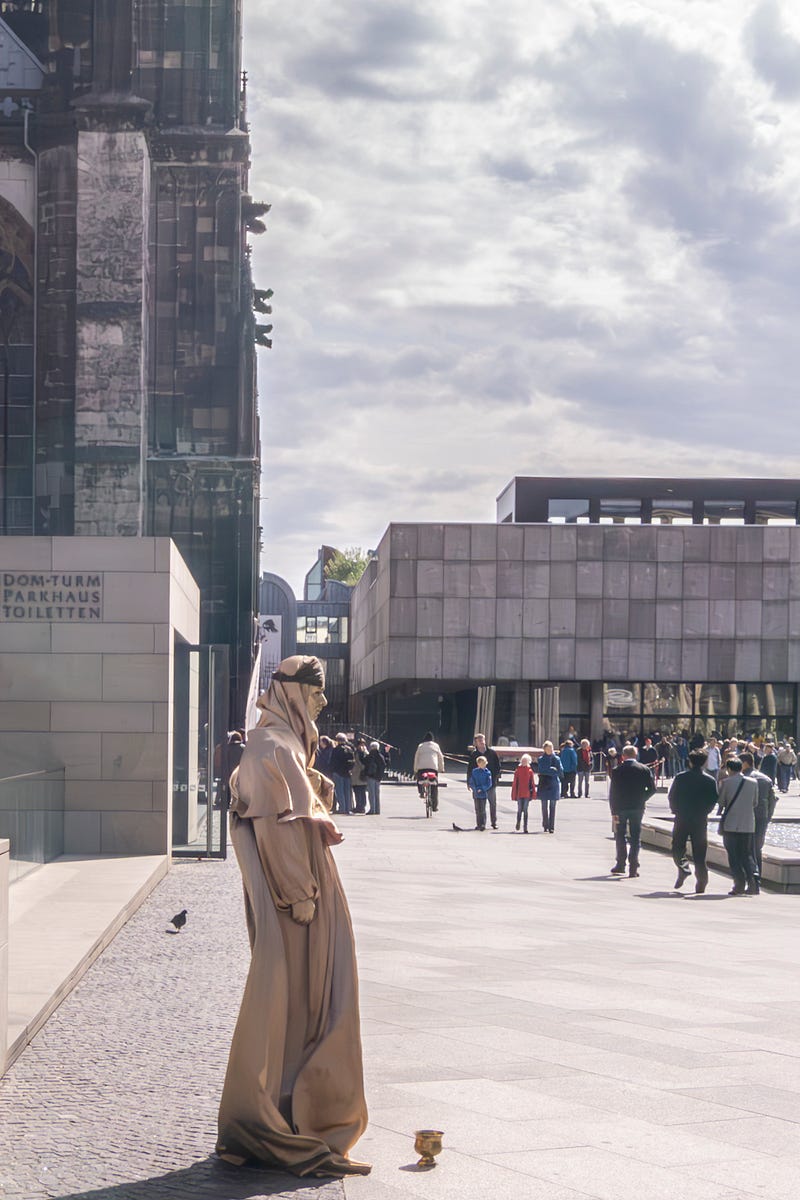
Two years later we were back in Europe cruising down the Rhine River. On our sixth day on the river, we arrived in Cologne and spent about an hour touring the magnificent cathedral. Then we spent another hour walking around the huge plaza in front of the cathedral and encountered our first German living statues.
We visited London the following year and found ourselves at the Covent Garden Market one day. We passed more living statues that day than on any other day in Europe. There must be something about British culture that makes these performers so popular. Or maybe London just handles the entertainment for popular tourist locations better than other cities.
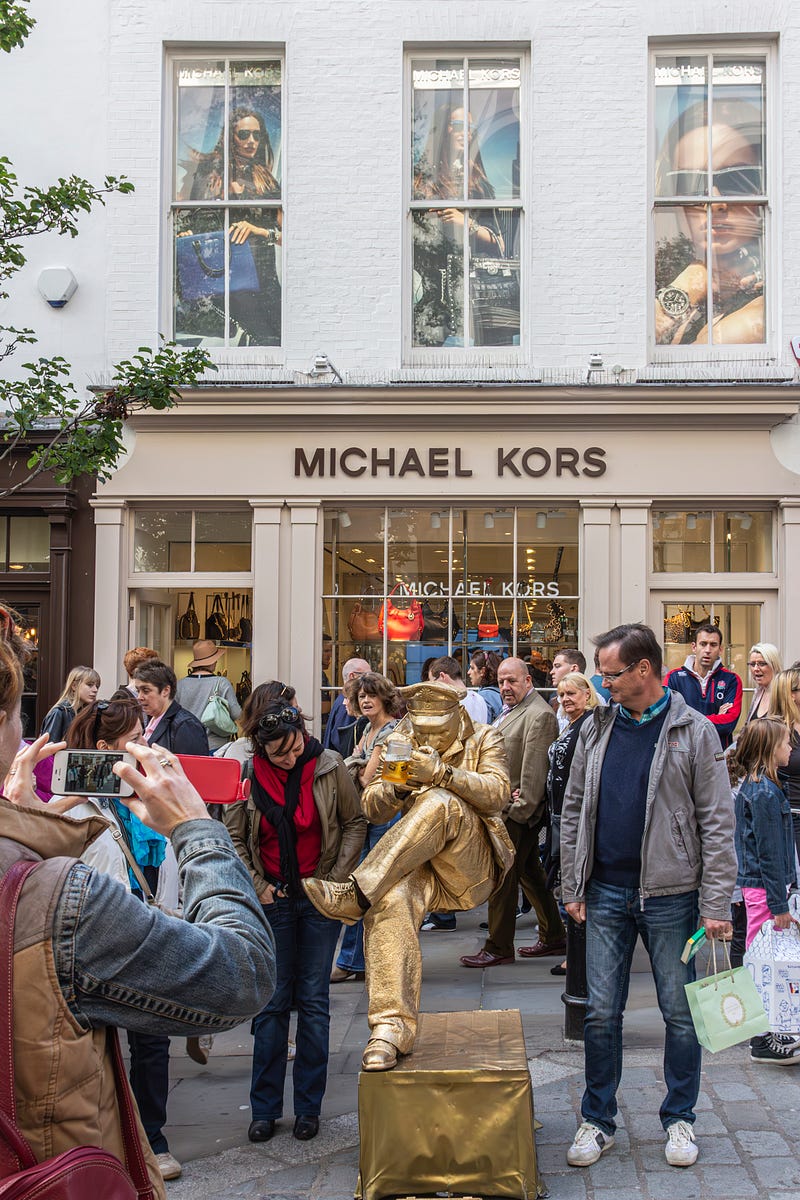
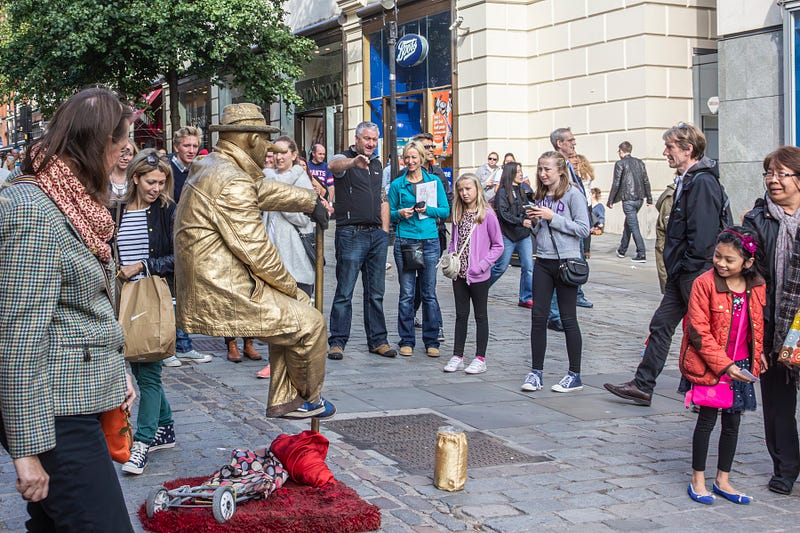
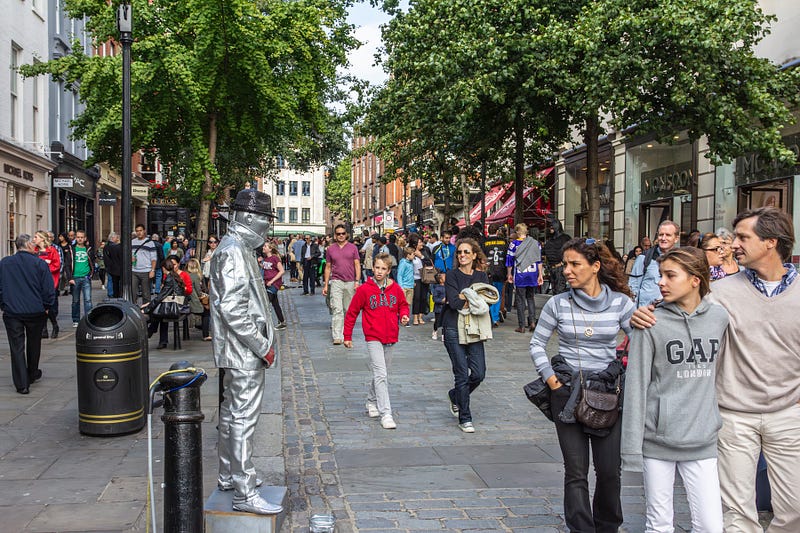
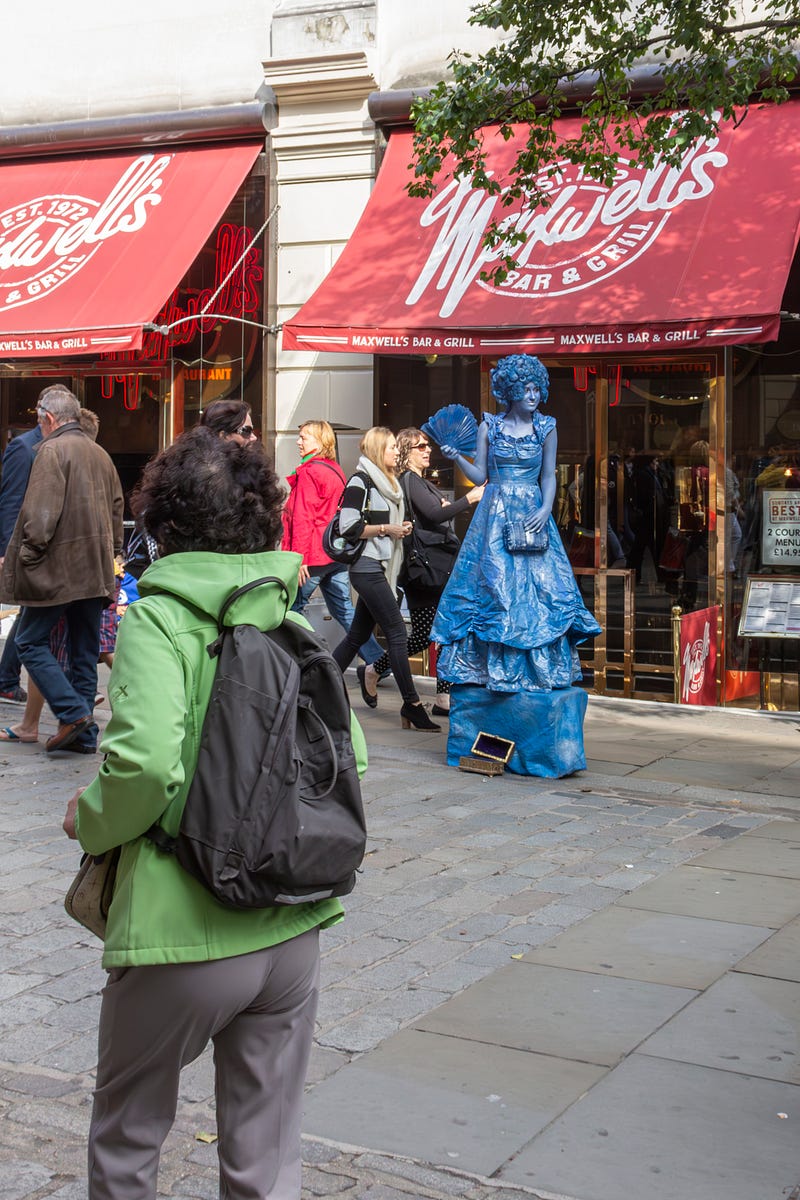
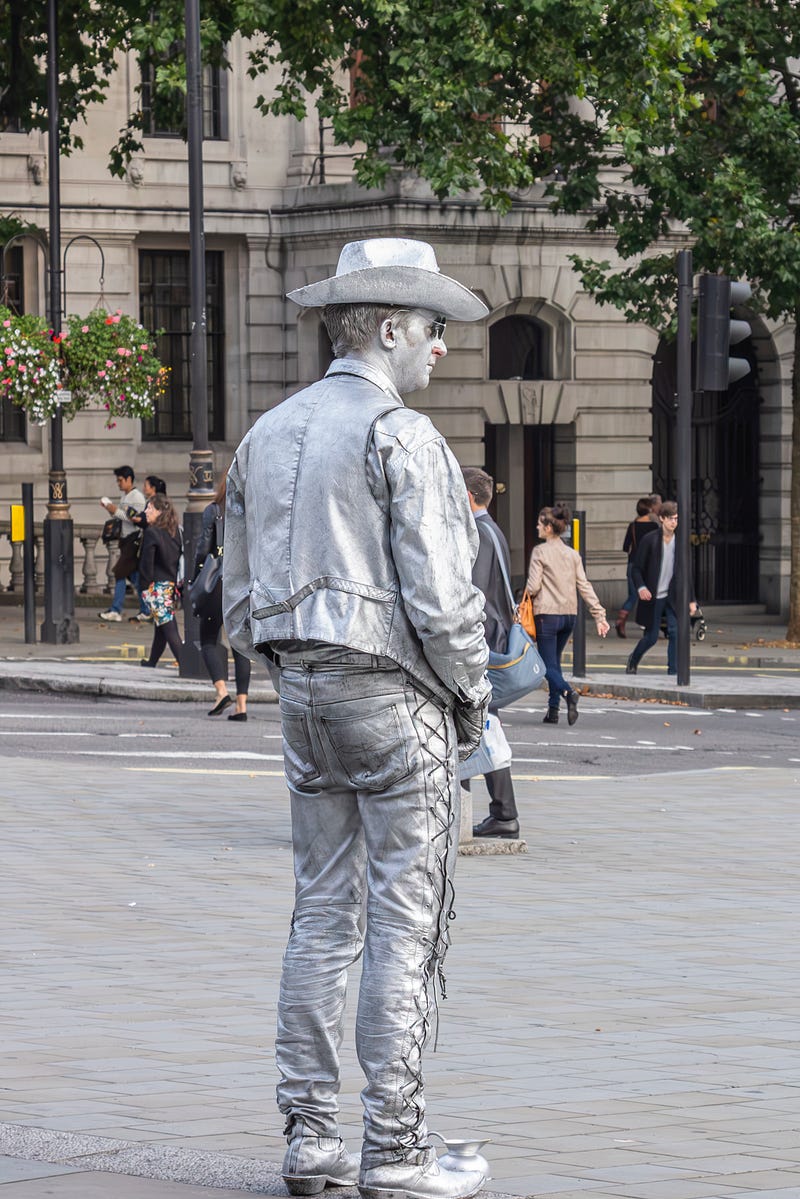
A few days after we walked through Covent Garden, we came across this silver cowboy in Trafalgar Square.
We went to Paris the next year and saw a zillion statues. But most of them were in museums and none of them were breathing.
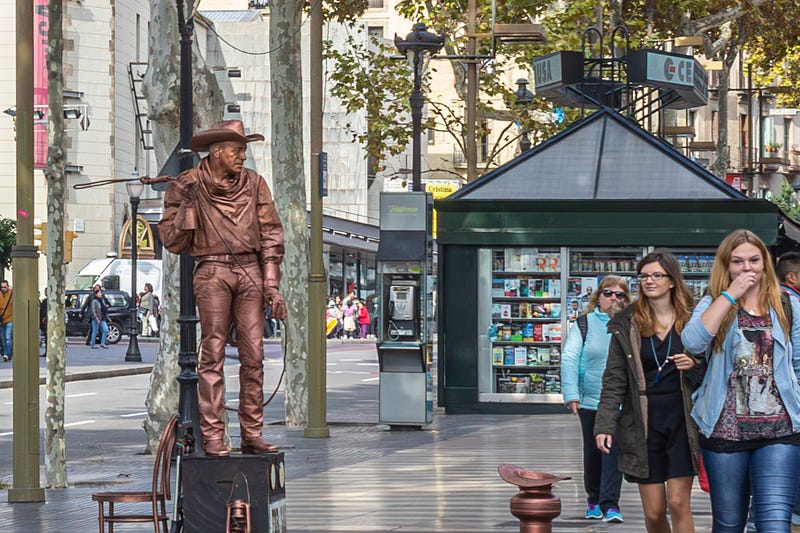
In the fall of 2015, we found ourselves in Spain again. One day we walked down Las Ramblas, the most popular pedestrian thoroughfare in Barcelona. And we encountered a host of street performers, most of them living statues.
Now traditionally these living statues are frozen in time, never moving an inch. But in Barcelona we caught some of these performers engaging with some of the tourists.
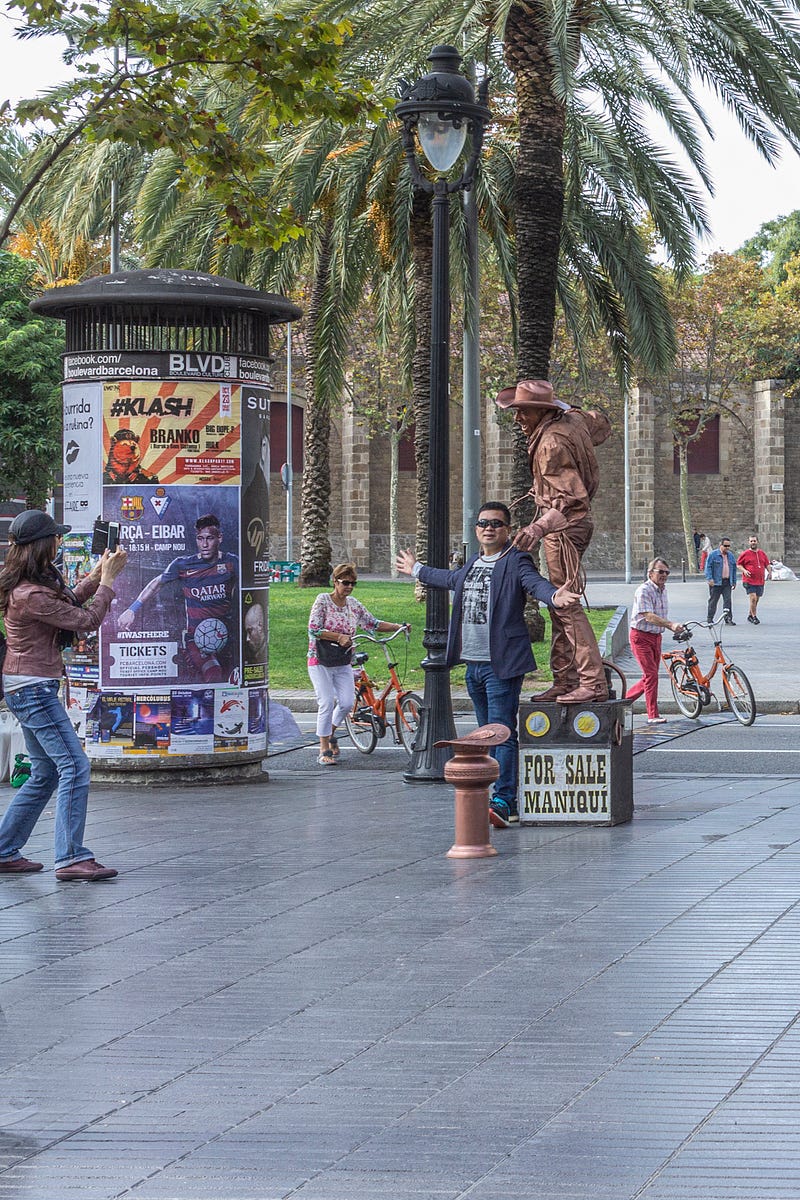
Our cowboy (see top photo) roped this tourist.
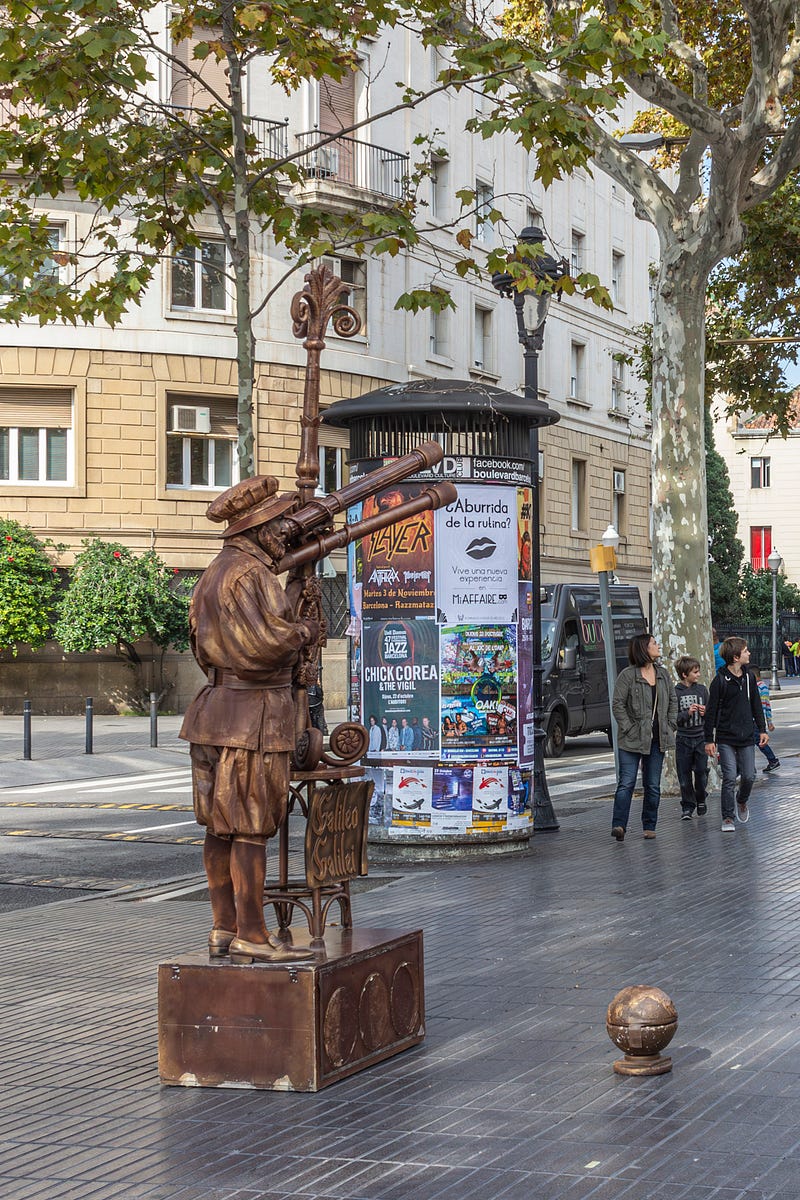
Galileo never moved, though. Maybe a new planet swam into his ken.
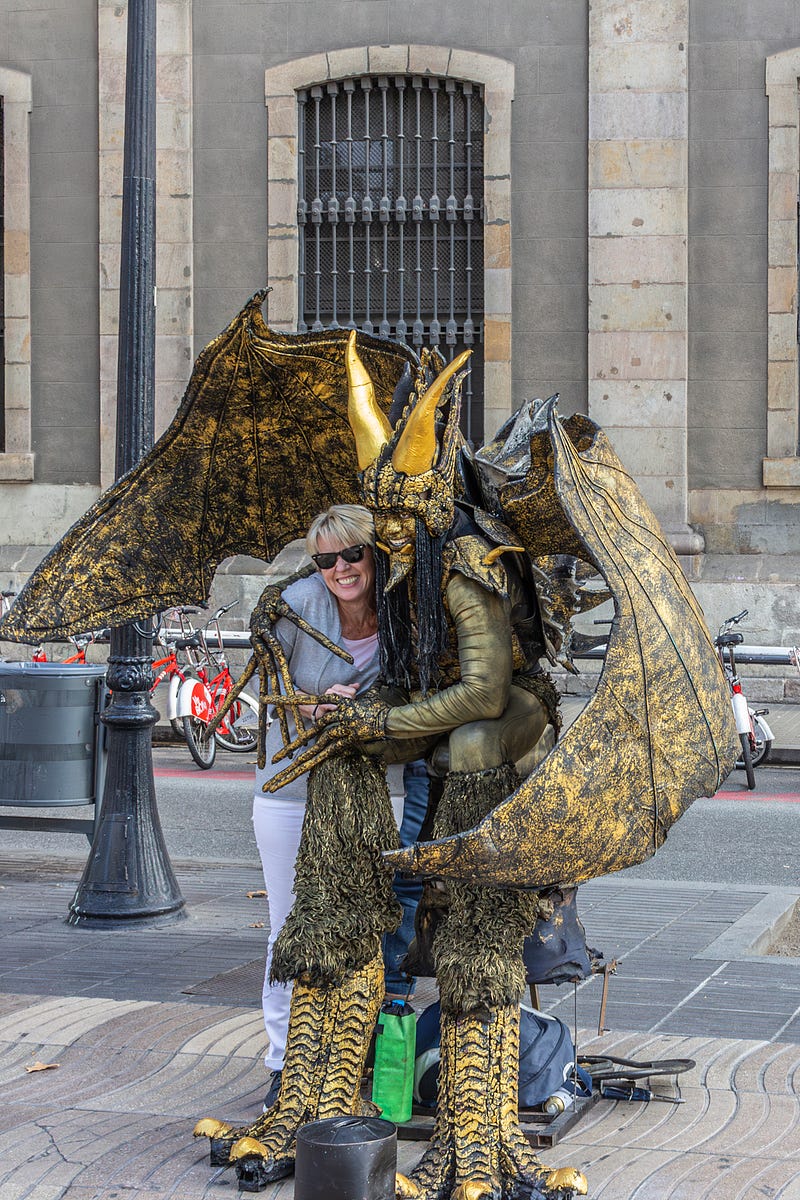
This tourist was captured by a dragon. She didn’t seem to mind.
There were no living statues in sight during our two-week visit to Scotland in 2016. Lots of musicians standing on corners dressed in kilts and playing bagpipes, though!
We stopped by the McDonalds on Aliados Avenue in Porto in 2017 and encountered this mummy right outside the restaurant.
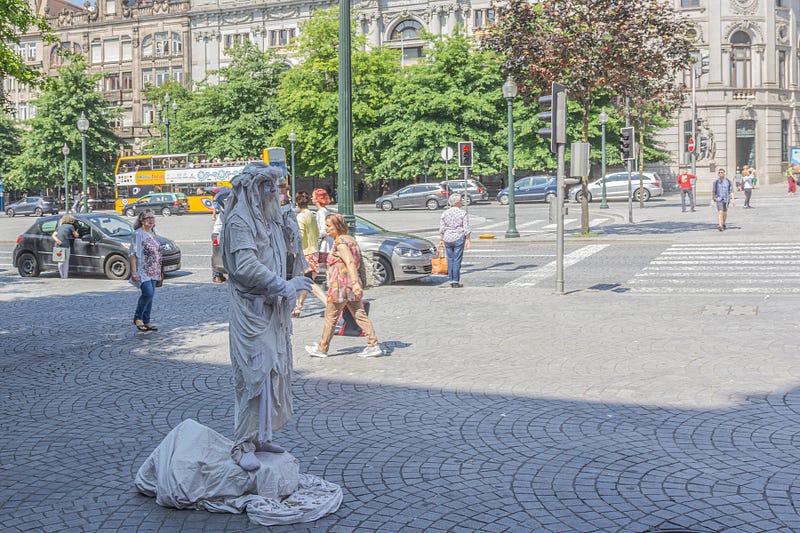
That mummy wasn’t parked in front of any McDonald’s. This was the Imperial McDonald’s, formerly the Imperial Café, and also known as the most beautiful McDonald’s in the world!
My guess is that some street performers just gravitate to the most popular tourist spots. In the big tourist cities, though, street performers such as our living statues are probably well regulated, and they are most likely assigned and scheduled to a certain spot at a certain time.
Here are two recent Globetrotters stories on street art that have inspired me:
Joel R. Dennstedt with
Martin Scherer with
Thanks for reading!


