
Do Lemons Cure Cancer ?
Cancer & Social Media
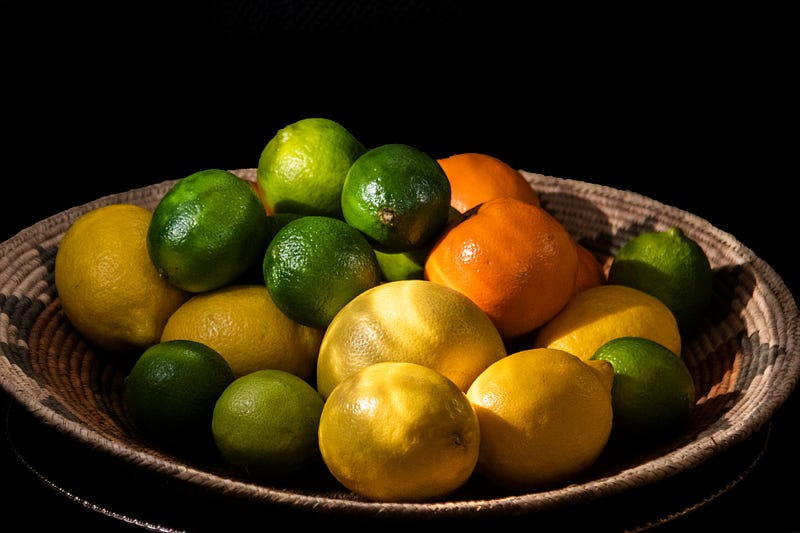
“Lemons cure cancer.” That was the title of the story I found on the Internet. For some reason there is the myth that lemons and lemon juice can cure cancer (1). A research study caused the creation of this myth, which indicates a compound available in lemons and other citrus fruit reduced some types of the cancer cells, which leads to the speculative conclusion (!) that eating citrus and lemons are beneficial in preventing or combating cancer. This does not mean lemons can cure cancer. That is not the way science works.
Let me introduce you to myself. I studied chemistry then received double master degrees in pharmacy and biomedical engineering and finally I got my PhD in polymer science and engineering. After all these degrees, I worked in medical school on cancer research. During my studies, I learned and observed a lot on cancer cell behaviors of colorectal and breast cancer lines that was not written in publications. In cancer, we know that you can never ever work with a text book, because if any subject is known long enough to enter in a text book, it is old; you always make sure you check the new treatments and new studies. The publications from 5 years ago are regarded old because someone probably developed a new method in the meantime. I worked on 2 different cancer types that includes multiple different cell lines; according to this experience I can assure you the way cancer behaves and react to a certain condition is very different from each other as day and night. One aggressive cancer line can be completely destroyed by a medication while a sneaky slow growing cell line might not be affected at all. Before the experiment, we can guess very little about their behavior.
The good thing about cancer research is that life expectancy and life quality of a cancer patient is much higher than the predictions done 5–10 years ago. The speed of the development is insane; we can hardly keep up with the publications and the clinical research on the response of the patients. The point is, after spending a short time in this research, you know the struggles of this complicated “personal” disease because everyone has their own personal history, response to the disease and also to the medication.
When my mind is full of studies and experimental plans, just to relax I sometimes go to social media and the title hits me “Lemon cures cancer”. I know it is absolutely ridiculous and if it were that simple, do you think we wouldn’t figure that out by now? Right now, thousands of scientists in multiple countries are looking for a cure — a solution to this global problem with the help of all possible technology like screening any known medication and different medication application strategies, gene technology and combination of medication and surgery mechanisms, etc. All these treatment possibilities are under investigation and the cure is lemon? No, unfortunately it is not possible but in the moment of desperation, a cancer patient or their beloved ones could get interested and would believe in it, not because of science but because of hope.
I can’t help but think what the writer of that story was thinking? I believe a lot of writers claim things to take attention because that will bring them fame and money. Even bad attention with critics works for them since it will bring reads and reviews. Is it ethical? No. Absolutely not. Many of these people do not even have a science background but try to make a speculative comment according to someone else’s data that they don’t understand.
Do Lemons Cure Cancer?
No, they don’t. According to some studies it is beneficial in preventing or combating some types of cancer at elevated concentrations. However, it really aggregates the data and manipulates the conclusion. The levels available in citrus might only help prevention like any other healthy food. A balanced diet is recommended to any of us at any stage in our life and fresh fruit and vegetables can help the prevention of cancer but it is not possible to claim any food would cure cancer or would protect you from cancer for sure. In the end, there is no conclusive scientific data that would recommend replacement for radiation therapy or chemotherapy.
Speculations Hurt Cancer Research and Patients
Since it had been a discussion in social media, I can only imagine how many people followed this advice and I really hope they didn't replace a scientific treatment with it. Considering we are living in a country where teenagers eat Tide pods (2), any online story can be influential. We just don’t know who reads our publications and what their story is. A speculation like this can hurt someone’s treatment and change their decision process towards a “working” treatment. Moreover, it can hurt them emotionally to hear that a scientific study telling them lemons won’t make any difference on cancer may upset them because it kills the hope when they need it the most. Cancer is a long-term disease and has a negative emotional influence on the patients and their household, even on their friends who are living with a lot of tension from the moment of diagnosis. In that mental state, people can believe crazy stories like that.
A speculative story would also hurt the research since it requires a scientific study to show the impact. For a speculation, all you need is to write a story. For a scientific paper, you need to run a well-designed experiment with and without the “claimed component” on cancer cell lines, and at least a couple of cell lines. In addition, each study has to be in at least triplicate (otherwise the work is statistically not acceptable). So multiply by 3 all the experiments you will run. Any cell line study, has to be tested on more than a couple of data points (such as day 0, day 2, day 4 — that will last usually 1–2 weeks) because you need to show their response over the time period. What I am trying to tell you here is that even a simple experiment to verify a condition like that would require a lot of work, time of a scientist and resources (For example: all the equipment and materials used will be expensive). Claims like that are toxic for cancer research. An example study showing the lack of impact of lemons on cancer is presented here (3).
What does “Cancer Free” mean?
When I was working on cancer treatments, the goal of my research was to increase the efficiency of the current treatments by combining two treatment systems that are compatible to each other. What I personally experienced is that no matter what I do onto these cell lines, I could never ever kill the cells 100%. Even if I do really harsh conditions that cannot be done to a human, every time a couple of cells would stay alive and when the harsh treatment is over and the conditions are improved, they would go back to the cancer phase and grow again. My point is that cancer cells can never be completely eliminated by a treatment and cancer free means that there is no detectible cancer growth in the body. In a month, in a year or maybe in a decade those cells can grow again. Cancer free does not mean there is no cancer cell in your body, it is just not at a detectable level and that is a good enough result.
Final Thoughts
Eating lemon or any other food will not make us cancer free. They are good for you but they are not cancer treatments. We can only rely on scientific studies that have been tested by a systematic methodology.
As writers, we need to be always ethical and considerate of the impact of our story. The fact is that we all want attention and need a title that will attract people to our page. But we should never leave our human side and remember that “winning at any price” won’t make us a good writer and definitely not a good person. I do think we should all learn about science, learn from scientific publications and always question the scientific basis of speculative conclusions.


