
#30DAYSOFSCIKUCHALLENGE
Do I hear that, right?
Day 22 Prompt: A Neuroscience Research Inspired Sciku
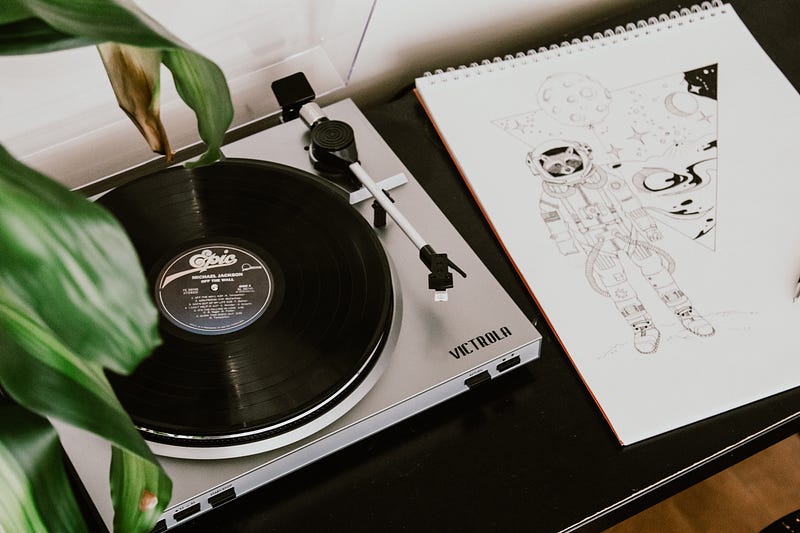
a sound of a bell based on prior perceptions melody or cacophony?
We depend on our senses to perceive the world and each other. Neuroscience has long studied the question of how faithfully our senses represent the physical reality itself, especially since we know now that our brain is continually generating predictions about what will happen next and filtering our senses to only pay attention to the difference between the predicted vs. actual reality.
A recent study at TU Dresden details how our entire auditory pathway is working on encoding sounds according to prior expectations — in other words, and we hear what at some level we want to hear — I suspect your therapist probably already told you something along those lines — now it seems science is echoing the same!
Using functional magnetic resonance imaging (fMRI) to measure participants' brain responses as they listened to sequences of sounds, the research team instructed participants to find which of the sounds in the sequence deviated from the others. The team further covertly modified the participants’ expectations to expect the deviant sound in certain positions of the sequences. The results showed that participants recognized the deviant faster when it was placed on positions where they expected it.
Dr Alejandro Tabas, first author of the publication, states on the findings: “Our subjective beliefs on the physical world have a decisive role on how we perceive reality. Decades of research in neuroscience had already shown that the cerebral cortex, the part of the brain that is most developed in humans and apes, scans the sensory world by testing these beliefs against the actual sensory information. We have now shown that this process also dominates the most primitive and evolutionary conserved parts of the brain. All that we perceive might be deeply contaminated by our subjective beliefs on the physical world.” Source: Science Daily
These findings reinforce the subjective nature of sensory perception and, therefore, the difference with which we experience things around us. Hopefully, it helps us appreciate differences in each other's perceived reality and build towards a more accepting world where we welcome differences and celebrate the diversity of expression.
Thank you for reading!
*This is Day 22 of the #sciku challenge — science-inspired haiku-like poetry( so #sciku?) prompts to get you inspired — Our dear readers — why not spend some time each day creating and having a little fun — if you do — publish it anywhere on medium, just tag it with — #30DaysOfScikuChallenge.
**Tagging Lynn E. O’Connor, Ph.D. Laura Griffith Machado, PsyD Rita Hitching, and anyone else who feels inspired to follow and/or play along with this fun #30DaysOfScikuChallenge and today’s prompt: Neuroscience Research
What’s next —
Or perhaps this one —


