
Do Beautiful Vineyards Really Produce Better Wine?
In Wine, Beauty Is More than Soil Deep
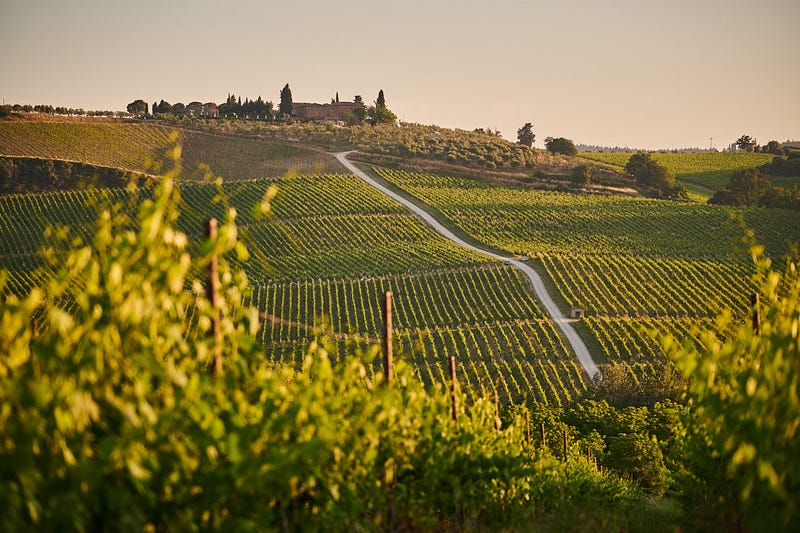
On the outskirts of Gevrey-Chambertin, one of the most famous wine villages in France, we turn off the D974 main road.
We’re in Burgundy visiting Bernard Bouvier, a winemaker my wife and I have been working with for several years, selling his wines in our store. Over 7 years in the wine trade I developed something of an obsession for Burgundy and anytime I come here it feels more like a pilgrimage than a business trip.
Bernard has suggested taking a look at one of his vineyards nearby — the famed ‘La Justice’. So we excitedly go to take a look at this hallowed piece of land.
“I think it’s this road next to the supermarket.”
“Are you sure? Isn’t that just the delivery bay?”
“No, I’m pretty sure this must be it.”
Sure enough, situated just behind a supermarket and the municipal garbage dump is ‘La Justice’, a vineyard I had dreamt of visiting for years. The grapes from this parcel of land produce magical wines; some of my favourite in all of Burgundy. Intensely flavoured and powerful, yet supremely elegant. In my mind’s eye I had pictured a majestic slope, perhaps a beautiful old stone wall built centuries ago by monks to protect the precious vines held within.
Instead, it is a flat, featureless piece of land on the edge of an industrial area. So featureless in fact that we neglected to even take a photo of it.
I’m confused. Somewhat deflated even. How can this piece of land be responsible for such sublime wines? It doesn’t feel right.
It got me to thinking:
If I had seen the vineyard first, would I have felt the same about the wine? Would I have tasted it differently?
Do we as wine drinkers and winemakers too often impose our own ideas on how the wines from a certain vineyard should taste?
Even to experienced winemakers, the results can sometimes be a surprise.
When Rioja estate Bodegas Bhilar bought their tiny San Julian vineyard for example, they quite reasonably expected this cool, steeply east-facing limestone slope to produce a light, delicate, ethereal wine. However, when they listened to what this vineyard had to say and made the wine without interfering or trying to cajole it, the results were the exact opposite — the wine is wonderfully dark, brooding and wild.
So why do these places produce wines that confound our preconceptions? Because of the incredibly simple but simultaneously unfathomably complex notion of terroir.
What is terroir?
Terroir is the simple idea that where the grapes are grown will affect how the wine will taste. It’s easy to imagine that grapes grown in the hot climate of the Mediterranean will be riper and fruitier than grapes grown in the cold, wet climate of England for example.
Standard definitions of what factors are part of terroir generally focus on soil, climate, aspect and altitude.
We can see and judge all these things. They all influence how beautiful we perceive the vineyard to be.
So we tend to associate beautiful vineyards with great terroir and therefore expect great wine. And we associate undistinguished-looking vineyards with a poor terroir and therefore nondescript wine.
But terroir is more than soil deep
Besides the things we can see, there are myriad factors and interactions whose roles we do not fully understand, yet have no less a part to play. Microbial populations in the soil. Yeasts in the air. Viruses and fungal infections inside the vine.
And let’s not forget the impact of us humans. How the vines are farmed can affect how the vine responds to the terroir or even change the terroir itself.
- Is the soil open and aerated or is it compacted by overuse of herbicides and tractors?
- How does the chosen vine rootstock interact with the type of soil and microbial populations which help the vine take in nutrients from the soil?
- What type of fertilizers are used and how do they affect the makeup of the soils?
- How do the trees or other crops we have planted nearby affect the vines?
- Are the vines irrigated?
The proof is in the wine
We still understand so little about how terroir affects vines but in the hands of a skilled winemaker there’s no denying we can taste its effects.
It takes a sensitive, but also brave, winemaker to really listen to the style of wines that a vineyard wants to produce, rather than trying to impose their own ideas.
What if the vineyard has a different taste in wine than the winemaker? Or simply wants to produce a different style of wine than the winemaker was expecting? What if their most prized piece of land which holds special sentimental value will actually never produce the outstanding wines they convince themselves it is capable of.
Both winemakers and wine drinkers need to put aside romantic aesthetic ideas of what constitutes a great terroir. We need to stop judging the proverbial books by their covers. We need to recognise that terroir is more complicated than we can possibly understand.
A great terroir doesn’t have to be a beautiful terroir. There are countless factors that could make even the most boring looking vineyard a great terroir.
That’s why even seemingly unremarkable vineyards next to a supermarket car park can produce incredible wine in the hands of a winemaker who is prepared to listen.
Subscribe to the Rooted newsletter and get 5 free city guides dedicated to the best places in Europe to eat and drink