
DNC: We Can Legally Choose Candidate Over Cigars In Back Room
In a courtroom in South Florida last week, a DNC lawyer said openly that if the party wanted to do things like the old days and pick a candidate over cigars in back rooms, it would be within their legal rights to do so.
“We could have voluntarily decided that, ‘Look, we’re gonna go into back rooms like they used to and smoke cigars and pick the candidate that way,’” Bruce Spiva, lawyer for the DNC, said during a court hearing in Carol Wilding, et al. v. DNC Services Corp., according to court filings exclusively obtained by TYT Politics.
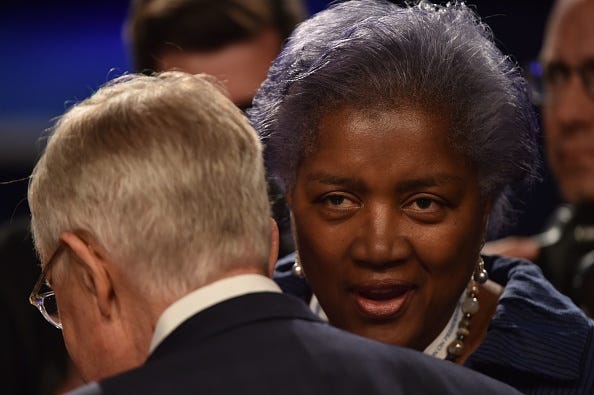
The class-action lawsuit has been deliberated since October, 2016. It was filed by Bernie Sanders voters and donors against the DNC, and has largely been ignored by mainstream media, many of whom have labeled Sanders supporters as a collective group of sour grapes who should simply unite with the establishment Democrat wing of the party against President Trump.
In my interview with plaintiffs’ attorney Jared Beck, Beck said:
“We’re seeking relief in the form of damages; essentially, the return of those donations that people paid to the Bernie Sanders campaign, under the understanding that this was a democratic, free, and fair election process that they were participating in through their donations to the Bernie Sanders campaign.”
The plaintiffs seek relief for all donors that gave to Bernie Sanders — nearly 7 million individual donations. They are also seeking relief for those that donated to the DNC during the primary.
The DNC’s lawyer also implied that, despite the DNC’s charter and bylaws stating that it must be neutral during Democratic primary contests, there’s no contractual obligation to follow through.
“There’s no right to not have your candidate disadvantaged or have another candidate advantaged. There’s no contractual obligation here…it’s not a situation where a promise has been made that is an enforceable promise,” Spiva said.
In one of the more strange defense rationales, Spiva evoked baptism to suggest the term “impartial” is too vague and open-to-interpretation to be enforced legally.
“You have a charter that says you have to be — where the party has adopted a principle of even-handedness, and just to get the language exactly right, that they would be even-handed and impartial, I believe, is the exact language. And, you know, that’s not self-defining, your Honor. I mean that’s kind of like, you know, saying, Who’s a Baptist?”
Beck pointed out that the neutrality pledge isn’t only stated in the charter — former Chairman Debbie Wasserman Schultz went on national television many times referencing the charter and the DNC’s pledge to be neutral.
Spiva went on to argue that the court can’t really answer this question of meaning, and trying to do so would be wading into “political squabbles.”
President Trump was also used during the DNC’s argument; Spiva pointed out then-candidate Trump’s promise to build a border wall funded by Mexico during the campaign, wondering if a court would rule in favor of Trump voters who donated money during the primary based on that promise and sued the president for failure to uphold it.
This, of course, is an apples to oranges comparison — candidate Trump was an individual candidate rather than a private organization overseeing Democratic primaries structured with bylaws stating its neutrality in primary processes.
The DNC has not responded to TYT Politics’ request for comment regarding its lawyer’s statements in court.


