
The Game Changer: DNA Evidence and Rolando Cruz’s Exoneration
DNA Evidence Reveals Truth: The Compelling Exoneration of Rolando Cruz
Unveiling Justice: Rolando Cruz’s DNA Exoneration Story
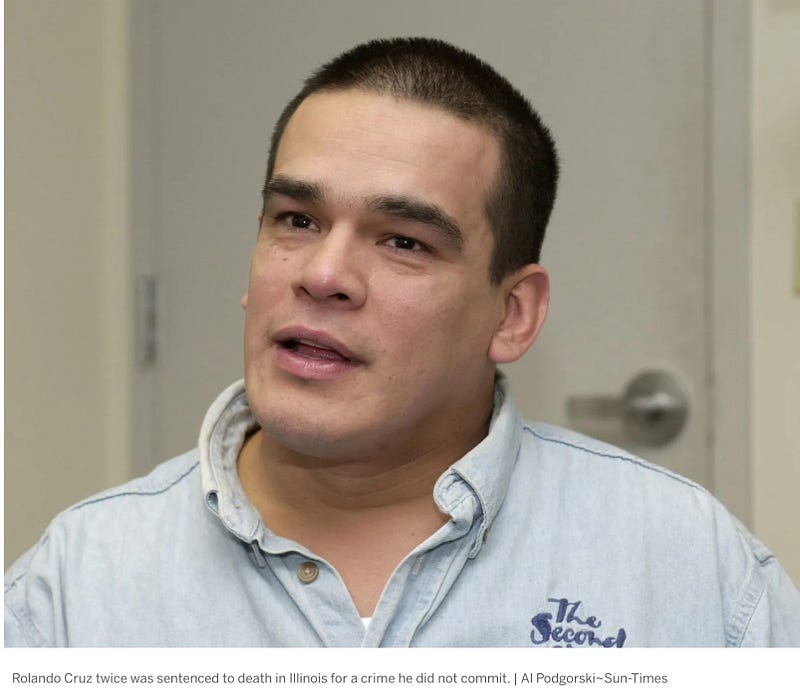
Imagine this for a moment: You are confined within the four walls of a prison cell, your years of life wasting away, imprisoned for a crime you did not commit. Sounds horrific, doesn’t it? This harrowing situation is not a plot drawn from a thriller novel. Instead, it tragically showcases the real-life journey of Rolando Cruz. As an individual wrongfully convicted of a heinous crime, Cruz spent more than a decade behind bars before DNA evidence came to his rescue, leading to exoneration.
“The most powerful tool in our justice system is truth. In Rolando Cruz’s case, it was the power of genetic fingerprinting that revealed the truth, rewriting the course of his life forever.”
Follow us as we delve into the gripping narrative of Rolando Cruz’s incarceration and exoneration. Understanding the game-changing significance of DNA evidence in proving his innocence, and forever altering the landscape of criminal justice.
Imagine this: Rolando Cruz, wrongfully accused and convicted of a crime he did not commit, spent over a decade behind bars. This harrowing reality underscores the necessity of continually examining our justice system. For its potential flaws, and the ways in which cutting-edge science can help correct them. Notably, DNA evidence played a pivotal role in Cruz’s eventual exoneration.
DNA evidence first came into use in 1986, revolutionizing criminal investigations and proving indispensable in countless cases. It’s utilized for prosecution, defense, and most notably, in the exoneration of wrongfully convicted individuals. But how does it work? Let’s take a closer look.
The process of analyzing DNA evidence starts at the crime scene, where careful collection of biological samples is crucial. These are then taken to DNA analysts who develop detailed profiles. This work involves extracting and amplifying DNA, running it through a process called gel electrophoresis to create a visible pattern, then analyzing this pattern to create what’s known as a DNA fingerprint.

Cross-referencing this unique DNA fingerprint with samples provided by suspects can unequivocally link or exclude someone from a crime scene. This is DNA profiling, and this is where it proved invaluable in Cruz’s case. The intricacies and specifics of his case, his exoneration, and the DNA evidence that facilitated it, further underscores the absolute necessity of available, reliable DNA evidence in criminal justice.
Professionals in this field often undergo rigorous certification processes, with credentials from institutions such as The American Board of Criminalistics. This only serves to highlight the vital role they play in the broader investigative process.
The ability to pinpoint a person’s unique genetic markers from a single hair or drop of blood means that DNA analysis is more than just a tool for investigators. It’s a beacon of hope for those wrongfully convicted. It has the potential to rewrite narratives, and in doing so, save lives. DNA evidence turned the tide in Rolando Cruz’s case, proving his innocence, and setting a precedent for the potential of DNA technology within our justice system.
- Since 1986, DNA evidence has been critical in aiding not only prosecution and defense, but also in exonerating those who were erroneously convicted.
- Forensic DNA analysis, also known as DNA fingerprinting, has revolutionized investigative procedures, providing crucial leads in countless criminal cases.
- DNA profiling is a significant part of forensic DNA analysis. It involves marking segments and comparing the genetic makeup of different tissue samples, looking for noteworthy distinctions or resemblances.
- With time, various advancements have been made in this field including the emergence of probabilistic genotyping. This cutting-edge technique aids forensic scientists in interpreting complex DNA mixtures by running statistical computations to estimate the likelihood of certain genetic compositions.
- The application of such advancements has led to innovative approaches in crime investigations, such as familial DNA searching. This involves identifying potential suspects through DNA similarities with relatives, thereby opening up new avenues for criminal case leads.
In conclusion, the adoption of DNA evidence in the legal sphere has proven to be an invaluable tool in ensuring justice. From the inception of forensic DNA analysis in 1986, through the advancements in DNA profiling and genotyping, to the innovative familial DNA searches, we’ve seen a remarkable transformation in investigative procedures.
The precision and definitiveness of DNA evidence have not only been instrumental in prosecution and defense, but have also provided a lifeline for the exoneration of the wrongfully convicted. As we continue to enhance our understanding and use of DNA evidence, the pursuit of truth and justice becomes more attainable and reliable, promising a more robust future for our legal system. The story of Rolando Cruz’s exoneration is a testament to the powerful impact of this scientific advancement.
