
Diversity & Inclusion In TV & Film — What No One’s Talking About But Should
Come on, guys. There are some obvious blind spots here.
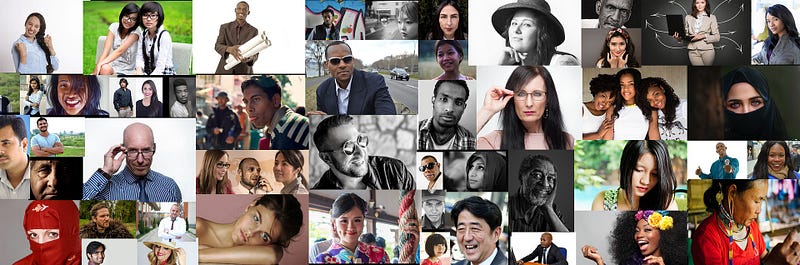
Being active on Twitter is like being locked in an insane asylum where the inmates all have megaphones.
This past weekend, a noisy, simplistic debate about diversity & inclusion in TV, film, and other media detonated on that lousy shit-site, and I’ll be damned if I’m going to let myself sit this one out.
I’ve been following this debate well before the recent Twitter free-for-all, and as a ravenous consumer of art and pop culture, I’ve noticed some jackass trends that I’m shocked shitless no one’s bothered to address in their pointless screaming.
This bastard bickering on the topic of diversity & inclusion in entertainment has dulled everyone involved into bush-league pundits, and I’m about ready to kick a complete stranger in a violent plea for maturity.
If you wanna know what’s angried up my blood, below are a couple of points that have yet to be conjured up in our bitchy cultural discourse:
The Pro-/Anti- Diversity & Inclusion Debate Has Turned Participants Into Cunty Ideologues
The main players in this argument have put their nuance on mute to take up hardline sides: you’re either completely pro-diversity & inclusion or completely anti-diversity & inclusion.
I’m still recovering from the facepalm I induced upon my person when I saw both sides deploying the same sleazy intellectual tactics, like painting the other with as wide a brush as possible.
And of course it always gets real political real fast:
“If you want more diversity and inclusion in your entertainment, then you’re a snowflake libtard.”
OR
“If you complain about your entertainment being too diverse and inclusive, then you’re a Trump-supporting bigot.”
First, keep your stupid politics out of the discussion about art and culture; they should serve as a refuge from the psycho circus and not a reminder of it.
And if you even think about bringing up the terms “left wing talking points” or “right wing talking points”, kindly make out with power lines labeled “DO NOT TOUCH”.
Second, some of the best ideas come out of the murky, unexplored depths of the Gray Area, that fabled place where two things can be true at the same time, everyone can be wrong, and novel concepts lie waiting.
If you plant your ideological flag firmly on the Land of Certainty (of which there are far too many), you’re missing out on a whole universe of revelation, ya dink.
Nobody Even Fucking Knows What Diversity & Inclusion Mean
Another reason why this debate is so unproductive is that no one’s operating with clear, consistent definitions of “diversity” and “inclusion”.
Seriously, the foundation on which this conversation is taking place has a sinkhole the size of one of the Dakotas under it.
The terms “diversity” and “inclusion” are tossed around so widely that not even their proponents know what they mean. Simply glance through the columns and opinions of their most ardent propagandists and you’ll be hard-pressed to find any semblance of coherence or through-line tying their half-baked thoughts together.
If the Social Justice braintrust had gotten together behind closed for a pow-wow to discuss which definitions they’d be working with BEFORE they tried to force them on everyone and everything, that STILL done more to lead to a beneficial talk.
But nah.
We’re stuck with blaring stupidity, instead.
Let me try to clarify some aspects of both sides’ understandings of the terms “diversity” and “inclusion” and how they pertain to the entertainment industry:
Supporters of these terms make part of a good case for them: For too long, stories involving marginalized groups have been left out of the media and pop culture, so we should make room for them, too.
But their conceptions of these terms become a problem when identity politics creeps in and creators who are straight, white, and/or male are encouraged to step aside to let disenfranchised creators participate.
This isn’t making room — it’s taking it away from others.
Critics of these terms make part of a good case for their concerns of them: Who cares about the race, gender, and sexuality of the characters and creators? As long as the story’s good and the artists behind them are talented, that’s all that matters.
But their conceptions of these terms become a problem when a movie or TV show that has, say, a minority or female or gay character in the lead, despite having no overt political message, is automatically dismissed as being “woke.” Check the water for babies before chucking it out, guys.
—
Before we can even discuss when diversity & inclusion are necessary and when they’re not, we need to first ensure that we’re operating with clear, consistent definitions of these terms, and discourage any attempt to warp them to suit a certain political or ideological agenda.
And before we can do that, we’re all going to have to grow some basic fucking intelligence.
While I definitely believe that advocates of diversity & inclusion have completely failed to establish the definitions of these terms, I also believe that those who argue against them aren’t even fully aware of what they’re arguing against.
Probably because idiocy has no tribe.
There’s a productive discussion to be had about how to ensure that creators from marginalized communities and stories from outside of the stereotypical American experience have equal opportunity for the spotlight.
But the babblers on each side have to shut the fuck up for a minute and stop looking at the issue with tunnel vision — there’s a much bigger picture to be seen and studied before a Duel of Ideas can take place at high noon or whatever.
Maybe I’m idealistic in believing that we can ensure fair chances for artists outside the mainstream system to share their work without us relying on a pernicious intersectional hierarchy that’s based on the bipolar whims of Twitter mobs and not much else.
Or maybe my head’s just been spending too much time in that pesky Gray Area…


