
Disruptive Concepts: Ghana’s Youth at Work Inspiring Stories of Success and Innovation

Ghana, a vibrant West African country, is at the forefront of addressing one of the most pressing challenges of our times: youth unemployment. The country’s unique approach towards empowering its young population is not just a local concern but a global example of innovation and resilience in the face of economic challenges.
Understanding the Ghanaian Youth Employment Landscape
In Ghana, like many other countries, the youth represent a significant portion of the population. However, a considerable gap exists between the number of young individuals entering the job market and the availability of job opportunities. This gap is not just a number; it reflects dreams, aspirations, and the future of a nation.
The Challenge
The primary challenge lies in the mismatch between the skills possessed by the youth and those demanded by the job market. Additionally, the traditional sectors such as agriculture and manufacturing are not able to absorb the increasing number of job seekers, thereby escalating the unemployment rates.
The Opportunity
However, every challenge brings an opportunity. Ghana’s rich cultural heritage, burgeoning tech scene, and entrepreneurial spirit provide a fertile ground for innovative employment solutions.
Reviewing Empirical Evidence
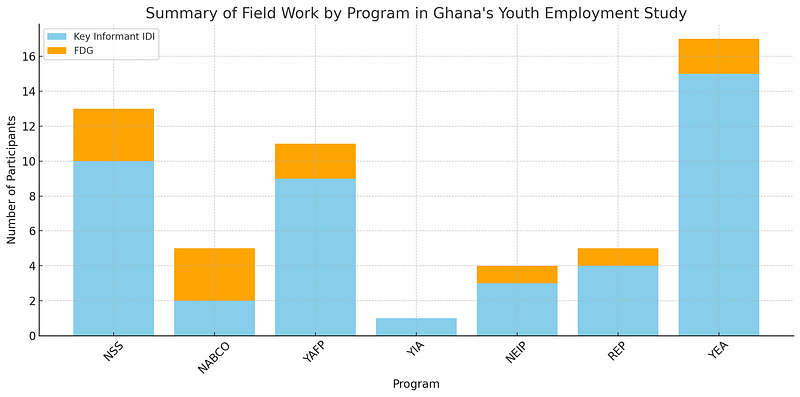
In the graph:
- Each bar represents a different program reviewed in the study: National Service Scheme (NSS), Nation Builders Corps (NABCO), Youth in Afforestation Program (YAFP), Youth in Agriculture (YIA), National Entrepreneurship and Innovation Program (NEIP), Rural Enterprises Program (REP), and Youth Employment Program under the Youth Employment Agency (YEA).
- The light blue portion of each bar shows the number of Key Informant IDI (In-Depth Interviews with Beneficiaries).
- The orange portion at the top of each bar indicates the number of Focus Group Discussions (FDG) conducted.
Key Findings:
- Skill Development Programs: These programs are crucial in bridging the skill gap. They range from vocational training to digital literacy courses, preparing the youth for a diverse job market.
- Entrepreneurship Encouragement: Small business support programs have shown significant success. They not only create job opportunities but also instill a sense of ownership and responsibility among the youth.
- Agriculture as a Goldmine: Revamping the agricultural sector with modern techniques and technology has attracted young people, transforming agriculture into a profitable and desirable career path.
Challenges and Recommendations:
- Sustainability: Many programs lack long-term sustainability, often depending on external funding.
- Scalability: Scaling successful models across the country remains a challenge.
- Integration with Formal Education: Strengthening the link between formal education and employment programs is crucial.
Stories of Success
The study highlights inspiring stories of young Ghanaians who have transformed their lives through these programs. From tech startups to innovative farming practices, these stories are a testament to the resilience and creativity of the Ghanaian youth.
The Road Ahead
While the journey is far from over, Ghana’s approach to tackling youth unemployment offers valuable lessons:
- Inclusivity and Diversity: Programs must cater to the diverse needs of the youth, including gender, geographical, and educational diversity.
- Collaboration: Partnerships between the government, private sector, and NGOs are crucial.
- Innovation: Embracing technology and innovation can unlock new employment avenues.
Conclusion
Ghana’s strides in addressing youth unemployment are commendable. The blend of traditional wisdom with modern innovation sets a precedent for other countries grappling with similar issues. The future looks promising, with the Ghanaian youth at the helm, steering towards a brighter and more prosperous tomorrow.
About Disruptive Concepts
Welcome to @Disruptive Concepts — your crystal ball into the future of technology. 🚀 Subscribe for new insight videos every Saturday!


