
Disney Influenced Our View on Love And We’re all Paying The Price
Happily ever after has caused us more harm than good, it’s time we let it go
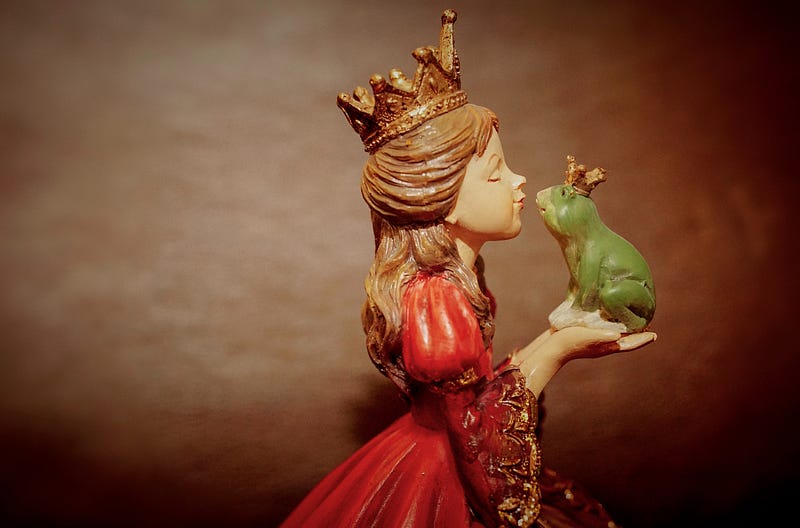
There was a time I believed love and beauty were synonymous; you couldn’t have one without the other.
There was a time I wanted to be a daisy in despair, so my knight in shining armor would save me.
There was a time I ignored red flags believing my kiss could turn a frog into a prince.
There was a time I was convinced that if I showed a man enough affection, it would heal his afflictions, and we’d live happily ever after.
Many accept Disney as a form of innocent childhood entertainment, a fantasy that’s outgrown with time. But the concept of “happily ever after” doesn’t die with age. It just gets harder to let go of.
This is why we still celebrate relationships that move fast instead of recognizing them as red flags. We still boil down a man’s character to one grand gesture. We still assign relationship goals to couples that give us an illusion of perfection.
Studies show that Disney films influence children’s values far more than public schools, religious institutes, and families. Let’s analyze our childhood tales and see how they shaped our views on love, relationships, and gender identity.
Beauty and the beast
Prince Adam was cold-hearted, selfish, and occasionally aggressive. His fowl character got him cursed into a hideous beast. Frustrated, he kidnaps a clockmaker, who he swaps for his beautiful daughter Belle. An angry mob led by a rival suitor named Gaston storms the castle in a quest to save Belle and kill the beast.
Bella risks her life to save her captor. That’s when he realizes his love for her. They danced into the sunset curse was reversed, the beast turned into a prince, and they lived happily ever after.
Never mind that during captivity, Belle was denied permission to see her ailing father even after pleading with the beast. That was all forgotten because True love conquers all.
Is it true love? or Stockholm syndrome — a situation hostages develop a psychological bond with their captor. Belle didn’t need to marry the beast, she needed therapy, but that’s a topic for another day.
Little mermaid
Ariel, a 16-year-old mermaid, becomes deeply infatuated with a young handsome human prince named Eric. She sacrifices all things dear to her — the throne, her swimming abilities, even her angelic voice — for the chance of being with him.
But Prince didn’t want just any girl. He wanted an Instagram baddie, the most attractive woman in all the lands. So when Ursula, the hideous witch, transformed herself into a bombshell named Vanessa, Prince Eric overlooked all the sacrifices Ariel made for him and was set on marrying Vanessa.
But Ariel and her friends crashed the wedding and revealed Ursula’s true identity. Upon realizing how hideous she was, Prince Erica kills her and settles for Ariel — yes, he settled for her.
I wonder what will happen when the next bombshell catches his eyes. Will Ariel keep proving her worth and fighting off the other woman? I guess we’ll never know because, according to Disney, they lived happily ever after.
Mulan
Li Shan is the embodiment of toxic masculinity. Hours after his trusted trooper, Mulan, takes a bullet for him, he discovers she’s a woman disguised as a man.
Instead of tending to her severe wounds, Li Shan takes off, leaving her stranded in the woods. When Mulan learned that Li Shan was still in danger, she staggered to the nearest city to warn him. This infuriated him even more.
Worry not, bleeding Mulan devised a plan that saved Li Shan and the kingdom from the tyranny of Shan Yu- the evil leader of the Hun army. Earning Mulan the highest military honor and dammit a marriage proposal from Li Shan himself.
Which is worse, a man proposing marriage to a woman he left for dead or a woman who accepts a proposal from a man who left her for dead? Either way, love conquered all, and according to Disney, Li Shan and Mulan lived happily ever after.
The princess and the frog
Prince Naveen loved extravagant parties and the company of beautiful women. He spent his days lazying around and admiring himself. The King and Queen of Maldonia grew tired of his antics and cut him off from the family fortune.
Instead of finding a job and tending to adulthood like a grown man Prince Naveen sought out a rich girl to sponge on. His sights were set on Charlotte La Bouff, the daughter of the wealthy Eli “Big Daddy” La Bouff. This lands him in hot water with a native doctor who turns him into a frog. To break the curse, he has to kiss a princess.
Upon seeing the beauty of Tiana, he assumes she’s a princess and devises a plan to trap her into kissing him. It backfires. He remains a frog, and Tiana tragically turns into a frog.
Was Prince Naveen remorseful for cursing Tian to his fate? Nope, Did he take accountability, hell naw, he instead blamed Tiana for deceiving him even though Tiana had never professed to be a princess.
Despite everything, Tiana molds Naveen into a respectable young man and brings out the best in him. In the end, Prince Naveen is no longer concerned with partying, lazing, and womanizing, the curse is breaks and they live happily ever after. Isn’t love fantastic?
Aladdin and the magic carpet
Nothing grits my teeth much like the story of Aladdin; unlike everyone else, Aladdin posed as a “nice guy” to get the girl. He pretty much lied about everything: his childhood, his status, his job, even his figure at some point. When Princess Jasmine would grow doubtful, he’d gaslight her to serve his agenda.
Ever had a man promise you the world, and it turned out to be a plot to get into your pants or win your favor? Well, Aladdin was that guy for Jasmine. Like every Disney movie, true love conquers all, and Jasmine ends up marrying Aladdin.
What do we learn from our childhood tales?
We learn that relationships are for character restoration instead of connection. We learn that men lack emotional maturity, and women have enough for two. We learn that narcissism makes men attractive, and beauty is a woman’s highest currency. We learn that marriage is something men do for women who’ve proven themselves. And that happily ever requires sacrifice, often at the expense of our goals and dreams.
How many relationships will we run through before realizing that this notion of love is toxic?
It’s time we accept that no knight is coming to save us from the world’s woes. And It’s time we acknowledge that no one is responsible for fixing anyone; the onus is on the individual.
One may argue that no one is perfect, that we’re all flawed, and carry baggage. That we need each other to heal. You’re right; we do. The problem comes when relationships are viewed through fairytale romanticism that pushes the narrative that relationships are for love-starved women and broken men who need fixing.
Give me a movie where women are flawed and loved. A prince chooses a plus-sized girl because she loves her and doesn’t give a damn what anyone thinks. Give me a story where a woman shows her darkest side, and a man sticks it through because love conquers all.
We need to see all this to heal.
Disney had us all fooled; love is not a switch that is flipped on by physical appearance, vocal abilities, charm, and moonlight dancing. Love is not mysterious or painfully tragic. Love is a conscious choice to take someone as part of yourself; It is then when we will be one step closer to building the relationships we’ve always wanted.
Want to read more articles like this? Sign up for Medium through my link here or joining my free newsletter here. In the meantime you may enjoy the article below:
The four relationship advice I got from my bartender.
©Dona Mwiria February 2022


