
Dismantling Democracy: Short Essay on Farmer’s Protest in India
Short note on the farmers’ movement in India that shook the entire nation
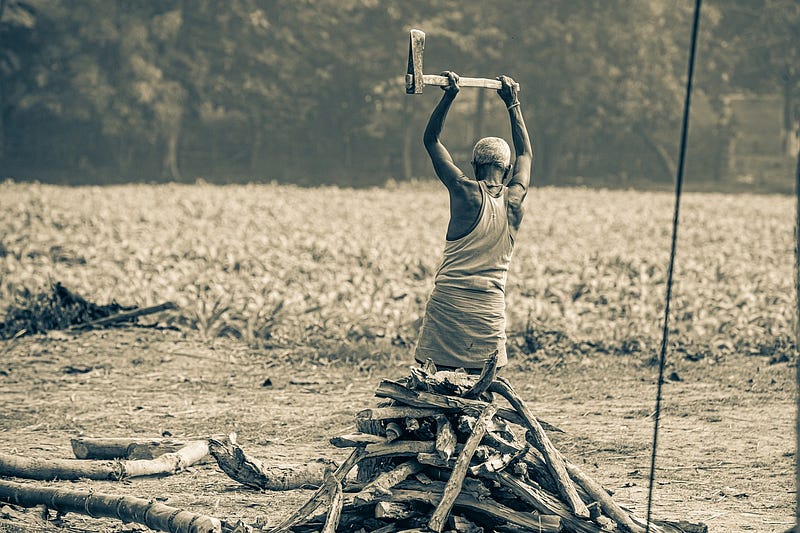
This short essay on, ‘Farmer’s Protests in India’ is an ode to all our Farmers that forced people to rethink the systems of democracy. The Farmer’s protest that happened in India caused a lot of stir, angst, and anguish for the govt. It was a tried and testing time for all the key players in this protest, the Farmers who were a micro-democratic institution, Govt- the elected authorizing polity handling this event as democratic rulers, and the public who swayed on either of the sides. The context of all this is very important to know as what each of these stakeholders had to say about the protest, and also How each of these units of democracy expressed themselves while being in tune with their democratic agency. Let us, first of all, peek into some straight-up facts, about what actually the Farmer Bill contained and then we will look at the holistic picture and its relationship with the democratic sentiment of the country.
What are the three laws that led to the Farmer’s Protest?
These farm laws include The Farmers’ Produce Trade and Commerce (Promotion and Facilitation) Act, The Farmers (Empowerment and Protection) Agreement of Price Assurance and Farm Services Act, and The Essential Commodities (Amendment) Act. The first two laws affect the Farmer directly, meaning it has provisions where it legalizes interstate trade and allows Farmers to sell their produce to the best kind of buyer, One who has legal trade licensing can be approached and the product further can be sold off. The second law which is Empowerment and Protection related does not exactly defines protection, it allows the Farmer in his agency to choose a buyer for himself without having to settle for a fixed income. It states that Farmers are free to choose their buyers, hence having autonomy on price. The last of these laws affect Farmers indirectly to further allow the Govt of India to export staples including wheat, rice, and lentils to other countries.
More on the three laws, read here
Govt’s point of view in response to Farmer’s protest
Govt rolled out these laws by justifying they were done to benefit the Farmers, having given them more monetary agency as they now do not have to depend on the middleman for the selling of the crops, which happens at APMCs (Agricultural Produce & Livestock Market Committee) where Farmers are promised to get an MSP (Minimum Support Price) on their produce. The Govt also mentioned the rising fiscal deficit which is often a by-product of MSP can be solved because of these laws. It makes the Govt free from the burden of subsidies that were given as MSPs.
Farmer’s Discontent led to the Farmer’s protests
Farmers are not in favor of these laws since Farmers also have their angst, apprehension, and doubts over these new laws. Farmers feel they do not have enough information about the issue, and accessing lawyers in case a company runs them over will be difficult.
The blend of farming and Corporations has not been good in India. From Cocacola plants and factories that evaporated groundwater in Kerala, there was a strange sense of animosity, hence believing corporations written word without any Govts intervention sounded insanely sketchy to them.
The root of all problems has been the MSP, and the Govt failed to reassure the Farmers about this, and thus the showdown continued for a long time.
So where lies the problem?
The issue is about Govt wanting to have a wider network of farm goods shuffling around many spaces and the Farmers getting the best of the prices, that way Govt can save some of its committed MSP money, and Farmers will have the authority to sell produce from any Corporation. Its MSP has been the bone of contention between various parties. The Farmer in our country perceives corporations as blood machines that exploit them like the likes of Pepsico and Cocacola depreciating the quality of natural aura and leaving people in acute hunger and malnutrition.
Farmers vs Corporations
In Cocacola’s case, in 2003, there was a wave of protests in the Kerala village Plachimada when their groundwater was depleted severely affecting several crops. The slug released from the industrial plants had high levels of toxic chemicals like Lead and Cadmium. Consumption of these leads to body toxicity and neurological degeneration. Children of Farmers were severely affected.
There are countless other examples, of what’s happening now with Himachal Apple growers. Adani pays 70–80 INR per kg for buying Apple, hoards them, and stocks it, once the prices rise, he sells for 250–300 INR per kg.
This brings us to the next problem, Corporate free hand in hoarding. If the Indian govt wants to let Indian Farmers have all the sweets in one go, why doesn’t it allow cold storage facilities and stocking facilities for the Farmer, that way we can see How much of a bigger margin they can get off of the current deal. The govt can build this food storage facility in a 5–6 km spectrum acting as a food warehouse in a collection of villages. Or else the Corporate situation is such that material preservation is controlled by them hence the price control allows them to dictate to Farmers and Farmers can only abide by it.
The Coca-Cola case, Read more here
Pay disparity for farmers and blue-colored workers
Skewed laws that benefit strong private players are another issue. The reason why these exploitations happen more in our country than in the west is because of a cultural trait.
India unlike Europe has never had revolts on a societal level. What is the earning of a neighborhood Electrician, Carpenter, or simply Househelp in India, a Farmer, Isn’t it in pennies? Yes, it is, Compared to the US and EU payscale, Blue Collar workers can make enough money to support themselves and their families.
In India, people even in this time of high inflation, where a cup of tea is 10 INR, try to fight with vegetable vendors to get discounts of 4 INR. This level of income inequality paired with apparently stable and dead societal change and no legal assistance further contributes to the problem. The difference is in many countries from West Europe have had confrontations with both scrapping mono-centric powers of the Church. Not to say that the western world cares for its people completely and corporations assist the demands of common folk.
But the value systems after social reformation have given hope that strength expands and inclusivity allows better cohesion within groups. There is a strong law system there that provides a chance to common folk or small institutions to fight back. Such is the case of Elon Musk. How did Elon Musk buy Twitter? He was leaving the deal high and dry in the middle. It was the intervention by a court that forced him to take the company Twitter as per paperwork. He was given an ultimatum to pay the company or pay for a lawsuit applicable in case failing to do so, hence keeping a check on his commitments.
Limitations of an Indian Farmer
An Indian Farmer in this scenario of having to fight for their rightful price has to seek legal counsel in case disputes. Where would a poor Farmer land such lawyers? Because there is no binding contract for private traders. An Indian Farmer survives on very little money.
Only Haryana and Punjab offer the bare minimum of low middle-class living conditions to a Farmer. In other states, barring some from the south the shape is bad. They are in distress.
Beyond Farming: Transitioning to Vocational learning
The original goal hence should be to equip our Farmers with technology and try to reduce the farming-dependent population. Farming comprises 60% of the country’s workforce but only has a 15% GDP share. A bulk of these Farmers have to be employed as vocational trainees in the future. That way we can access the demographic dividend needed for good use. Transitioning into manufacturing, and building industrial skills can reduce the stress on the land which anyway yields per acre low, at least less than in Brazil, China, and the United States.
Indian Farmers do not have storage capacities or cold storage facilities like Farmers in the western world or east Asia. That also makes them vulnerable to selling on time. The MSP works as a secured price for selling. In an event of a Price conflict they cannot approach to seek any govt intervention, thus falling prey to the corporate loonies. They also fear since the corporations can store items and sell them later, the big companies will control the market and cut them off from supply streams, and be forced to sell their crops at a lower price. Thus, they can pay a Farmer less and not take the harvest of the next session by hoarding it and thus selling it at a higher price.
Being a Farmer in India indicates that one has anyway struggled a lot in finding a stable job. They want solutions and not new problems. Inefficient lawyer access, No Govt backing, and No determination of MSP had crumbled their spirits to accept any new change.
How to address these limitations?
Empower our Farmers
The Govt has to help the farmers to become better and play an active role in empowering them through legal aid, by providing fair prices. Empowerment can only help the Farmer or else the subinfeudation that small-scale manual land laborers face won’t ever be treated. Provide free courses by merging their ideas and actual science and help to increase yield. After the coming of Monsanto and other seed companies, there is an increase in staples. Rest Veggies and their seed plantation/ local crops have been grown out of fashion. You should also save some seeds for now so that the culture of multi-cropping can return and we can decrease the HYV seeds. HYV seeds have a host of issues that can destroy the living conditions of the local seed/plants.
Farmers Protest: A challenge or a boon to democracy
Farmer’s Protest also has a wider implication for Indian democracy. The govt in power has a lot of influence in controlling the information channels of the media. With Govt controlling every external central institution turning their heads around, and reopening many cases to get opposition people engaged, to have the Political turf clean for them was on agenda. Hence, Govt started to use protests as a link to discredit Farmers and malign them, calling them Khalistani supporters. Punjab, Haryana, UP, Madhya Pradesh, and Farmers from the south were active protesters. The flash point came to a halt where despite various barriers the Farmers went and hoisted especially the ‘Sikhi flag’ on the RedFort. There was violence, and some of the Farmers died too.
There is an abhorring video clip where a ruling party MLAs son was seen thrashing farmers with his SUV car amidst the crowds protesting in Lakhimpur Kedi, UP. That was the extent to which made a democratically elected govt go to silence protesters. The media was not standing up with the dissenting voice which led to the violence. Rather painted Farmers as a terrorist organization.
Sounds fascinating considering Farmers are hard workers and several of them despite feeding all the citizens have to remain hungry. What kind of moral code one has if he/she questions someone powerless, burning the midnight oil and making ends meet?
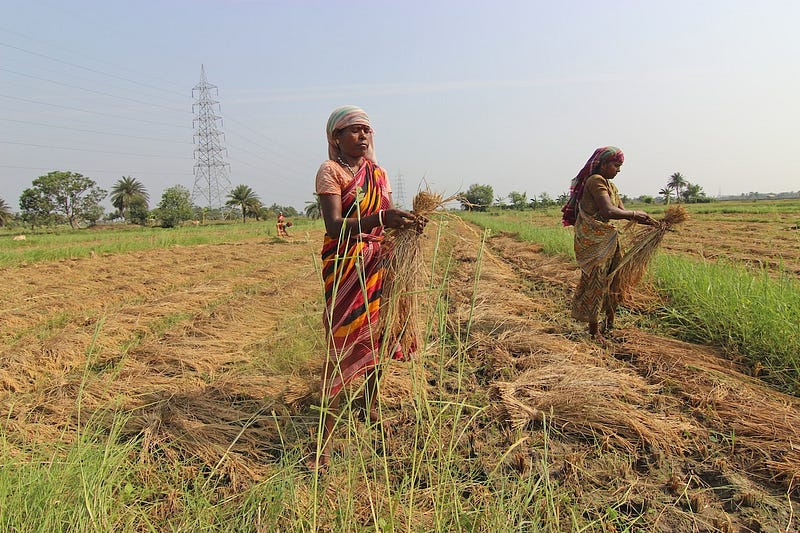
Farmer Protests Essay Made us Reflect on Ideas about democracy
This Protest displayed the hidden Technocracy in democratic application to society. There is a common misconception where People think democracy solves bloodshed.
Democracy is synonymous to protest which when applied as a conversation requires a give-and-take situation. In the entire Farmer’s protest episode the Govt tried punishing the Farmers by blocking their protest site with barbed wire, trenches, and big nail beds; calling them Terrorists, calling them ISI funded, and not allowing them to voice demands.
Democracy is applied as an agreement that rights are individual units, not a centered whole. Rights are granted and discussed through deliberation. Protest whether violent or non-violent disintegrates from protest as a whole into both these sub-units. A continued talk and discussion maintaining parity in pros and cons happens on both sides. The nonviolent protests started by Gandhiji were opined as Satyagraha.
The great freedom fighter stated that Satyagraha is an inner battle, your morality will shake the moral compass of the other person thus leading to change. But that is utopian in its technocratic element.
In that case, protest whether nonviolent at first or nonviolent later can be a discussion. But if it turns violent to make it a cause it requires a balanced choice. To which public come in.
Public discourse battle
The public in Farmer’s protests is bifurcated into two streams. One bought the narrative from the media and considered the Farmers Terrorists. Others sympathize with them and are wary about the Govt’s interlude and inclusivity to discredit the masses, especially against people granting us food at the expense of their exploitation.
Both of them had not understood Democracy much like ‘Indian style secularism’ and ‘proper secularism’ itself. Secular means the separation of state and religion or trying to minimally depict religious embedded thinking.
Indian elections as of now are happening appeasing caste, class, creed, ethnicity, and religion. Except for religion, even the other identity and collective traits operate as religion.
The former appears to be in disarray regarding the process of democracy. Democracy is not about convenience, where someday you will support it, and then another day you won’t. The problem with this thinking is a person enjoys all freedoms of the democratic sentiment but instead jeopardizes the institution of farmers itself. Democratic sentiments also support societal federalism where groupings, class gatherings, and people in general when being part of it one has to exercise it. Trying to discredit it by taking an alternative route for work and then for your ease declaring it Terrorism is your personal inconvenience talking when roads happen to be blocked because of the protests, not your being concerned about the nation’s well-being.
The latter falls into the category of preachers than doers. Support needs to be garnered much like substance support, not just empty promises.
Democracy is a contract between govt and the people. Though the rights are individuated with dispersal, people have to come in cohesion.
Being democratic requires radical change, hence people have to stand up with any democratic grouping, formation, or institution as a shield for their rights, liberties, and freedoms.
Conclusion
This short essay is about Farmer’s protests and How Farmers helped us understand the nuances of democracy and its ideas. India being a multi-ethnic, multi-cultural, multi-religious country requires a collective governing mechanism like Democratic Federalism. I discuss these themes but also gaze into the laws and influence they will have at a ground level. Farmers showed an all-encompassing identity beyond the fraction defined by religion, gender, and caste, A true spirit of ‘Indian style democracy.’