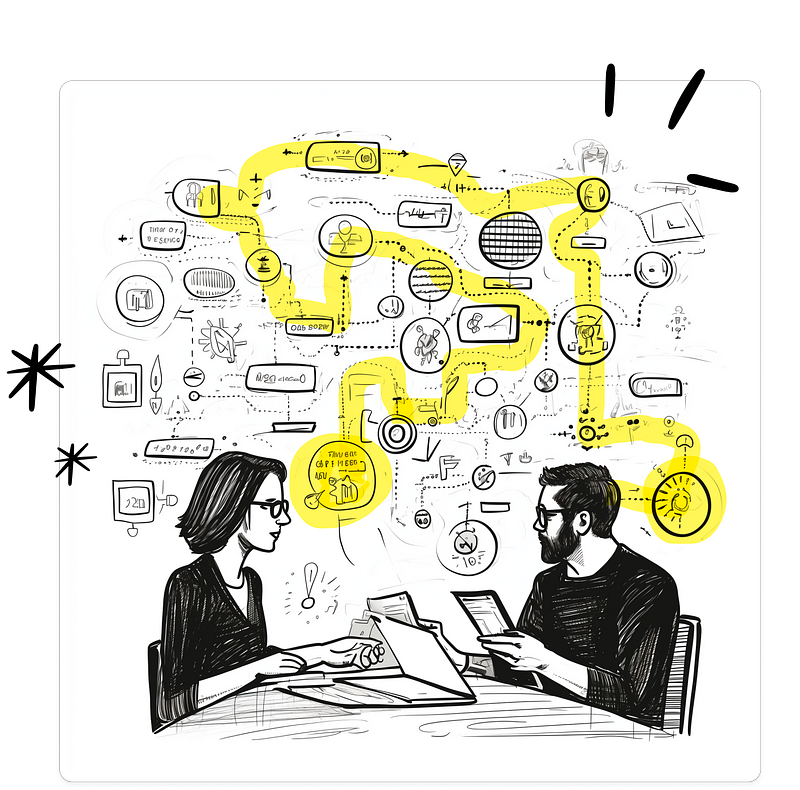
Discussing Product Designer and Product Manager collaboration best practices
Ah, the stories of our journey through the twists and turns of collaborating with PMs and Product Designers — Jetty, an experienced PM with a design background, and Max, a seasoned Product Designer who, after several years in the PM role, has now transitioned back to full-time product design. Together, they share their tales of victories and mishaps. Brace yourselves, there are even doodles to illustrate our escapades 😏.
Tell me what’s wrong with our product
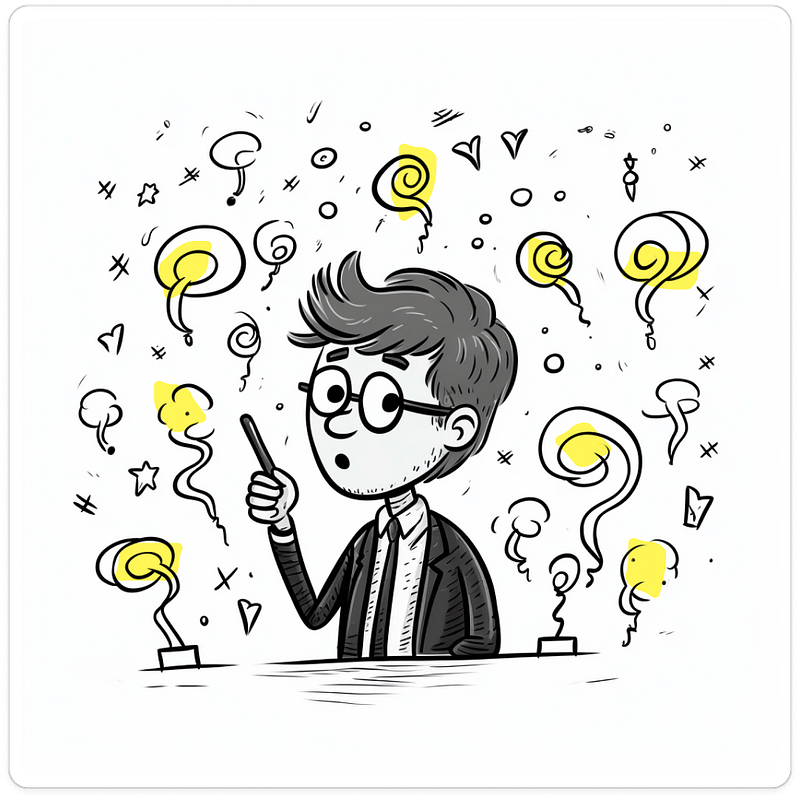
Max (Designer): Back in my junior design days, high-level objectives seemed like distant entities. They didn’t speak my language, and I struggled to see the impact of my daily work on those lofty metrics.
Jetty (PM): Oh, been there. Part of the PM gig is turning those business objectives into digestible opportunities. I’m all about caring for product performance from a business angle. It’s about translating those complex objectives into bite-sized, actionable bits — Key Results, or even smaller insights. Asking the right questions based on each team member’s expertise is crucial too.
Max: Absolutely! The PM’s questions used to spark my brain. That’s when I could unearth my own problems to solve, always with that customer-centric lens. Real teamwork kicks in when members cross the line and uncover problems they’re passionate about. PMs should invest the time to make objectives accessible to the entire team.
Let’s dive into a good and bad scenario to illustrate this.
Cross the line!
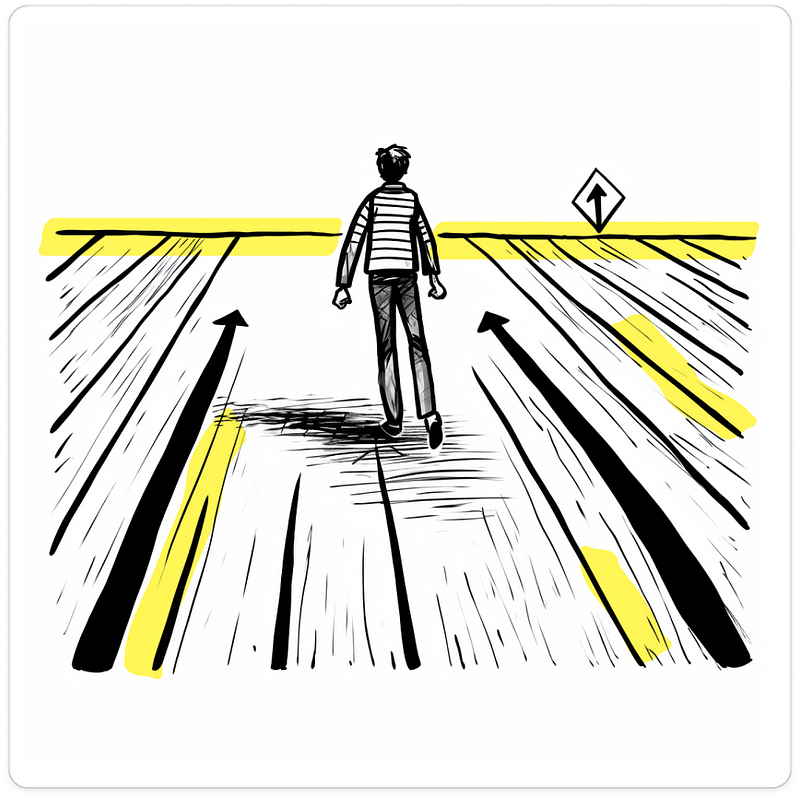
Jetty: Remember, if a cross-functional team can find their problems and align with the mission, it’s a win for the PM.
Max: True, but getting everyone into the Discovery phase, the problem space, is tricky. Countless workshops resulted in zilch. Onboarding everyone and making objectives crystal clear is key.
Jetty: It’s challenging, and focus on all team members is crucial. Leverage their expertise in cross-functional teams. Let them guide us to our goals and identify problems in their domain.
Max: Designers need to step up and be proactive in finding their own problems to solve. When a new PM joins, involving the Designer in problem definition is a much smoother workflow.
Put on the Autopilot at the Solution intersection
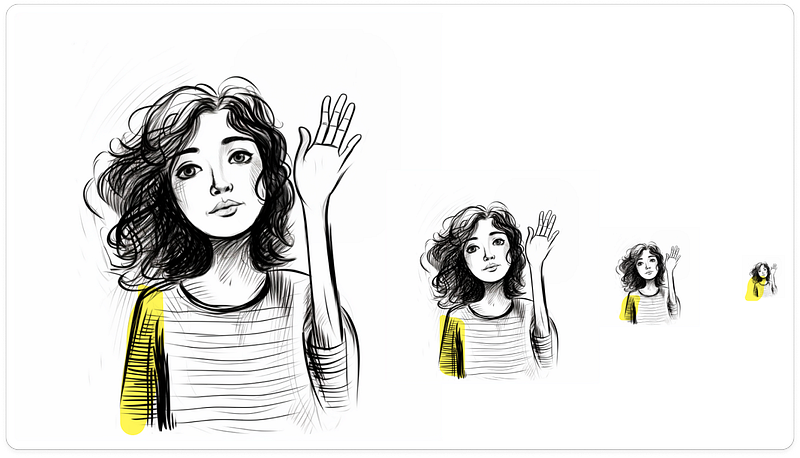
Jetty: Once we define a clear, worthwhile problem in the problem space, the Designer should lead the solution space. It’s not about the PM stepping back; it’s about letting Design take the reins.
Max: Design is a plan for arranging elements to accomplish something specific, as Charles Eames said. Designers thrive when building a solution, involving stakeholders. PMs maximize the team’s capacity by delegating part of the making process.
Jetty: My role here is supportive — offering feedback, challenging design decisions, and connecting people.
You guys should talk
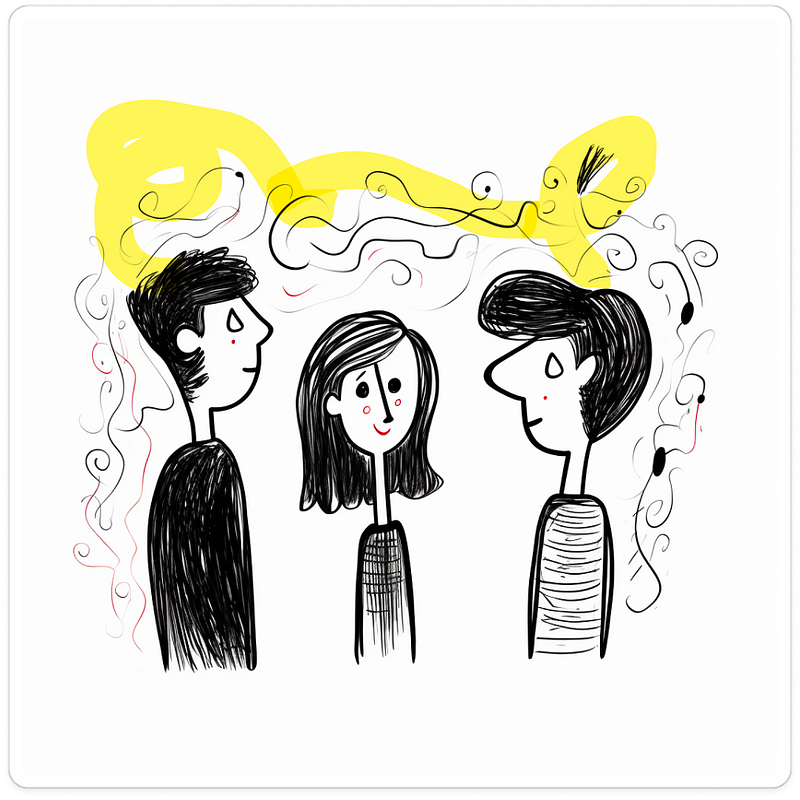
Jetty: Connecting people helps unearth information within the team. Frequent 1-on-1s allow me to hold the most knowledge, connecting stakeholders when needed.
Max: Designers need to talk to relevant people during the design process for success. PMs play a crucial role in this.
Jetty: Sometimes, PMs and Designers need to connect too, especially when transitioning between problem and solution spaces.
Advocacy is all

Max: Defining the problem is one thing; convincing others is another.
Jetty: Opportunities drop because of a lack of convincing elements. Advocacy superpowers are needed here. Design brings powerful visual elements that numbers alone can’t match.
Max: Advocating the product discovery process inside the team is crucial. It clarifies why time spent in the problem space is necessary before moving to the solution space.
Jetty: So true. Design helps in advocacy, not just in problem and solution spaces but in advocating the entire product discovery process.
Convince me!
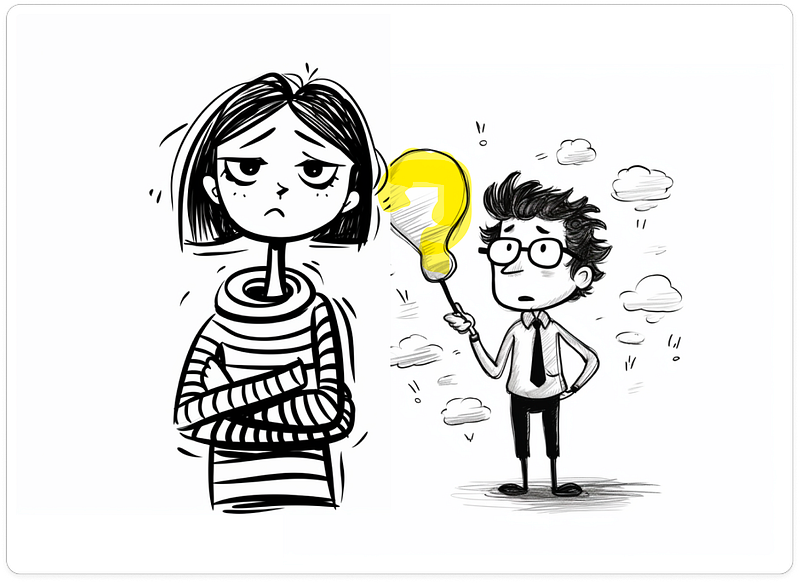
Max: Convincing the PM of a functional opportunity can be a challenge. Designers usually have more autonomy, so each individual needs to push their own initiatives.
Jetty: It’s tough to get functional improvements prioritized without PM validation. PMs find it challenging to validate and prioritize design function improvement tasks.
Max: Designers must advocate, explain, and convince why the team needs this update. Consulting with teammates to gauge feasibility, outcomes, and cost is key.
Jetty: By then, everyone involved is already on board, and the Designer has allies. The Designer needs to show how the functional update impacts the product and metrics.
Wrapping up
And that’s a wrap on our experiences and insights about better collaboration as a PM and Product Designer duo. Hopefully, you found this useful — it certainly was for us! Share your comments and differences in opinion below. If you enjoyed this, give it a thumbs up for more stories! This post took time, and your thumbs up will motivate us to share more tales. 😊
Co-written with The Forested. (Jetty Cho).