Discovering a Family Tragedy From 1849
My namesake was a victim of cholera
Cholera in Barnard Castle
I had long known that my grandfather’s grandfather was a tailor in the town of Barnard Castle, in County Durham, which is one of the most northerly counties of England. John Welford (the same name as me) was born there in 1800, and died there in 1849.
However, I discovered, almost by accident, what had caused his death, and the terrible conditions under which he and his family would have lived. Some years ago, Durham County Council sponsored a learning package, designed for local schools, that focused on Barnard Castle, the nearby Bowes Museum, and a particular tragedy that befell the town in 1849. They highlighted one particular family for which they had documentary evidence, and my discovery was that that family was the Welfords, my ancestors.
The tragedy was cholera, almost unknown in western countries today, but the scourge of industrial Britain in the 19th century, striking without warning in communities where sanitation was poor and people relied on unsafe water supplies.
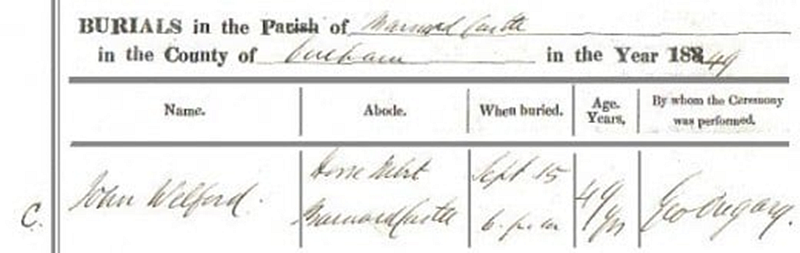
The image at the top of this page is John Welford’s burial certificate, the C on the left-hand side indicating the cause of death as cholera. The disease, a strain of Asiatic cholera, is believed to have reached Britain via the port of Sunderland in 1831, and it spread widely from there in the following years.
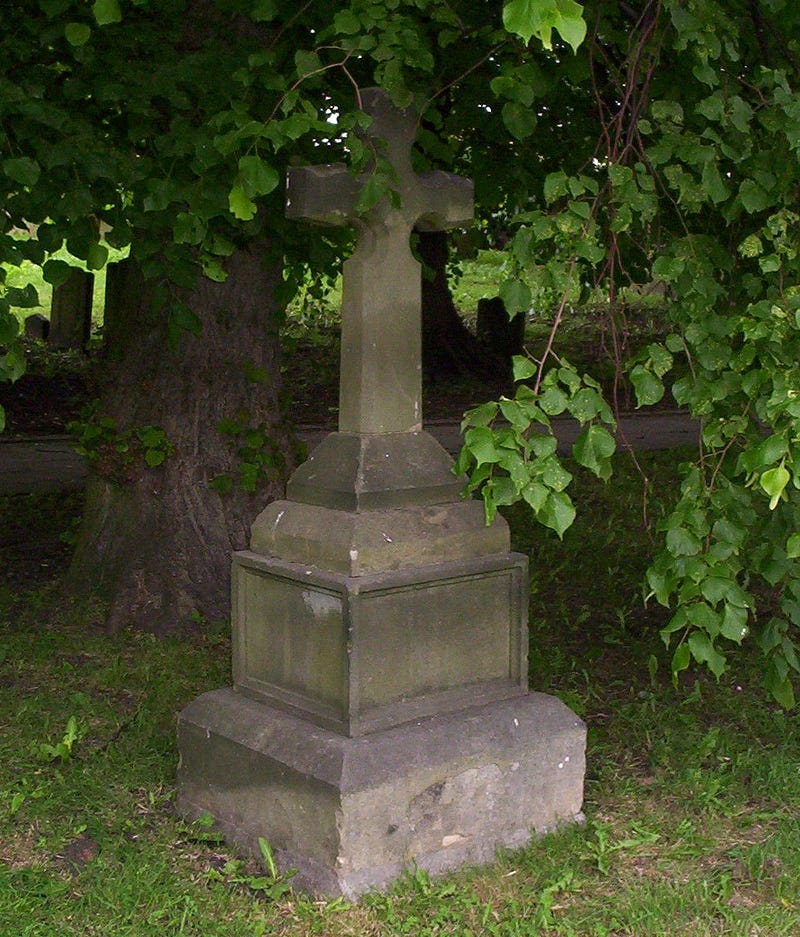
The outbreak in the town of Barnard Castle was short-lived but extremely virulent, with 143 deaths recorded between 18th April and 18th October. They were buried in a mass grave in the churchyard.
Report to the General Board of Health
The following year, a full report on the outbreak was prepared by William Ranger, the health inspector, for the General Board of Health, in which he drew attention to the conditions under which the disease could wreak such devastation in a small, tight-knit community. This is an excerpt from the report:
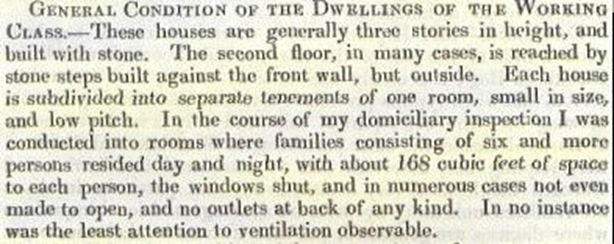
Cholera is a water-borne disease, and it is noticeable that concentrations of cases occur in properties that depend on specific sources of water. For example, in the street named Thorngate there were only two water pumps, which were clearly infected, as there were 154 cases (not all of them fatal) in that street alone.
The report had a lot to say about poor sanitation, as it not only led to sources of water becoming infected, but it made recovery less likely. One part of the report reads:
“With the present defective sewerage it has not been practicable to drain houses and as a consequence cesspools have been adopted, or the refuse is thrown upon the surface of the yard and the streets where it is allowed to remain until carried off by evaporation or until it percolates into the substratum and from thence into the wells.”
A local doctor added:
“I consider the rooms ill-ventilated, and in the case of fever I am frequently obliged to break a pane of glass to admit fresh air.”
The report contains many examples of overcrowding, including:
“In Old Priory Yard, a cul-de-sac, there are 15 tenements occupied by 64 persons, and in one instance only, there are six persons living and sleeping in a single room. A large cesspool in the centre of this yard is surrounded by houses; the soil [excrement] it was stated has not been removed for years, and there is but one privy to 15 houses.”
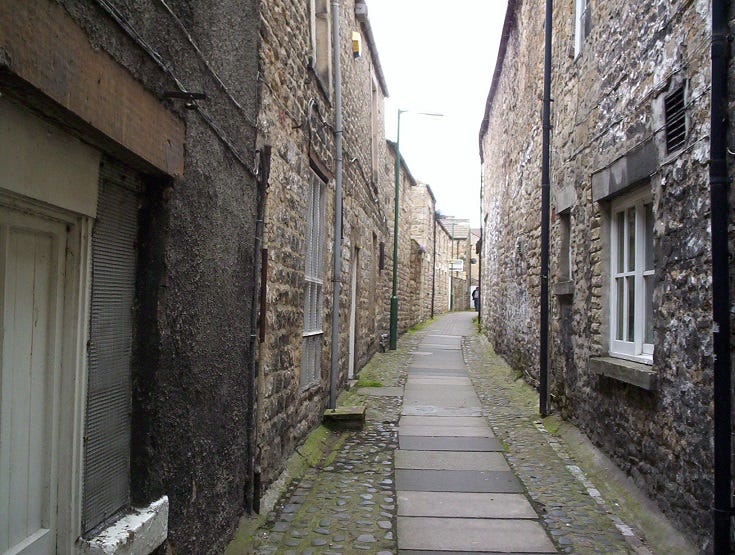
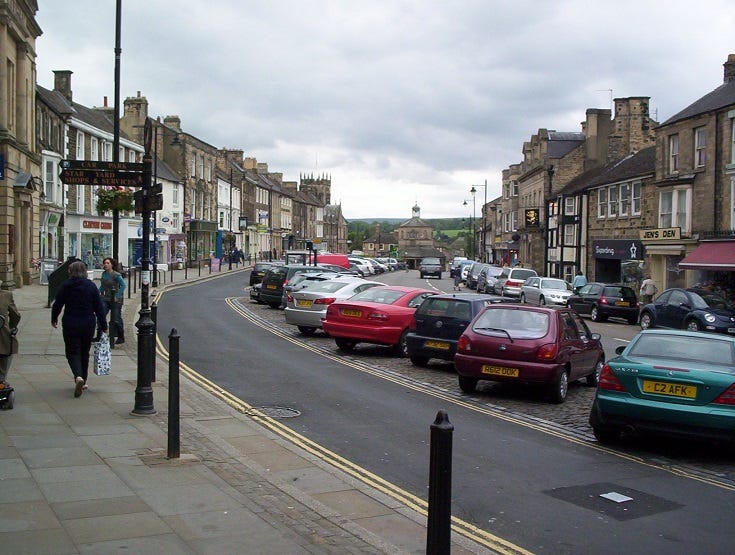
Many of the old houses are still in existence, although they are not overcrowded in the way they were 160 years ago.
The relief fund
Because the epidemic affected so many working people, whose earnings and wages supported large families, many more people would have faced real hardship as a result. A relief fund was therefore set up, and there is evidence that generous contributions were made to it by local landowners and other wealthy people. The surviving accounts show that the Duke of Cleveland and the Bishop of Durham gave generously.
The document below shows that my ancestor’s family were beneficiaries of the fund, as on 17th September, two days after John’s burial, sheets, blankets and other items were delivered. However, it is also stated that two of the blankets were later returned. Did the relief fund trustees think that they had been too generous, perhaps? Or perhaps they were intended for John’s own use, but they arrived too late?

Afterwards
The cholera epidemic ended as suddenly as it began, although people at that time were only vaguely aware of how cholera was spread. There is no evidence that any of John Welford’s family were also victims, although several of his children, and those of his brothers, died in infancy in later years. Fortunately for me, his son George had a long life and a large family, of whom my father’s father was one (another of George’s children was Jimmy Welford, a prominent member of the highly successful Aston Villa football team at the end of the 1890s).
The report to the General Board of Health contains some hope for the future, not only pointing out the need for better sanitation, but also including the aspirations of the townspeople, who called for better working conditions and public parks and baths. Many of the public open spaces we have in our modern towns and cities were laid out in Victorian times in response to calls such as this, and the sewers beneath our streets were built by far-sighted Victorian engineers.
Further reading:
Beverley Pilcher. Barnard Castle and the Cholera Outbreak, 1849. Self-published, 2004
Did you like this? Maybe not! Either way, your comment will be very welcome!
For other similar pieces, see my List:


