
DISC: How to Master Working With Others
Working with others is crucial, but there are right and wrong ways to collaborate. Read on to learn more about this crucial subject!

This may sound obvious, but you can’t act and talk to everyone the same way. Obviously, you shouldn’t try to give your manager a high-five, but I’m talking about the macro level — everyone around you - your peers, your colleagues, even your direct reports if you’re a manager. Changing your style to meet your audience is easily one of the most overlooked ways to build and maintain strong relationships, avoid friction, and make sure you’re able to influence and get things done as effectively as possible. In this article, I’m going to look at the DISC personality model as a means of applying a way to engage in effective behavior, with a focus on the workplace.
If you are not a Medium member, I encourage you to join for free, however, if you’d like to read the entire story without signing up, please click here.
What is DISC?
DISC personality model was developed in the early 1900s as a way of predicting job performance, although its quadrant-based format actually goes back in various forms all the way to ancient Greece. While there are many types of other personality models such as VIA and Big 5 (aka OCEAN), DISC is what I prefer for two reasons: it makes the most sense to me to be applied in a workplace setting as it has been studied, and used in that capacity (especially geared towards people-managers), and it’s also just easier to teach others about. DISC is an acronym that stands for four different personalities: Dominant, Influential, Steady, and Conscientious. The theory is that everyone has certain percentages of each of these four letters, however, most fall into one or two major areas of the quadrant.
But what does it mean to say you’re a “D” or that your two highest letters are “I” and “S”? Let’s examine that next, and see how it applies to working with others.
The Four Personality Types
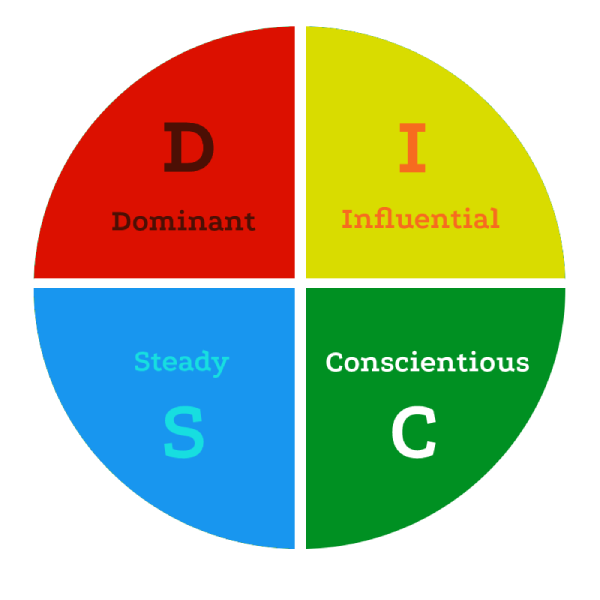
In a future post, I will conduct a deeper dive into each of these personalities, providing you with key insights and ways to fully appreciate their nuance. But for now, the summaries below should give you a taste of what you need to consider from a different perspective when working with others.
You will encounter people who possess spectrums of the personality types below; that is to say, some have higher percentages of each of the areas below, and with some practice, it’s not too difficult to detect where others line up. The trick is once you get an appreciation for the personality types, you tailor your language, actions, and general approach to align with how others prefer input. You’ll find it makes a big difference in collaboration and getting results.
😤 Dominant 😤
This personality type favors direct, decisive action and is focused on driving results. Often blunt, a “D” is aggressive, comfortable moving fast, taking risks, and getting things done. A “D” generally prefers to be a leader, interested in being the one who makes decisions and moves forward within the timeframes they set. They can be very territorial in nature. Unfortunately for you, they understand that to make an Omelette, you need to break a few eggs!
Of course, this doesn’t mean a “D” is an intolerable, angry monster. It’s just that their methods for driving results differ from the other three personalities and their threshold for failure and misses is significantly lower and they’re not afraid to tell you. A “D” is great at asking for more and raising the bar higher, which can translate to professional growth and development for those around the “D”.
Their key strength lies in being able to drive results (typically quicker than others). D personalities are great at making quick decisions and figuring out how to get something over the finish line.
Their key weaknesses are that they tend to be abrasive, and do not mind upsetting others if it means they can drive results. They are also comfortable disagreeing with others and overstepping authority. Finally, D’s can run the risk of taking on too much work in the spirit of accomplishment. They usually need coaching on the soft skills side, depending upon what other underlying letters in DISC they are made up by.
Their motivations tend to be centered around interesting work, especially if it can mean success. They shy away from the monotony of safe, boring projects (contrast that to an S or C personality) and enjoy competition.
Tips on Working With a “D”
Working with a D means you need thicker skin. Give them space to work, and don’t encroach on their territory, or demonstrate you’re a threat to their fiefdom. When speaking to a “D”, give them the details they need in as few words as possible without being vague; succinct and to the point, please! If they have more questions, they’ll ask. If you’re managing a “D”, give them latitude and show your trust that they’ll complete the mission without you micromanaging them. When you give them work, don’t be afraid to give them the most challenging projects, but remember that if things go south, they may start acting more abrasive to help get things back on track, so don’t give them something impossible. If working for a “D”, have answers ready and strive hard to complete your deadlines — they fear missing dates and failing, so if you’re a cause for that, that won’t lead to a good performance review later.
Tips on Working as a “D”
If you’re a “D” personality, you need to understand first and foremost that not everyone around you thinks the way you do. It doesn’t make them worse at getting results, it may just mean they have a different way of winning the race. You need to be OK if someone talks longer than you can stomach, but also know that you owe it to them to keep them on track. There’s nothing wrong with holding someone accountable, but pay attention to how you do it; dial back the abrasiveness. Show more empathy, and try to win over others knowing they may have been less comfortable taking risks. They will look to you to make decisions and let them feel included and involved in helping you get there.
🤩 Influential 🤩
The “I” personality type is all about being the center of attention. They are mostly cheerful, optimistic, and outgoing. They can be fearless, not afraid to take risks, great negotiators, and prefer light-hearted humor to conflict and discord. The “I” is great with collaboration and influencing/motivating others, and combined with their natural talent in solving problems (in particular with out-of-the-box solutions) they can inspire others to achieve great things. They tend to be good at getting results, however, their driver for it lies more in being able to showcase their success than their desire to achieve success (the way a D does).
Their key strengths are creativity and problem-solving, influencing others, keeping everyone at ease, and people-related activities where they can shine, share ideas, and hopefully get the praise they crave for the work they’re doing.
Their key weaknesses are being bad with the details, and they are notorious for slipping on deadlines. They like staying “in the clouds” and avoid getting down to the nitty-gritty. They fear rejection, disapproval, and their ideas not making a splash.
Their motivation is approval from others, and they enjoy praise, flattery, and being on projects where their ideas can make a difference (and increase what others think of them).
Tips on Working With an “I”
Praise and flattery go a long way! I tend to let the “I” personalities speak more than me and ask them tailored questions that I know will give them a chance to shine and highlight what energizes them. While this seems self-centered, the “I” really just needs to establish they are accepted and then are very much willing to collaborate and help others to shine as well. If you aren’t giving them a forum to innovate, you are likely missing out on some fresh and potentially strong ideas that can deliver success.
Tips on Working as an “I”
If you’re an “I” personality, you should know your strengths (innovation, big picture, and motivation by praise) can leave everyone else feeling a bit overwhelmed and even angry. Expanding on that, the “C” and “D” will want details and clear tasks with clear deadlines (which you are weaker at), and the “S” will shy away from the risks you are willing to take (which you have a hard time not doing). When working with a “C”, try tempering your adventurous, risk-taking spirit by pushing yourself to stay close to details, to have dates prepared, and to discuss how you plan to mitigate risks. When engaging an “S”, tone down any ideas that sound risky and use words like “maybe” and “I’d like to try this, but I want to think on it first” before jumping straight into something new. For working with a “D”, dial back how much you talk, stay focused, and be militant in your commitments to dates.
🙂 Steady 🙂
The “S” personality is an even-keeled, middle-of-the-road sort of type that likes to go with the flow. This doesn’t make them weak or unopinionated, it just means their perspective is that a group’s best way to succeed is when everyone is happy and working together. They excel at getting a group to arrive at a consensus and are good mediators. They prefer to stick to routines and have a very low tolerance for risk. An “S” is great at coaching and mentorship, however, may be uncomfortable delivering hard news or asking for more the way a “D” would.
Their key strengths lie in their loyalty, ability to listen, and to encourage groups to reach a decision uniformly. They are naturally talented at cooperating with others, collaborating well on projects, and even calming the team down in times of tension. An “S” is adept at identifying the strengths of others and encouraging them to contribute in an area they are effective.
The key weaknesses of an “S” are that they shy away from change and conflict, have an extremely low threshold for risk, and do not like working in environments with a lot of flux. As a result, they prefer to be told upfront of any major events or changes, and ideally with a lot of time for them to react to it and plan for adjustments.
Their motivation is routine in a safe environment where they can collaborate and contribute to focused tasks that lead to everyone sharing in the success. Ideally, these wins should lead to group acceptance for them.
Tips on Working With an “S”
An “S” does not like to be put in a position where they have to demonstrate an unpopular opinion, especially if it could lead to conflict. On the flip side, they really enjoy being put in positions where they can collaborate and work towards a common goal. Try to keep that in mind when asking for help or assigning tasks to an “S”.
Know that an “S” is often willing to go with a group decision even if they themselves have a better approach. In their mind, going with the flow is easier and creates more harmony than arguing over why their idea is better than others as it could invite conflict. Try to get the “S” to speak up and hear what they have to say, and do it in a way that avoids their alienation — this is absolutely critical. If they’re frequently put in an environment where they need to upset others and be scrutinized often, they will flee.
Tips on Working as an “S”
Your strength to inspire those around you to collaborate and remain balanced can go a long way. Keep in mind that as an “S”, you may find yourself compromising to achieve harmony when instead you should step up and say what you really feel — remind yourself you owe it to your peers, manager, or direct reports to share your opinion even if it may create discord or conflict, but do it out of knowing it could lead to even greater harmony later. As an example, giving someone feedback after missing a deadline may seem difficult, but if it led to a reduction in missed deadlines, wouldn’t that make the team better in the end? Additionally, others may be frustrated if you do not show much backbone in times when it calls for it. Try to keep that in mind at times when acquiescing may not be perceived well by a non-S and could even lead to poor results later. Again, it all goes back to challenging yourself outside of your comfort zone in that the rewards could lead back to stability.
🧐 Conscientious 🧐
The “C” personality is focused on accuracy and data to drive quality results. They are analytical in nature, driven often by logic and metrics and rarely by emotion. In fact, you will tend to see that “C” personalities are generally weaker in the social arena, either demonstrating a shy side, or the words not coming out exactly as intended. This can lead to awkward or misconstrued outcomes, however unlike the “D”, the “C” usually avoids conflict and prefers to withdraw and stay quiet. “Everything is fine” when it’s really not is something you may see more in this personality.
Their key strength is bringing their analytical side to the table, questioning, and using data to help make the right decision. They think something through to the end and will be the ones raising great points of consideration, risks, and tradeoffs on designs or tasks.
Their weaknesses tend to come from their strengths; that is to say, because they are so analytical, they may take too long to come back with an estimate, or not feel comfortable rushing into any decision that hasn’t been thoroughly vetted. As mentioned above, they may also need help on the social side, particularly if there is a disagreement and they’re not willing to speak up, or worse they may speak up in a way that is abrasive, presenting their facts without appreciating the other party. I’ve also seen them share concerns in a blunt way, becoming irritated if processes and rules aren’t being followed.
Their motivation is data, logic, order, and process. They enjoy being in a position where they can affect change in a manner that drives accurate results or correctness of work.
Tips on Working With a “C”
Appreciate their aversion to risk, and when you have a new idea try to slow it down enough for them to process everything. On each step of the way, explain the way you’ve mitigated (or are considering) the risks so nothing is moving too quickly. A “C” isn’t slow, they’re just methodical and will want to see the same approach. They do not like surprises and want you to follow a process for everything. Late on a deliverable? Well, I sure hope you filled out your Late Deliverable form, submitted it in triplicate, peer-reviewed, and approved by the manager!
When speaking to a “C”, always have your facts available in case they are needed. Be organized and avoid vague timelines, specifications, or objectives.
The “C” fears criticism or when their work is inaccurate, so if you are managing one, catching sloppy mistakes they make will impact them harder than any other personality type. The C likes a controlled work environment and prefers to have control over their area without someone coming in and messing something up.
Tips on Working as a “C”
Appreciate that everyone makes mistakes and may not live up to your standards. Rome wasn’t built in a day — we are all works in progress, and our processes are as well. Since you naturally get into the details, this will allow you to see faults and flaws in someone else’s work. The way you bring this up to others makes all the difference. They’ll be grateful for your findings, but leaving them feeling bad about their mistakes will not be the key to a successful relationship. Instead, try to share your findings with a softer touch, offering solutions or ways forward that align with their personality type instead of yours. You are naturally strong at details and process; help drive the process forward, but do not let it be a barrier to your success or the success of others. Don’t create a process for the sake of the process.
Wrapping Up
People have different ways of communicating, and by appreciating their styles, and more importantly, by being willing to adapt your style to them, you’ll be more effective in the workplace. If you’re not willing to do this, then remember that others around you will be, and that will likely position them to succeed faster than you.
While you’re contemplating this, remember that people don’t fit nicely into certain letters; we’re all complicated. Two people can each be a “D”, and yet they will have percentages of other letters that make them act differently. This is what makes us unique. Despite that, the overarching types tend to still be more apparent, and as you continue to work with others, get a feel for which of these letters they lean towards, and be flexible enough to adapt accordingly.
If you enjoyed reading this, please clap, follow, and subscribe via email to show your support. I would really appreciate it!
Subscribe for more:


