Disappearing Defense Secretaries should be a relic of Soviet Russia, not American present politics
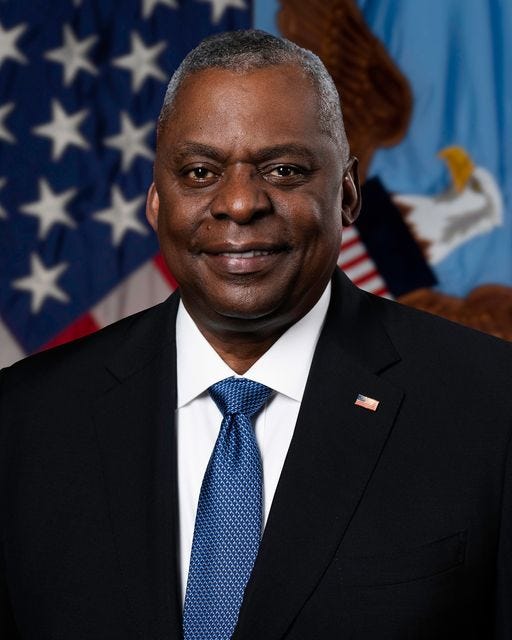
When the news broke Saturday on Secretary of Defense Lloyd Austin’s hospitalization and apparent failure to notify other key officials, my initial reaction was to say, “What on earth!”
However, mistakes happen, and sometimes they are “doozies.” As the Washington Post put it, quoting senior leaders: “the handling of the incident showed ‘unbelievably bad judgment’ on Austin’s part.”
Those of us who report on local government expect small-town city and county officials to make mistakes, and while we don’t expect similar mistakes by senior leaders at the upper levels of our national government, they do happen.
Sometimes we assume that those in top leadership roles are ten feet tall and have enough experience not to make rookie errors, or at least have enough staff members surrounding them who will say, “Sir, do you really want to do this?”
Still, people are people, and things happen.
To his credit, the Secretary of Defense has made clear that he takes full responsibility for what appears to be a pretty major communication failure.
What concerns me more than the initial error is the way the Pentagon is handling this matter after the Washington Post broke the story. I expected to turn my computer on Monday morning and find that lots of questions being raised on Saturday had been answered by Monday.
That didn’t happen, and that’s a problem.
When I’m reading headlines like this — “Pentagon struggles to explain Defense Secretary Lloyd Austin’s secret hospitalization; The intensely private Pentagon chief kept even President Joe Biden in the dark about his illness for 3 days” — well, let’s just say there’s a bigger problem than whatever mystery illness sent the Secretary of Defense to the intensive care unit.
We don’t live in Soviet-era Russia where top leaders would disappear for days on end with little explanation. Our top officials live in a fishbowl. They know that, or at least they should.
The communication team at the senior levels of the Department of Defense is — or at least is supposed to be — some of the best, not only in the United States but in the world, at communicating military matters to the news media. Someone in senior leadership of PAO simply had to have known that the SecDef was “unavailable,” even if people at PAO didn’t know the reason. It is their job to brief their bosses on things that could cause trouble in media.
It’s also their job to help the boss clean up messes once they happen, even when (perhaps especially when) they have to tell the boss, “Sir, we tried to tell you, you didn’t listen, now let’s figure out how to fix this.”
It’s entirely possible that nobody outside the senior leadership circles of the Pentagon knows enough yet to be sure what happened. However, the lack of a clear explanation means that what may well have begun as a simple and honest mistake will now become political, with elected officials on both sides of the political aisles blaming or trying to defend President Joe Biden and his handling of this issue. If President Joe Biden didn’t know the secretary of defense was sick, why not? And why, two days into the 24-hour news cycle, is there still confusion over what happened?
Maybe the Pentagon PAO is responding to the privacy concerns of the top official in the Pentagon, but why have the White House press office and President Biden’s political advisors, who can be expected to be more attuned to the political problems and realities of the Washington press corps and Congressional antagonism, not stepped in and said, “We need answers, we need them right now, because your failure to brief the President made the President look uninvolved and detached from his own government?”
It needs to be restated that conspiracy theories and similar nonsense need to be rejected. It’s all but certain that the story emerging so far — that SecDef Austin went to the hospital for an elective procedure that was routine, but a complication happened and he ended up in the ICU — is true. He’s 70 years old, and medical issues happen with much younger people, and at his age, it is entirely reasonable to believe what is being said publicly is accurate.
That’s not the problem.
The problem is failure to communicate.
SecDef Austin has taken full responsibility and that’s good.
What we need to know now is why this was mismanaged, why the President was not informed, and what is being done to make sure this doesn’t happen again.
This analysis by The Week pretty much sums up the problem and its likely cause:
“Austin, 70, had no definite legal obligation to tell his boss or Congress he was in the hospital, former Senate staffer and retired Gen. Arnold Punaro told The Wall Street Journal, ‘but there is a very long history and precedent that something of this nature would be immediately notified and it isn’t even a close call.’ Officials attributed Austin’s lack of transparency on his hospitalization to his intense privacy and small, tight circle of advisers. ‘You want a defense chief who’s discreet, who’s not going to jam the president,’ a senior official told the Post. ‘But in rare cases like this one, where more transparency was warranted, it served him poorly.’”
Note these two items in a key sentence: “intense privacy and small, tight circle of advisers.”
Taken together, those two things combined are a recipe for disaster in political life.
My personal read is that this may turn into a very simple and easily explainable disconnect between the military culture of protecting the personal privacy of senior leaders (and ordinary personnel, for that matter) and the political culture of Washington in which everyone at the upper levels of government is open for criticism, and therefore must be transparent in both their personal and professional lives.
If that’s all that happened, fine. Mistake made, lesson learned, fix the problem and move on. Secretary Austin would not be the first military person to find out the hard way that the rules are different for political leaders than for military leaders.
Perhaps this can be an important lesson for people at all levels of the military — and not just at the Pentagon — that failure to communicate has consequences far more serious than the initial incident on which communication failed to happen.
Army Public Affairs has two important proverbs: “Maximum disclosure, minimum delay,” and “bad news does not improve with age.”
Somebody at the Pentagon has probably already told those principles to Secretary Austin and applied them to this situation. If nobody has yet who works for Austin, the people for whom Austin works in the White House will quickly make them clear to him.
Here’s a link to the analysis in The Week, with a timeframe of when things happened and the problems this created: https://theweek.com/defence/pentagon-struggles-lloyd-austin-secret-hospitalization
Here’s the Washington Post’s initial coverage of this: https://www.washingtonpost.com/national-security/2024/01/06/lloyd-austin-hospitalization/
More followup from the Washington Post: https://www.washingtonpost.com/national-security/2024/01/07/lloyd-austin-hospitalized/
Here’s another commentary, this one in Time Magazine, on just how serious this misstep by SecDef Austin was: https://time.com/6553301/secretary-lloyd-austin-surgery-national-security/