CREATIVE CORNER AUTHOR INTERVIEW SERIES
Disability Culture Advocate, Historian, and Author Dr. Steven E. Brown
“I always want my work to be as accessible as possible no matter who the audience is.”
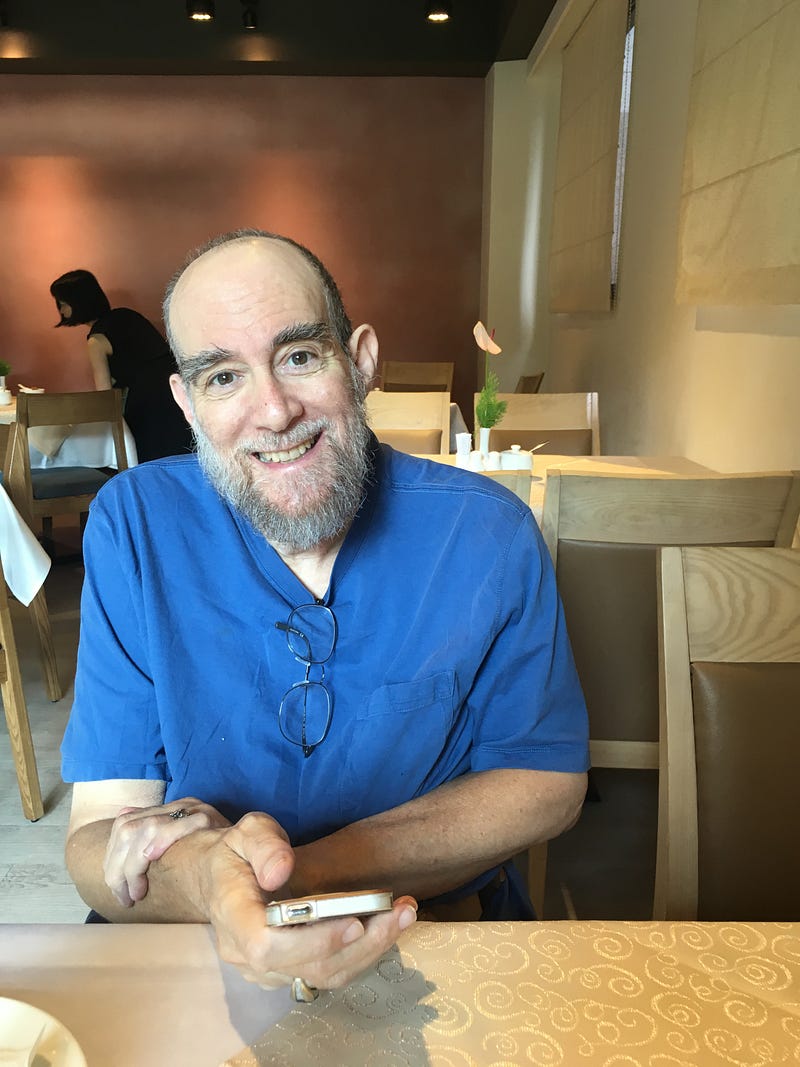
This is a special interview because Dr. Steven E. Brown is my dad. He’s also famous in the field of Disability Culture. The doctorate comes from his Ph.D. in History. He has written numerous papers, books, and poems. He guest speaks at fancy-schmancy disability training events. He even works on emergency safety procedures and plans to accommodate people with disabilities.
I’ll say too little or too much in this intro, so I’m going to let my dad’s words, credentials, and social media platforms speak for him.
Also, as he recovers from a painful, life-altering fall in March, he is planning to begin blogging here, so be sure to give him a follow: Steven E. Brown.
The last several months have involved massive efforts from my dad and my stepmom, Lillian, to help him recover. You may have read the article I published about their Gofundme campaign, which illuminates the hot mess U.S. healthcare is and how people are further penalized for living with disabilities.
Why do you write creative nonfiction?First of all, I love fiction. Many years ago, when I was on an academic track to become a historian I was most impressed by historians who were good writers. In those days, we’d say something like their histories are as compelling as novels. I always want my work to be as accessible as possible no matter who the audience is.
When and how did you break into creative nonfiction?After leaving academia because of employment discrimination related to my disability, I began to write lots of essays and publish in newsletters and magazines. This was before the Internet, in the 1980s and 1990s. In 2003 I published a book of essays, and I published a memoir in 2011 and a book for middle grade readers in 2015.
Where have you learned the most about creative nonfiction? For example, from reading other writers, advanced education, workshops, or elsewhere? For aspiring writers, are there workshops you would recommend?Almost all I’ve learned has come from reading and writing. I still keep a copy of “Elements of Style” on my bookcase. I also attended 2 Writer’s Workshops when I lived in Hawai’i. One was really wonderful; the other less so. I grew up and began writing before the existence of social media. Writing has changed with the lack of people’s attention spans. It’s a cliché but reading is the best way to learn besides writing.
Who are your 3 favorite creative nonfiction writers?My favorite book of recent times is Tyson Yunkaporta, “Sand Talk: How Indigenous Thinking Can Save the World. Another of my recent favorites is Naomi Ortiz, “Sustaining Spirit: Self Care for Social Justice.” Pulling out early favorites, I think I’ve read all of the nonfiction work of James Baldwin.
What are your tips on writing astounding creative non-fiction?Besides reading, it might be helpful at times to read your own writing aloud. I’ve never been in a writer’s group aside from the workshops I mentioned, but I think that could be useful as well. I have had a number of readers on the book I’m currently working on who have led to positive (and sometimes significant) changes. While I understand there’s a market need, if you don’t write to please yourself first, you’re not likely to please anyone else.
What are the pitfalls to avoid in creative nonfiction?As a former academic, I can write like a professor talks. Not a great idea for appealing to a broad audience. I may understand perfectly well what I’m trying to say, but if one of my readers doesn’t I try to pay attention and revise.
What are your future projects?
I’ve been working for several years on a book about Disability Culture. I hope I’m in one of my final revisions. I have other projects in mind but too early to discuss, except that they are both nonfiction and fiction.
Bio, Social Media, Book CreditsHistorian Steven E. Brown (Ph.D., University of Oklahoma, 1981) is Co-Founder, Institute on Disability Culture and retired Professor of Disability Studies, Center on Disability Studies (CDS), University of Hawaii. He is an individual with a disability and family member of individuals with disabilities. In 2002, he moved to Hawaii and began working at CDS. He retired as a Full Professor and returned to the mainland in 2014, though he continued teaching online through 2019.
Brown has published many articles and presented on disability rights and culture throughout the U.S. as well as in Canada; Germany; Hungary; Korea (via remote video) Japan; Norway; Saipan; Sweden; Taiwan; and Thailand.
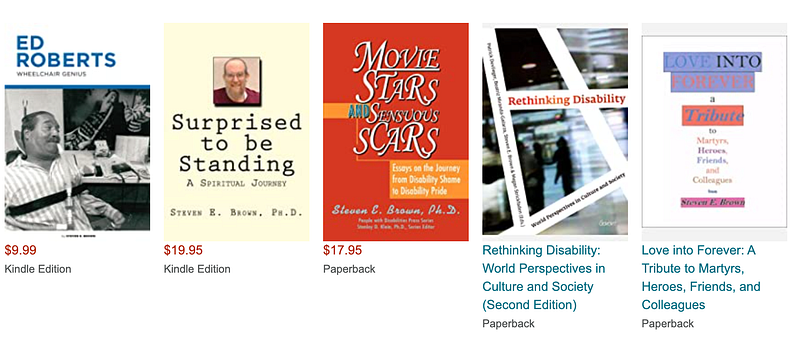
His books are Movie Stars and Sensuous Scars: Essays on the Journey from Disability Shame to Disability Pride (2003); Surprised to be Standing: A Spiritual Journey (2011); and Ed Roberts: Wheelchair Genius (2015) for middle grade readers. He’s currently working on a book about Disability Culture.
Amazon author page
Website: http://www.instituteondisabilityculture.org/
Email: [email protected]